
High Quality Universal Flange for Industrial Piping Applications: A Practical Guide from a Manufacturer’s Perspective
Have you ever faced a situation where bolt holes do not align during pipe installation, even though the flange size is correct? Or when a piping system needs slight adjustment, but rigid flange connections make installation difficult?
In my experience working with industrial piping systems, these problems are more common than most engineers expect.
As a manufacturer at Zhejiang Songlin Flange Co., Ltd., located in Longwan, Wenzhou—China’s well-known valve and flange production base—we design and supply a wide range of Industrial Flanges, including the High Quality Universal Flange for Industrial Piping Applications. Our goal is simple: make pipeline installation easier, safer, and more flexible without sacrificing strength or sealing performance.
This article is based on real manufacturing and engineering experience, not theory. I will walk you through how universal flanges work, where they are used, how to choose them, and what mistakes to avoid in real industrial projects.
What Is a Universal Flange
How Universal Flanges Work in Piping Systems
Materials and Manufacturing Process
Industrial Applications
Universal Flange vs Standard Flange Comparison
How to Choose the Right Universal Flange
Frequently Asked Questions
Conclusion
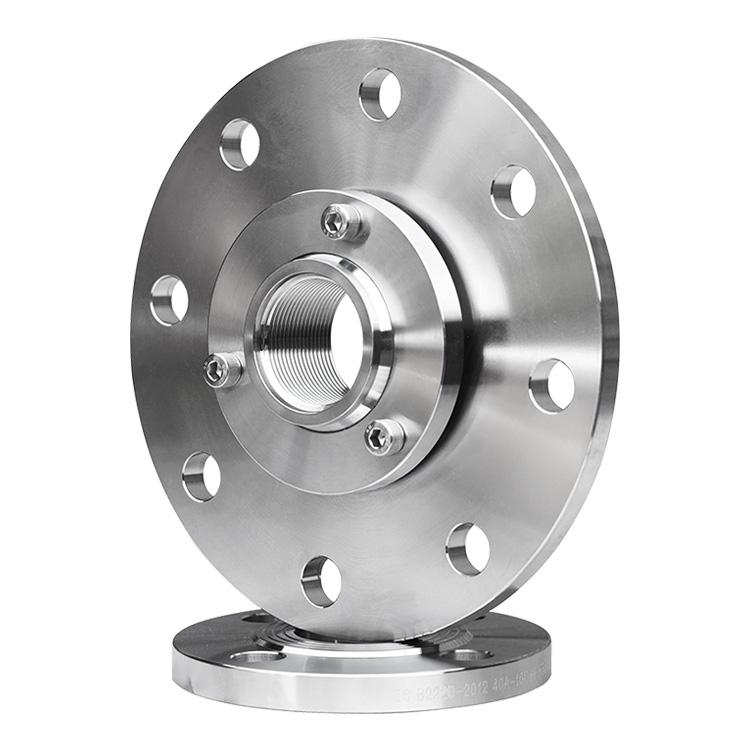
A universal flange (also known as a swivel flange in some markets) is designed to provide flexibility during pipe alignment and installation.
Unlike traditional rigid flanges, a High Quality Universal Flange for Industrial Piping Applications allows slight rotation during assembly. This makes it easier to align bolt holes and connect pipelines even when there are small installation deviations.
In real projects, perfect alignment is rare. Pipes may shift due to:
Thermal expansion
Welding distortion
Foundation movement
Installation tolerance differences
This is where universal flanges become extremely practical.
From our factory experience, customers often choose universal flanges when they need faster installation and reduced onsite labor cost.
The working principle is simple but very effective.
A universal flange typically consists of:
A flange body
A rotating ring or swivel structure
Machined sealing face
During installation, the flange can rotate slightly to match bolt hole positions. Once aligned, it is tightened and fixed in place.
This design provides three major benefits:
Easier installation in tight spaces
Reduced need for pipe rework
Better alignment accuracy
In our production, we ensure the rotation surface is precisely machined using CNC equipment. Even a small error can affect sealing performance, so dimensional accuracy is critical.
A properly manufactured High Quality Universal Flange for Industrial Piping Applications still maintains full pressure performance similar to standard flanges when installed correctly.
Material selection directly affects performance, especially in demanding environments.
At Zhejiang Songlin Flange Co., Ltd., we produce universal flanges using multiple material grades depending on application requirements.
Carbon Steel (ASTM A105, A350 LF2)
Stainless Steel (304, 304L, 316, 316L)
Alloy Steel (F11, F22)
Duplex Stainless Steel
Custom forged materials
We follow a controlled production workflow:
Raw material inspection
Forging or billet preparation
Heat treatment
CNC rough machining
Precision machining of sealing surface
Swivel mechanism machining
Drilling bolt holes
Surface finishing
Dimensional inspection
Pressure-related testing (if required)
Final quality check
Every High Quality Universal Flange for Industrial Piping Applications is checked for dimensional accuracy before shipment.
We also provide inspection reports such as:
Material Certificate (EN 10204 3.1)
Ultrasonic Testing (UT)
PMI (Positive Material Identification)
Third-party inspection (SGS / BV / TUV)
Universal flanges are widely used in industries where installation flexibility matters.
Used in pipeline stations, refinery systems, and offshore platforms where alignment is difficult due to long-distance piping and vibration.
Chemical plants often require frequent maintenance and modifications. Universal flanges reduce downtime during system upgrades.
Steam and cooling water pipelines benefit from easier installation and alignment adjustment.
Shipbuilding and offshore platforms use universal flanges to handle vibration and structural movement.
Stainless steel universal flanges are used where hygiene and corrosion resistance are required.
| Feature | Standard Flange | Universal Flange | Source |
|---|---|---|---|
| Installation Flexibility | Low | High | ASME B16.5 Engineering Practice |
| Bolt Alignment Tolerance | Strict | Adjustable | Manufacturer Field Data |
| Installation Time | Longer | Shorter | EPC Project Reports |
| Maintenance Access | Standard | Easier in retrofit systems | Industrial Installation Studies |
| Cost Efficiency | Medium | Higher initial, lower labor cost | Field Engineering Analysis |
Conclusion: The High Quality Universal Flange for Industrial Piping Applications provides clear advantages in installation efficiency and alignment flexibility.
| Material | Corrosion Resistance | Strength | Application | Source |
|---|---|---|---|---|
| Carbon Steel A105 | Medium | High | Oil, gas, general industry | ASTM A105 Standard |
| Stainless Steel 304 | High | Medium | Food, water systems | ASTM A182 |
| Stainless Steel 316L | Very High | Medium-High | Chemical, marine | ASTM A182 |
| Duplex Steel | Excellent | Very High | Offshore, seawater | Industry Duplex Guidelines |
From my experience, many buyers make decisions based only on price. That often leads to problems later.
Here is a more practical selection guide:
Ask yourself:
Is it corrosive?
Is it high temperature?
Is it high pressure?
Universal flanges are best when:
Space is limited
Pipe alignment is difficult
Maintenance is frequent
Common classes:
Class 150
Class 300
Class 600
Class 900
Wrong material selection is the most common failure reason we see in real projects.
If you are unsure, always choose 316L stainless steel for chemical or marine environments—it reduces long-term risk.
It allows rotation during installation, making pipe alignment easier and reducing installation time.
Yes, when properly manufactured, they can meet ASME pressure ratings similar to standard flanges.
They are widely used in oil & gas, petrochemical, marine, power, and water treatment industries.
Carbon steel, stainless steel, alloy steel, and duplex stainless steel are most common.
Yes, we manufacture based on drawings, including non-standard sizes and special requirements.
In real industrial projects, installation challenges are often underestimated. A small alignment issue can delay an entire pipeline system.
The High Quality Universal Flange for Industrial Piping Applications is designed to solve exactly this problem. It improves installation flexibility, reduces labor time, and maintains strong sealing performance under demanding conditions.
At Zhejiang Songlin Flange Co., Ltd., we focus on practical engineering value, not just product supply. Every flange we produce is designed to perform reliably in real working environments, not just on paper.


Copyright © 2022 Zhejiang Songlin Flange Co., Ltd.
SitemapThis website uses cookies to ensure you get the best experience on our website.

 Español
 Pусский
 Français
 Deutsch
 日本語
日本語 한국어
한국어 العربية
 Italiano
 Nederlands



 WhatsApp
 Phone
Phone