
Precision Machined Tank Bottom Flange for Industrial Engineering Projects: A Practical Manufacturer Guide
Have you ever noticed that many industrial tank failures start from the bottom connection point rather than the tank body itself?
In my experience working with Industrial Flange production at Zhejiang Songlin Flange Co., Ltd., this is a very common issue. The bottom connection is under constant static pressure, corrosion exposure, and long-term load stress.
A Precision Machined Tank Bottom Flange for Industrial Engineering Projects is designed specifically to solve these problems. It ensures safe sealing, controlled drainage, and long-term stability in storage tanks used across chemical, oil, water, and food processing industries.
In this article, I will explain how tank bottom flanges work, why machining precision is important, how to choose the right type, and real industrial insights from manufacturing practice.
What Is a Tank Bottom Flange
Why Precision Machining Matters
Materials and Manufacturing Process
Industrial Applications
Comparison of Flange Types
Selection Guide for Engineers
FAQ
Conclusion
A tank bottom flange is a specialized flange installed at the lowest point of a storage tank to control discharge and ensure sealing.
A Precision Machined Tank Bottom Flange for Industrial Engineering Projects is designed to:
Provide leak-proof sealing under static pressure
Support long-term liquid storage
Allow controlled drainage
Resist corrosion at the tank base
From factory experience, this is one of the most critical sealing points in any storage system.
Many engineers underestimate the importance of machining accuracy in tank bottom flanges.
Even small errors can lead to:
Uneven gasket compression
Slow leakage over time
Bolt stress imbalance
Corrosion acceleration at sealing edges
That is why every Precision Machined Tank Bottom Flange for Industrial Engineering Projects must be CNC-machined with strict tolerance control.
Sealing face flatness
Bolt hole alignment
Thickness uniformity
Inner bore concentricity
In real projects, precision is directly linked to safety and long-term performance.
At Zhejiang Songlin Flange Co., Ltd., material selection depends on real working environments.
Carbon Steel (ASTM A105, SA516 Gr.70)
Stainless Steel (304, 316L)
Duplex Stainless Steel
Lined or coated steel for chemical resistance
Carbon steel is widely used for general storage, while stainless steel is preferred for corrosive or hygienic systems.
Raw material inspection
Forging or forming
CNC rough machining
Precision sealing surface finishing
Bolt hole drilling
Anti-corrosion surface treatment
Dimensional inspection
Pressure/leak testing
Final quality control
Packaging and traceability labeling
Each Precision Machined Tank Bottom Flange for Industrial Engineering Projects is individually inspected before shipment.
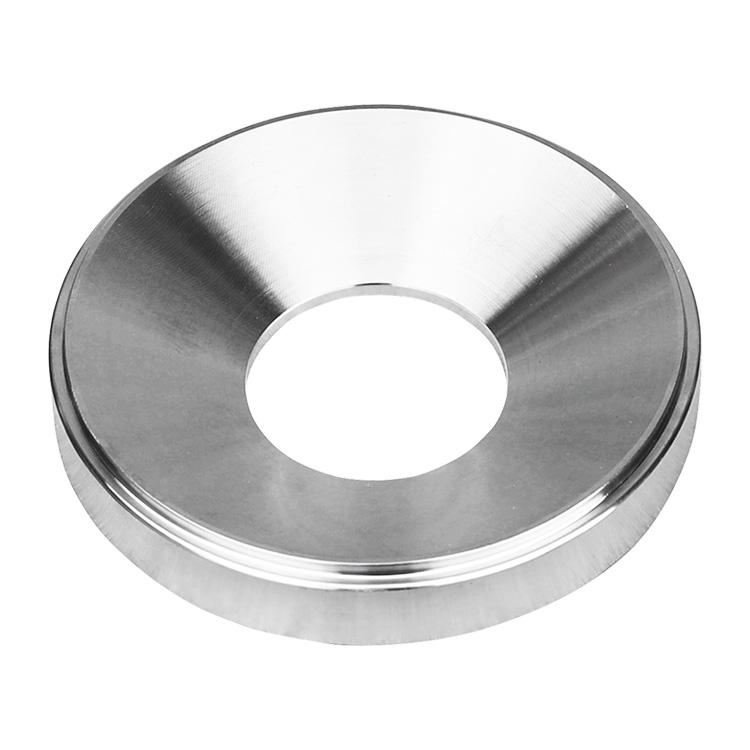
Tank bottom flanges are widely used across multiple industries.
Acid storage tanks
Alkali and solvent systems
Fuel storage tanks
Lubricant systems
Clean water tanks
Wastewater processing systems
Syrup and liquid ingredient tanks
Hygienic storage systems
Raw material storage
Process liquid handling systems
| Feature | Tank Bottom Flange | Standard Flange | Source |
|---|---|---|---|
| Installation Position | Tank bottom outlet | Pipeline connection | Engineering practice |
| Sealing Requirement | Very high | Medium | ASME B16.5 |
| Load Type | Static liquid pressure | Flow pressure | Industrial tank design data |
| Corrosion Risk | High | Medium | Field engineering reports |
| Application | Storage systems | Piping systems | ASME standards |
Conclusion: Tank bottom flanges are specifically designed for storage safety, not general pipeline use.
| Material | Corrosion Resistance | Strength | Cost Level | Source |
|---|---|---|---|---|
| Carbon Steel A105 | Medium | High | Low | ASTM A105 |
| Stainless Steel 304 | High | Medium | Medium | ASTM A182 |
| Stainless Steel 316L | Very High | High | Medium-High | ASTM A182 |
| Duplex Steel | Excellent | Very High | High | Industry standards |
Choosing the right tank bottom flange requires practical engineering thinking.
Water → carbon steel or 304 stainless
Chemicals → 316L or duplex steel
Fuel/oil → carbon steel with coating
Bottom zones often suffer from sediment buildup and corrosion concentration.
Even low-pressure tanks require reliable sealing at the bottom outlet.
Good design should allow:
Easy disassembly
Safe cleaning
Quick replacement
In corrosive environments, upgrading to stainless steel reduces long-term maintenance cost significantly.
It connects and seals the bottom outlet of storage tanks for controlled discharge.
Because sealing failure often starts from uneven surface or poor alignment.
Yes, we manufacture according to drawings and engineering requirements.
Chemical, oil & gas, water treatment, food processing, and industrial manufacturing.
Sealing reliability under long-term static pressure.
A Precision Machined Tank Bottom Flange for Industrial Engineering Projects is a key safety component in modern storage systems.
From my experience, most tank failures do not come from the tank body itself, but from weak or poorly designed bottom connections.
At Zhejiang Songlin Flange Co., Ltd., we focus on producing precision-engineered flanges that ensure stable sealing, corrosion resistance, and long-term reliability in real industrial environments.
For engineering projects involving storage tanks, selecting the right tank bottom flange is essential for operational safety and system efficiency.
 RELATED


Copyright © 2022 Zhejiang Songlin Flange Co., Ltd.
SitemapThis website uses cookies to ensure you get the best experience on our website.

 Español
 Pусский
 Français
 Deutsch
 日本語
日本語 한국어
한국어 العربية
 Italiano
 Nederlands



 WhatsApp
 Phone
Phone