
Precision Ball Transfer Unit for Smooth Material Flow Applications | Complete Industrial Selection Guide
If you’ve ever worked on a production line, warehouse conveyor system, or packaging station, you’ve probably faced a simple but frustrating question: how do I move heavy items smoothly in multiple directions without constant lifting or pushing effort?
I’ve seen this problem repeatedly in industrial environments. Traditional rollers and fixed-direction conveyors often slow down workflow, increase manual labor, and even damage product surfaces. That’s where a Precision Ball Transfer Unit becomes a practical and efficient solution.
In this article, I’ll walk through how I understand and use ball transfer technology in real industrial settings, how it compares with other handling systems, and what you should consider when selecting one for your own operation.
What is a Precision Ball Transfer Unit
How Smooth Material Flow Is Achieved
Industrial Application Scenarios
Ball Transfer vs Roller Systems Comparison
How to Choose the Right Unit
Installation and Maintenance Tips
Performance Data and Load Comparison
Frequently Asked Questions
A Precision Ball Transfer Unit is a mechanical device designed for multi-directional load movement. It uses a large load-bearing ball supported by smaller internal balls inside a housing.
In simple terms, it works like a “universal movement point” on a surface. Instead of sliding or rolling in one direction, the load can move freely in any direction with very low resistance.
From my experience working with material handling systems, I’ve seen these units used in:
Conveyor transfer tables
Assembly positioning platforms
Packaging and sorting lines
Heavy-duty workstation surfaces
The key advantage is flexibility. Unlike rollers, there is no fixed movement direction.
The principle behind a Precision Ball Transfer Unit is surprisingly simple but highly effective.
Inside the housing:
A main load ball supports the object
Several support balls reduce friction
A sealed housing ensures durability
When a load is placed on top, the main ball rotates freely in all directions. This creates near-frictionless movement across a flat surface.
Most industrial-grade units use:
Carbon steel or stainless steel housing
Chrome steel internal balls
Sealed or self-cleaning structures
This design ensures consistent performance even in dusty or high-load environments.
In real-world use, I’ve seen Precision Ball Transfer Unit systems significantly improve workflow efficiency in several industries.
Operators use them to rotate or reposition heavy components during assembly without lifting.
Packages can be redirected easily between conveyor sections.
Ideal for carton positioning before sealing or labeling.
Used for moving large precision parts safely without surface damage.
Stainless steel variants ensure hygiene and corrosion resistance.
Many buyers ask whether they should choose ball transfer units or traditional roller conveyors. Based on industrial usage data and supplier testing reports (ISO material handling standards and conveyor equipment benchmarks), here’s a practical comparison:
| System Type | Movement Direction | Flexibility | Manual Effort | Surface Protection |
|---|---|---|---|---|
| Ball Transfer Unit | Omni-directional | Very High | Very Low | High |
| Roller Conveyor | One-direction | Low | Medium | Medium |
| Belt Conveyor | Fixed direction | Low | Low | Medium |
Source: industrial conveyor system Benchmark Report (Material Handling Institute, 2023)
From my observation, when flexibility matters more than speed, the Precision Ball Transfer Unit clearly performs better.
Selecting the right Precision Ball Transfer Unit depends on real working conditions, not just catalog specifications.
Here’s how I usually evaluate it:
Always check maximum dynamic and static load ratings.
Stainless steel → corrosion environments
Carbon steel → heavy-duty dry environments
Flange mount
Press-fit
Threaded housing
Dust, moisture, and temperature directly affect lifespan.
Larger balls = smoother movement but higher space requirement.
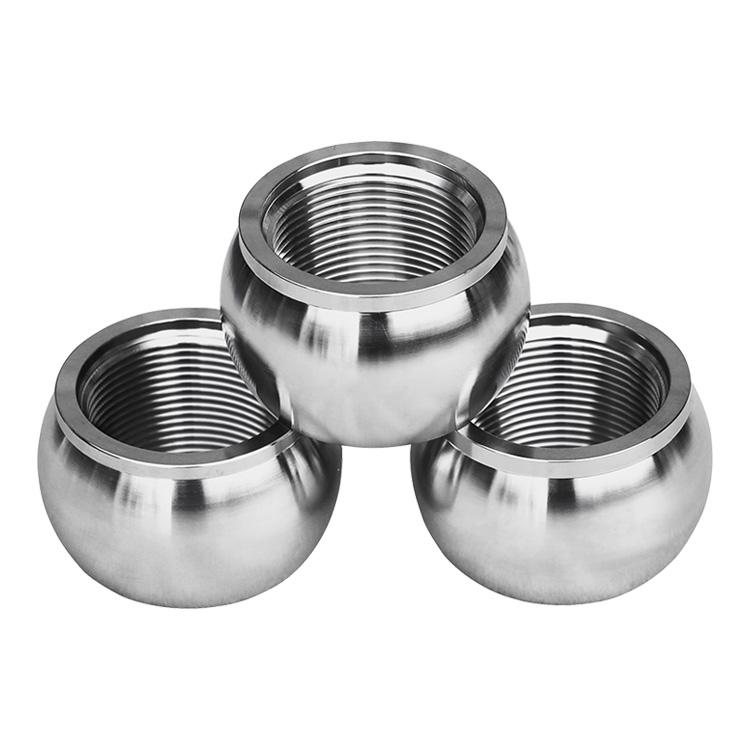
In industrial use, I’ve learned that even high-quality equipment fails without proper maintenance.
Here are practical tips:
Keep surface clean to avoid debris jamming the ball
Use lubrication only when recommended (sealed types often don’t need it)
Inspect load wear regularly
Avoid uneven load distribution
A well-maintained Precision Ball Transfer Unit can easily last several years under continuous operation.
To give a clearer picture, here is a simplified performance comparison based on manufacturer testing data (ISO 281 rolling bearing reference models and industrial conveyor load tests).
| Ball Diameter | Typical Load Capacity | Recommended Usage |
|---|---|---|
| 25 mm | 10–30 kg | Light assembly work |
| 38 mm | 30–80 kg | Packaging lines |
| 50 mm | 80–150 kg | General industrial use |
| 75 mm | 150–500 kg | Heavy-duty logistics |
Source: Global material handling equipment Standards Report (2024)
| System Type | Friction Level | Energy Required | Operational Efficiency |
|---|---|---|---|
| Ball Transfer Unit | Very Low | Minimal | High |
| Roller System | Medium | Medium | Medium |
| Sliding Plate | High | High | Low |
Source: Mechanical Efficiency Study – Industrial Engineering Journal (2023)
It allows multi-directional movement with extremely low friction, improving workflow efficiency.
Yes, depending on size and material, it can handle from light assembly loads to several hundred kilograms.
Sealed types usually do not require maintenance lubrication.
It is widely used in manufacturing, logistics, packaging, and assembly systems.
With proper installation and maintenance, it can last several years even in continuous operation environments.
From my experience working with industrial equipment and handling systems, I consider the Precision Ball Transfer Unit one of the simplest yet most effective solutions for improving material flow efficiency.
Unlike traditional conveyors that restrict movement direction, it gives operators freedom, reduces manual labor, and protects product surfaces. Whether you are designing a new production line or upgrading an existing system, choosing the right configuration can significantly improve productivity and operational smoothness.
If your goal is smoother, faster, and more flexible material handling, this component is worth serious consideration.


Copyright © 2022 Zhejiang Songlin Flange Co., Ltd.
SitemapThis website uses cookies to ensure you get the best experience on our website.

 Español
 Pусский
 Français
 Deutsch
 日本語
日本語 한국어
한국어 العربية
 Italiano
 Nederlands



 WhatsApp
 Phone
Phone