
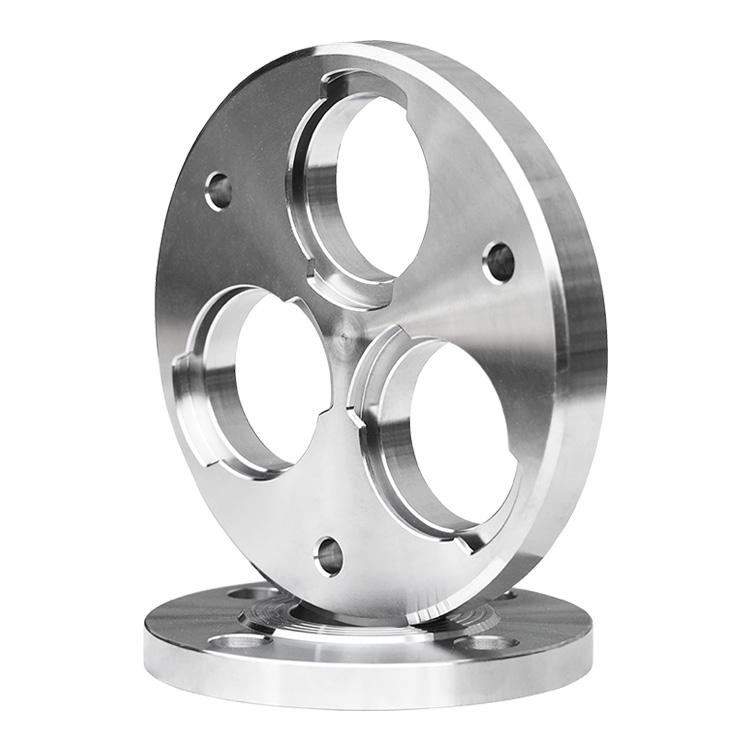
An industrial welding neck flange for chemical plants is one of the most trusted pipe connection components used in
demanding process environments. In chemical processing facilities, where corrosion resistance, pressure containment, thermal stability,
and leak prevention are critical, the welding neck flange remains a preferred solution for connecting pipelines, vessels, pumps,
reactors, heat exchangers, and other equipment. Its distinctive long tapered hub and butt-weld connection design help distribute
stress evenly across the pipe joint, making it highly suitable for high-pressure and high-temperature service.
Chemical plants operate under complex conditions that often involve aggressive media, fluctuating temperatures, corrosive fluids,
vapors, and strict safety requirements. Because of these challenges, selecting the right flange type is essential for operational
reliability and long service life. The welding neck flange is designed to provide a strong, smooth, and durable
connection that supports system integrity in critical applications. When properly specified, fabricated, installed, and maintained,
it can significantly reduce the risk of leakage, maintenance downtime, and unplanned shutdowns.
This guide provides SEO-friendly, industry-focused information about the industrial welding neck flange for chemical plants,
including its definition, main advantages, common materials, dimensional standards, pressure ratings, surface finishes, applications,
installation notes, inspection considerations, and selection guidance. The content is written in clear English and structured for
direct use in blog pages, category pages, product directory pages, and industry resource pages.
A welding neck flange is a flange type featuring a long, tapered hub that transitions gradually from the flange ring
to the pipe wall. It is attached to the pipeline by a butt weld at the end of the neck, creating a strong and continuous joint.
This design is especially effective in systems where mechanical stress, vibration, pressure cycling, and temperature changes are common.
In chemical plants, the welding neck flange is widely used because it helps maintain structural stability and sealing performance in
critical service conditions. Unlike some other flange types that rely more heavily on bolting force and gasket compression alone,
the welding neck flange benefits from its welded connection and smooth stress distribution. This reduces localized stress concentration
at the flange root and helps improve fatigue resistance.
The flange face is typically manufactured in standard configurations such as raised face, flat face, or ring-type joint. The choice
depends on the piping standard, gasket type, service pressure, and corrosive nature of the process fluid. In chemical plants, welding neck
flanges are often selected for severe service lines, process transfer lines, reactor connections, utility systems, and any piping section
requiring high reliability.
Chemical plants are among the most demanding industrial environments for piping components. The fluids and gases handled in these facilities
may be toxic, flammable, acidic, alkaline, abrasive, or high purity. These conditions make flange performance a key design factor.
The industrial welding neck flange for chemical plants is used because it offers several practical and technical advantages:
These benefits make welding neck flanges a preferred choice in many sections of a chemical plant where safety and process continuity are
top priorities. They are also commonly used where inspection, maintenance, and component replacement must be minimized to reduce downtime.
| Advantage | Description | Benefit in Chemical Plants |
|---|---|---|
| Strong butt-weld connection | The flange neck is welded directly to the pipe end for a permanent joint. | Improves reliability in critical process lines. |
| Tapered hub design | The gradual taper reduces abrupt stress changes. | Supports better fatigue performance and load distribution. |
| Leak resistance | Stable alignment and strong weld geometry help maintain sealing integrity. | Reduces process leakage and safety risks. |
| High pressure capability | Designed for severe service and demanding operating conditions. | Suitable for high-pressure chemical transfer systems. |
| High temperature performance | Performs well when exposed to elevated thermal loads. | Useful in heated chemical processing systems. |
| Corrosion-resistant material options | Available in stainless steel, alloy steel, duplex, and specialty alloys. | Helps resist acids, chlorides, solvents, and other corrosive media. |
| Long service life | Robust construction reduces wear and premature failure. | Supports lower maintenance costs over time. |
In addition to these advantages, welding neck flanges are well suited to systems where dimensional precision, weld quality, and sealing
reliability are essential. For chemical plants, the cost of leakage or shutdown can be extremely high, so using a flange type with
proven mechanical performance is often a practical and economical decision.
The material selection for an industrial welding neck flange for chemical plants depends on the service fluid, temperature,
corrosion level, pressure rating, and environmental exposure. Common material options include:
| Material | Main Characteristics | Typical Chemical Plant Use |
|---|---|---|
| Carbon Steel | Good strength, cost-effective, suitable for non-corrosive or controlled environments. | Utility lines, general service piping, non-aggressive media. |
| Stainless Steel 304 / 304L | Good corrosion resistance and fabrication performance. | General chemical processing, water-based systems, moderate corrosion service. |
| Stainless Steel 316 / 316L | Improved resistance to chlorides and many corrosive fluids. | More aggressive chemical lines, solvent systems, marine-influenced environments. |
| Duplex Stainless Steel | High strength and good resistance to chloride stress corrosion cracking. | Severe service, chloride-rich process environments, high-demand piping. |
| Alloy Steel | Strong mechanical performance and good heat resistance. | High-temperature process lines and pressure service. |
| Nickel Alloys | Excellent corrosion resistance in highly aggressive environments. | Specialty acid service, highly corrosive process units, critical applications. |
| Hastelloy / Superalloy Grades | Exceptional resistance to harsh chemicals and oxidation. | Extremely aggressive chemical processing and specialty production units. |
Material choice must be based on compatibility with the process medium. For example, some chemicals may cause rapid attack on standard
stainless steels, while others may be manageable with 316L or duplex grades. In high-purity or contamination-sensitive systems, material
traceability and surface quality also become important considerations. A suitable material specification helps ensure the flange can
withstand long-term exposure without excessive corrosion, cracking, or dimensional degradation.
Welding neck flanges used in chemical plants are typically manufactured according to internationally recognized standards. These standards
define dimensions, pressure classes, materials, testing requirements, and face configurations. Using standard-compliant flanges makes
integration easier and improves compatibility with piping systems and accessories.
| Standard | Region / System | Typical Application |
|---|---|---|
| ASME B16.5 | United States / International | Pipe flanges and flanged fittings from small to medium sizes. |
| ASME B16.47 | United States / International | Large diameter flanges for heavy-duty pipeline systems. |
| EN 1092-1 | Europe / International | European Standard Flanges for piping systems. |
| DIN Standards | Germany / International | Legacy and industrial piping systems requiring DIN compliance. |
| JIS Standards | Japan / Asia-Pacific | Industrial piping systems and equipment connections. |
| GB Standards | China / Regional | Domestic industrial and chemical plant piping systems. |
The most common specification elements include nominal pipe size, flange class or pressure rating, flange face type, hub dimensions,
bolt hole pattern, material grade, heat treatment condition, surface finish, and inspection requirements. In chemical plant projects,
specifications often also include corrosion allowance, low-temperature impact requirements, and non-destructive testing.
Pressure class is an important selection factor for any industrial welding neck flange for chemical plants. The required
rating depends on operating pressure, design temperature, fluid characteristics, and applicable code requirements. The following table
shows common ASME pressure classes used in industrial piping:
| Pressure Class | General Description | Common Use Level |
|---|---|---|
| 150 | Lower pressure service with standard industrial performance. | General utility and low-pressure process systems. |
| 300 | Medium pressure capability with broad industrial use. | Widely used in chemical plant process piping. |
| 600 | Higher pressure service for more demanding applications. | Critical process lines and higher-load systems. |
| 900 | Heavy-duty service for severe pressure conditions. | Specialized chemical process units and high-stress piping. |
| 1500 | Very high pressure service. | Special engineering applications. |
| 2500 | Extreme pressure service with specialized design requirements. | Highly critical process environments. |
It is important to note that pressure rating is not determined by the flange class alone. The allowable pressure decreases as temperature
increases, and the final selection must consider the complete operating profile. Chemical plants often involve thermal variation, so engineers
must review both pressure and temperature before finalizing flange specifications.
Welding neck flanges are manufactured in a wide range of sizes to match standard pipe dimensions. The size must match the nominal pipe
size and the selected pressure class. In chemical plant systems, dimensional precision is essential for proper alignment, gasket seating,
bolt loading, and weld quality.
| Dimensional Factor | What It Means | Why It Matters |
|---|---|---|
| Nominal Pipe Size (NPS) | Standard pipe size designation. | Ensures correct flange-to-pipe fit. |
| Outside Diameter | Overall flange diameter measured across the outside edge. | Affects bolt circle compatibility and installation layout. |
| Bolt Circle Diameter | Diameter of the circle passing through the bolt holes. | Required for proper bolting alignment. |
| Hub Length | Length of the tapered neck section. | Influences stress distribution and weld preparation. |
| Thickness | Flange body thickness. | Supports pressure containment and mechanical strength. |
| Bore Size | Inside opening matched to the pipe bore. | Helps maintain smooth flow and reduce turbulence. |
| Weld End Preparation | Bevel or end geometry for butt welding. | Critical for weld quality and joint strength. |
Accurate dimensional matching is essential because even small deviations can affect sealing performance, create fit-up issues, and increase
installation time. For chemical plant projects, dimensional verification should be part of incoming inspection and pre-installation quality
control.
The flange face is one of the most important factors influencing sealing performance. Common face types for welding neck flanges include:
In chemical plants, the gasket selection must match the flange face and the service fluid. Common gasket materials include graphite,
PTFE, modified PTFE, spiral wound construction, and metallic ring gaskets. The sealing system should be chosen based on chemical resistance,
temperature resistance, compressibility, and required leak tightness.
For aggressive chemicals or high-temperature services, sealing performance is often as important as the flange body material itself.
A well-designed welding neck flange with the correct face finish and gasket pairing helps reduce fugitive emissions and improve plant safety.
The industrial welding neck flange for chemical plants is used in a broad range of plant systems. Typical applications include:
| Application Area | Typical Function | Reason for Using Welding Neck Flange |
|---|---|---|
| Process piping | Transfers raw materials and finished chemicals. | Requires leak resistance and pressure integrity. |
| Reactor connections | Connects reactors to feed, discharge, and utility lines. | Handles thermal cycling and mechanical load. |
| Heat exchangers | Supports thermal processing systems. | Works well under temperature variation and pressure. |
| Pumps and compressors | Connects rotating equipment to piping systems. | Improves alignment and joint reliability. |
| Storage and transfer systems | Connects tanks, vessels, and transfer pipelines. | Supports safe and durable fluid handling. |
| Utility lines | Handles steam, cooling water, air, and other utilities. | Provides strong and stable connection points. |
| Corrosive service lines | Transports acids, alkalis, solvents, or aggressive media. | Material options help improve chemical resistance. |
| High-purity systems | Used where contamination control is important. | Supports clean, precise, and reliable joint construction. |
In all of these applications, the main objective is to ensure stable, safe, and long-lasting performance. Chemical plants frequently
operate continuously, so even a small joint failure can lead to production losses, environmental concerns, and safety hazards.
Understanding how the welding neck flange compares to other common flange types helps clarify why it is often selected for chemical
plant service. The table below highlights the general differences:
| Flange Type | Main Feature | Typical Advantage | General Limitation |
|---|---|---|---|
| Welding Neck Flange | Tapered hub with butt weld connection. | Excellent strength and stress distribution. | Higher cost and more welding effort. |
| Slip-On Flange | Pipe slips into the flange before welding. | Easier and faster installation. | Lower mechanical strength than welding neck. |
| Socket Weld Flange | Pipe inserted into socket before welding. | Useful in smaller sizes and compact systems. | Not ideal for all severe service conditions. |
| Threaded Flange | Connected using pipe threads. | No welding required. | Less suitable for high pressure or hazardous service. |
| Blind Flange | Solid disk for closing pipeline ends. | Useful for line closure and maintenance access. | Not a line connection flange for flow passage. |
| Lap Joint Flange | Used with a stub end. | Convenient for systems needing frequent disassembly. | Usually not preferred for the most severe service. |
Compared with these alternatives, the welding neck flange is often chosen when mechanical integrity and long-term performance are the
highest priorities. Although its installation may require more precise welding and alignment, the resulting connection is highly suitable
for critical chemical plant applications.
Surface finish can influence sealing performance, corrosion resistance, and cleanliness. In chemical plants, flange surfaces may be exposed
to corrosive vapors, moisture, cleaning agents, or product residues. A smooth and properly finished flange face helps improve gasket sealing
and reduce the likelihood of localized corrosion.
For stainless steel and specialty alloy flanges, surface treatments may be used to improve passivation or remove contaminants from fabrication.
Depending on the application, flanges may be supplied with pickled, passivated, machined, coated, or polished surfaces. In high-purity
chemical applications, a cleaner and smoother finish can also help reduce contamination and facilitate cleaning.
Corrosion control in chemical plants is not only about material selection. It also includes correct gasket choice, proper coating, accurate
bolt tightening, drainage design, and routine inspection. The welding neck flange contributes to this broader corrosion management strategy
by providing a strong, stable joint that is less likely to shift or loosen under service conditions.
Proper installation is essential for the performance of an industrial welding neck flange for chemical plants. Even a high-quality
flange can fail to perform if welding, alignment, or bolting practices are poor. Important installation considerations include:
In chemical plant environments, installation quality directly affects safety and uptime. Best practice is to treat flange installation as
a controlled mechanical process, not simply a routine assembly task. Detailed documentation, inspection, and testing can help ensure that
each joint meets operational and regulatory expectations.
Because chemical plant piping often carries hazardous or valuable media, flange joints are frequently subject to inspection and testing.
Common quality control methods include:
| Inspection / Test Method | Purpose | Relevance to Welding Neck Flanges |
|---|---|---|
| Visual Inspection | Checks surface condition, weld appearance, and assembly quality. | Basic but essential first-level quality control. |
| Dimensional Inspection | Verifies size, thickness, hole pattern, and bore alignment. | Ensures compatibility and proper fit-up. |
| Radiographic Testing (RT) | Evaluates internal weld soundness. | Useful for critical butt-weld joints. |
| Ultrasonic Testing (UT) | Detects internal flaws and assesses weld integrity. | Common for high-reliability industrial service. |
| Dye Penetrant Testing (PT) | Finds surface-breaking cracks or defects. | Suitable for surface quality verification. |
| Hydrostatic Testing | Checks pressure containment under liquid test conditions. | Confirms sealing and structural performance. |
| Leak Testing | Identifies gas or fluid leakage at joints. | Important for fugitive emission control. |
The extent of inspection depends on project requirements, code obligations, and service severity. In chemical plants, more critical services
generally require more rigorous inspection and documentation. This helps maintain operational reliability and support compliance with
safety and quality standards.
Choosing the correct flange requires a balance of mechanical, chemical, and economic factors. The following checklist can help guide
selection:
The best flange choice is not always the lowest-cost option. In chemical plant service, long-term reliability, reduced leakage, and
maintenance efficiency often provide greater total value than initial purchase price alone.
| Parameter | Typical Range / Option | Notes |
|---|---|---|
| Flange Type | Welding Neck | Preferred for high-pressure and critical service. |
| Materials | Carbon Steel, Stainless Steel, Duplex, Alloy, Nickel Alloys | Selected according to chemical compatibility. |
| Pressure Classes | 150, 300, 600, 900, 1500, 2500 | Exact rating depends on temperature and code. |
| Face Types | Raised Face, Flat Face, Ring-Type Joint | Must match gasket and mating component. |
| Standards | ASME, EN, DIN, JIS, GB | Selection depends on project location and code. |
| Primary Benefits | Strength, leak resistance, fatigue resistance, durability | Ideal for chemical processing environments. |
| Typical Service | Process lines, reactors, pumps, exchangers, utilities | Used throughout chemical plants. |
For search-friendly industrial content, the following keyword variations may be naturally included in surrounding text, headings,
metadata, or internal linking context. These phrases are useful for ranking related pages without mentioning specific brands or suppliers:
When used naturally and consistently, these keyword variations can support organic visibility while keeping the content readable and
informative for engineers, buyers, procurement teams, and plant maintenance personnel.
The industrial welding neck flange for chemical plants is a fundamental component in reliable process piping design.
Its tapered hub, butt-weld connection, and strong stress-handling performance make it particularly suitable for high-pressure,
high-temperature, and corrosive chemical service. Compared with many other flange types, it provides superior integrity and long-term
reliability, especially where leakage prevention and safety are essential.
By selecting the correct material, pressure class, face type, and standard, chemical plant operators and engineers can improve system
performance and reduce lifecycle risk. Proper installation, inspection, and maintenance further enhance the value of welding neck flanges
in demanding industrial environments. For chemical plants that require durable, code-compliant, and dependable flange connections, the
welding neck flange remains one of the most important and widely used solutions in modern process piping.
```


Copyright © 2022 Zhejiang Songlin Flange Co., Ltd.
SitemapThis website uses cookies to ensure you get the best experience on our website.

 Español
 Pусский
 Français
 Deutsch
 日本語
日本語 한국어
한국어 العربية
 Italiano
 Nederlands



 WhatsApp
 Phone
Phone
Comment
(0)