
Custom-Made Non-Standard Flanges for Oil, Gas and Petrochemical Applications
Have you ever encountered a piping project where standard flanges simply could not meet the engineering requirements? We often hear this question from customers involved in oil, gas, and petrochemical projects. While international standards such as ASME, EN, DIN, and JIS cover a wide range of piping connections, they cannot satisfy every unique application.
As a manufacturer specializing in Custom-Made Non-standard Flanges for Oil, Gas and Petrochemical industries, we understand that reliability is not optional. A single flange failure may cause production downtime, costly repairs, or even serious safety risks. That is why every Custom Flange we manufacture is designed around the customer's actual operating conditions rather than relying solely on standard specifications.
At Zhejiang Songlin Flange Co., Ltd., located in Longwan, Wenzhou—known as China's Valve City—we combine advanced CNC machining centers, precision inspection equipment, and years of manufacturing expertise to provide customized flange solutions for customers worldwide.
Our product portfolio includes slip-on flanges, welding neck flanges, blind flanges, threaded flanges, lap joint flanges, socket weld flanges, Pressure Vessel Flanges, large-diameter flanges, Tube Sheets, and fully customized non-standard flanges manufactured according to customer drawings.
Instead of simply producing metal components, we help customers solve engineering challenges. From material selection and design review to precision machining and quality inspection, our team works closely with every customer to ensure each flange performs reliably in demanding industrial environments.
In this article, we share our practical manufacturing experience, explain how custom flanges improve industrial piping systems, compare material options, and provide useful purchasing tips for engineers, distributors, and project managers.
On This Page
What Are Custom-Made Non-Standard Flanges?
Why Oil, Gas, and Petrochemical Industries Need Custom Flanges
Our Manufacturing Process
Material Selection Guide
Typical Industrial Applications
How to Select the Right Flange
Frequently Asked Questions
Conclusion
What Are Custom-Made Non-Standard Flanges?
A Custom-Made Non-Standard Flange is a flange manufactured according to customer drawings or project-specific technical requirements instead of fixed international standards.
Although ASME, DIN, EN, and JIS standards cover most industrial piping applications, many projects require customized solutions because of unique equipment designs or extreme operating environments.
Custom flanges may differ in:
Outside diameter
Inside diameter
Thickness
Bolt circle diameter
Number of bolt holes
Facing design
Pressure rating
Material grade
Surface finish
Welding preparation
Each custom flange is engineered to solve a specific installation or operational challenge.
Many industrial systems use customized equipment that cannot accommodate standard dimensions.
Typical examples include:
Large pressure vessels
Heat exchangers
Reactors
Offshore equipment
Compressor stations
LNG facilities
In these situations, modifying a standard flange often increases installation complexity and may compromise system integrity.
Instead, manufacturing a flange according to the original engineering drawing provides a safer and more reliable solution.
Why Oil, Gas, and Petrochemical Industries Need Custom Flanges
Few industries demand higher standards than oil, gas, and petrochemical processing.
These facilities often operate under conditions involving:
High pressure
Elevated temperatures
Corrosive chemicals
Continuous operation
Strict environmental regulations
Under these conditions, flange quality directly affects equipment reliability.
Many refinery and natural gas pipelines operate at pressures far above those encountered in ordinary industrial systems.
To improve structural performance, engineers frequently specify:
Increased flange thickness
Reinforced hubs
Larger bolt sizes
Customized sealing surfaces
These design modifications improve pressure resistance while maintaining sealing integrity.
Petrochemical plants process aggressive media that can rapidly damage ordinary materials.
Depending on the process fluid, we may recommend:
Stainless Steel 304
Stainless Steel 316L
Duplex Stainless Steel
Alloy Steel
Nickel-Based Alloys
Proper material selection significantly extends equipment service life while reducing maintenance costs.
Every hour of downtime in an oil refinery or gas processing facility can represent substantial financial losses.
When flanges match equipment dimensions precisely:
Installation becomes faster.
Alignment improves.
On-site modifications are minimized.
Labor costs decrease.
Project schedules remain on track.
This is one of the main reasons engineering contractors prefer custom-manufactured flanges.
A well-designed custom flange contributes to:
Better sealing performance
Reduced leakage
Lower maintenance costs
Longer service intervals
Higher operational safety
Although the initial manufacturing cost may be slightly higher than a standard product, the overall lifecycle cost is often significantly lower.
| Feature | Standard Flange | Custom-Made Non-Standard Flange |
|---|---|---|
| Dimensions | Fixed Standards | Fully Customized |
| Equipment Compatibility | General Applications | Project-Specific Equipment |
| Pressure Capability | Standard Ratings | Customer Requirements |
| Material Selection | Standard Options | Wide Material Choices |
| Engineering Support | Limited | Full Technical Support |
| Installation Efficiency | Standard | Optimized for Equipment |
Source: ASME B16.5, EN 1092-1, Zhejiang Songlin Flange Engineering Experience.
Our Manufacturing Process
Producing reliable custom flanges requires much more than machining steel.
Each project begins with technical communication between our engineers and the customer.
We first collect detailed project information, including:
Engineering drawings
Pressure rating
Working temperature
Process medium
Applicable standards
Material requirements
Inspection specifications
This allows us to fully understand the application's operating conditions before manufacturing begins.
Our engineering team carefully reviews each drawing.
If necessary, we recommend improvements such as:
Optimizing flange thickness
Adjusting bolt spacing
Selecting more suitable materials
Improving sealing surface design
These recommendations are intended to improve product reliability while maintaining cost efficiency.
Material quality directly influences flange performance.
Depending on customer requirements, we manufacture custom flanges using:
Carbon Steel
Stainless Steel
Alloy Steel
Duplex Stainless Steel
Nickel Alloy
Only qualified raw materials enter our production process.
Material traceability is maintained throughout manufacturing.
Advanced CNC machining centers provide:
Excellent dimensional accuracy
Stable production quality
Consistent bolt positioning
Smooth sealing surfaces
High production efficiency
Automation allows us to manufacture complex flange geometries with excellent repeatability.
Every flange undergoes detailed quality inspection before shipment.
Typical inspections include:
Dimensional verification
Material identification
Hardness testing
Surface finish inspection
Visual inspection
Non-destructive testing when specified
Inspection reports are available according to customer requirements.
Custom flanges often travel thousands of kilometers before installation.
To protect machined surfaces, we use:
Anti-rust treatments
Protective flange covers
Wooden export cases
Secure packaging methods
Proper packaging helps ensure every product arrives in excellent condition.
Selecting the right material is one of the most critical steps in manufacturing Custom-Made Non-Standard Flanges for Oil, Gas and Petrochemical projects. In these industries, flanges are exposed to harsh environments where high pressure, extreme temperatures, corrosive chemicals, and continuous operation are common. Choosing the wrong material can shorten equipment life, increase maintenance costs, and even create safety risks.
When we evaluate a new project, we always consider the following factors before recommending a material:
Operating pressure
Working temperature
Process medium
Corrosion potential
Mechanical strength
Service life
Budget requirements
Our goal is to recommend the material that provides the best long-term performance rather than simply the lowest initial cost.
Carbon steel remains one of the most economical materials for Industrial Flange manufacturing.
Advantages
Excellent mechanical strength
Easy machining
Cost-effective
Good weldability
Suitable for medium-pressure systems
Typical Applications
Crude oil transportation
Water injection systems
Utility pipelines
General industrial piping
Common grades include ASTM A105 and ASTM A350 LF2.
Where corrosion resistance is essential, stainless steel is often the preferred option.
Advantages
Excellent corrosion resistance
Long service life
Smooth surface finish
Easy maintenance
Good fabrication performance
Typical applications include:
Chemical processing
LNG facilities
Desalination plants
Offshore platforms
Pharmaceutical production
Common grades include ASTM A182 F304, F304L, F316, and F316L.
High-temperature steam and high-pressure pipelines require stronger materials.
Alloy steel offers:
Excellent high-temperature strength
Good creep resistance
Reliable long-term performance
Superior pressure resistance
It is widely used in:
Thermal power plants
Steam systems
Petrochemical refineries
Pressure vessels
Typical grades include ASTM A182 F11, F22, and F91.
Offshore engineering often requires both strength and corrosion resistance.
Duplex stainless steel provides:
Higher yield strength
Outstanding resistance to chloride corrosion
Excellent fatigue performance
Longer operating life
These properties make duplex materials ideal for seawater environments.
Some petrochemical processes involve extremely aggressive chemicals.
Nickel alloys provide exceptional resistance to:
Strong acids
Oxidizing environments
High temperatures
Chemical attack
Although these materials have a higher initial cost, they often provide the lowest lifecycle cost in severe operating conditions.
| Material | Corrosion Resistance | High Temperature Performance | Typical Applications | Relative Cost |
|---|---|---|---|---|
| Carbon Steel | Moderate | Good | Oil Pipelines | Low |
| Stainless Steel 304 | High | Good | Water & Chemical | Medium |
| Stainless Steel 316L | Excellent | Good | Offshore & Chemical | Medium-High |
| Alloy Steel | Moderate | Excellent | Steam & Power Plants | High |
| Duplex Stainless Steel | Outstanding | Excellent | Marine & Offshore | High |
| Nickel Alloy | Exceptional | Exceptional | Petrochemical Plants | Very High |
Source: ASTM A182, ASME Boiler & Pressure Vessel Code, ASM International Materials Handbook.
Throughout our manufacturing experience, we have supplied custom flange solutions for a wide variety of industrial facilities. Every application presents different engineering challenges, which is why customized manufacturing plays such an important role.
Oil refineries operate around the clock under demanding conditions.
Common applications include:
Crude oil pipelines
Distillation units
Storage tanks
Heat exchangers
Pump stations
Custom flanges help improve sealing reliability while reducing maintenance shutdowns.
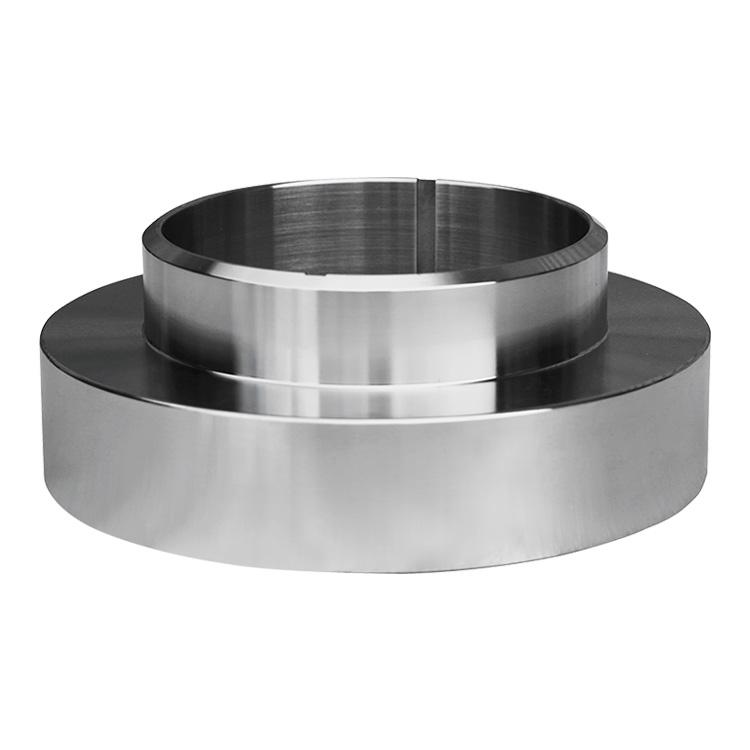
Gas processing facilities require components capable of handling:
High operating pressures
Low-temperature service
Large pipe diameters
Strict sealing requirements
Our engineering team often recommends customized welding neck flanges with optimized wall thickness for these projects.
Chemical processing systems frequently transport corrosive liquids and gases.
Depending on the process medium, customized flanges may require:
Special gasket grooves
Increased corrosion allowance
Precision-machined sealing faces
High-alloy materials
These features help improve system safety and operating efficiency.
Offshore environments combine saltwater exposure, humidity, and continuous vibration.
For these projects, we commonly manufacture:
Duplex stainless steel flanges
Large-diameter flanges
High-strength custom forgings
Proper material selection significantly extends equipment life.
Liquefied Natural Gas systems often operate under cryogenic temperatures.
Custom flange designs help maintain sealing integrity during repeated temperature fluctuations.
A petrochemical equipment manufacturer contacted us regarding a reactor project.
The requirements included:
Large custom flange diameter
Stainless steel material
Special sealing groove
Increased flange thickness
Strict dimensional tolerance
After reviewing the engineering drawings, our team optimized several machining details and produced the flanges using CNC machining centers.
The customer reported:
Smooth installation
Excellent sealing performance
Reduced assembly time
Stable operation after commissioning
This project demonstrated how customized engineering can improve both installation efficiency and long-term reliability.
Selecting the right flange involves more than simply matching dimensions.
We recommend evaluating the following technical factors before placing an order.
Higher pressure generally requires:
Stronger materials
Increased flange thickness
Larger bolts
Improved sealing surfaces
Pressure should always be verified during the design stage.
Temperature affects both material strength and sealing performance.
Examples include:
Carbon steel for moderate temperatures
Alloy steel for steam systems
Stainless steel for corrosive environments
Duplex stainless steel for marine applications
The chemical composition of the fluid determines the required corrosion resistance.
Questions to consider include:
Is the fluid acidic?
Does it contain chlorides?
Is abrasion present?
Are oxidizing chemicals involved?
The answers help determine the most suitable material.
Common flange designs include:
Slip-On Flange
Welding Neck Flange
Blind Flange
Socket Weld Flange
Threaded Flange
Lap Joint Flange
Pressure Vessel Flange
Fully Customized Non-Standard Flange
Each design offers different advantages depending on the installation environment.
When selecting a supplier, we recommend considering more than price.
Look for manufacturers with:
Advanced CNC machining equipment
Experienced engineering teams
Comprehensive inspection systems
Material traceability
Export experience
Reliable delivery schedules
A dependable supplier contributes directly to project success.
| Manufacturing Stage | Standard Flanges | Custom Non-Standard Flanges |
|---|---|---|
| Engineering Review | Standard Design | Customer Drawing Analysis |
| CNC Programming | Standard Program | Customized Program |
| Material Selection | Standard Grades | Project-Specific Materials |
| Machining | Mass Production | Precision Custom Manufacturing |
| Quality Inspection | Routine Inspection | Customized Inspection Plan |
| Final Approval | Factory Standard | Customer Confirmation |
Source: ISO 9001:2015 Quality Management System, ASME Manufacturing Guidelines, Zhejiang Songlin Flange Production Experience.
Based on our experience working with industrial customers worldwide, we recommend the following:
Provide detailed engineering drawings whenever possible.
Include operating pressure, temperature, and process medium in your inquiry.
Specify inspection standards before production.
Confirm material grades and certificates.
Request dimensional inspection reports for critical projects.
Work with a manufacturer that offers engineering support rather than simply supplying products.
By planning carefully at the beginning of the project, customers can reduce installation challenges, avoid unnecessary modifications, and improve the overall reliability of their piping systems.
Choosing the right supplier is just as important as choosing the right flange. In the oil, gas, and petrochemical industries, every component plays a role in maintaining system safety and operational efficiency. Our goal is not only to manufacture products but also to become a reliable engineering partner for every customer.
To achieve high precision and consistent quality, we have invested in advanced CNC machining centers and complete inspection equipment. Automated machining allows us to produce complex custom flanges with excellent dimensional accuracy, while improving production efficiency and repeatability.
Our production capabilities include:
Large-diameter non-standard flanges
Pressure vessel flanges
Tube sheets
Custom forged flanges
OEM and ODM flange manufacturing
Whether your project requires a prototype or a large production run, we can provide flexible manufacturing solutions.
Every custom flange begins with engineering.
Before production starts, our engineers carefully evaluate:
Technical drawings
Material specifications
Pressure ratings
Temperature requirements
Sealing surface design
Machining feasibility
If improvements can enhance performance or reduce manufacturing costs, we discuss them with our customers before production begins. This collaborative approach helps avoid unnecessary modifications later in the project.
Quality is built into every production stage.
Our inspection process may include:
Raw material verification
Chemical composition analysis
Mechanical property testing
Dimensional inspection
Surface roughness inspection
Hardness testing
Ultrasonic Testing (UT)
Magnetic Particle Testing (MT)
Positive Material Identification (PMI)
Inspection reports and material certificates are available according to customer requirements.
We believe good service extends beyond manufacturing.
Our team provides support throughout the entire project, including:
Technical consultation
Material recommendations
Drawing review
Production updates
Export packaging
Logistics coordination
After-sales communication
By maintaining close communication, we help customers complete projects more efficiently and reduce potential risks.
Even the highest-quality flange requires proper installation and routine maintenance to achieve maximum service life.
Before assembly, always check:
Sealing surfaces
Bolt hole alignment
Surface cleanliness
Material identification
Overall dimensions
A clean and undamaged sealing face is essential for preventing leaks.
The flange connection works as a complete system.
Choosing compatible gaskets, bolts, nuts, and washers is just as important as selecting the flange itself. Components should match the pressure rating, operating temperature, and process medium.
Improper bolt tightening is one of the most common causes of leakage.
For best results:
Tighten bolts in a cross pattern.
Apply torque gradually in multiple stages.
Use calibrated torque tools.
Follow the equipment manufacturer's recommended torque values.
These practices help distribute gasket pressure evenly and improve sealing reliability.
Routine inspections help identify potential issues before they become major problems.
Recommended inspection items include:
Corrosion
Bolt condition
Surface wear
Leakage
Vibration effects
Preventive maintenance reduces unexpected downtime and extends equipment life.
Yes. Most of our projects are based on customer-supplied drawings or technical specifications. Our engineering team reviews every drawing before production to ensure accuracy, manufacturability, and reliable performance.
We manufacture custom flanges in a wide range of materials, including:
Carbon Steel
Stainless Steel
Alloy Steel
Duplex Stainless Steel
Nickel-Based Alloys
Material selection depends on pressure, temperature, corrosion resistance, and application requirements.
Our products are widely used in:
Oil and gas
Petrochemical processing
LNG facilities
Offshore platforms
Power generation
Pressure vessel manufacturing
Marine engineering
Water treatment
Heavy industrial equipment
To provide an accurate quotation, we recommend supplying:
Engineering drawings
Material grade
Pressure rating
Operating temperature
Flange dimensions
Quantity required
Inspection requirements
Complete technical information helps reduce production time and ensures accurate pricing.
Although modifying standard flanges may appear less expensive initially, it often leads to installation difficulties, reduced sealing performance, and higher maintenance costs.
A professionally manufactured custom flange is designed specifically for the application, providing:
Better compatibility
Easier installation
Improved sealing
Longer service life
Greater operational reliability
Reliable piping systems begin with reliable components. As a manufacturer specializing in Custom-Made Non-Standard Flanges for Oil, Gas and Petrochemical applications, we understand that every project has unique technical requirements. From engineering consultation and material selection to precision CNC machining and comprehensive quality inspection, we are committed to delivering flange solutions that meet the highest standards of safety, durability, and performance.
At Zhejiang Songlin Flange Co., Ltd., we continuously invest in advanced manufacturing technology, strict quality management, and customer-focused service. Our extensive product range—including slip-on flanges, welding neck flanges, blind flanges, pressure vessel flanges, large-diameter flanges, tube sheets, and fully customized non-standard flanges—enables us to support a wide variety of industrial projects around the world.
Whether you are designing a new refinery, upgrading a petrochemical plant, expanding an LNG facility, or manufacturing specialized equipment, we are ready to provide dependable custom flange solutions tailored to your exact specifications. We look forward to building long-term partnerships based on quality, trust, and mutual success.


Copyright © 2022 Zhejiang Songlin Flange Co., Ltd.
SitemapThis website uses cookies to ensure you get the best experience on our website.

 Español
 Pусский
 Français
 Deutsch
 日本語
日本語 한국어
한국어 العربية
 Italiano
 Nederlands



 WhatsApp
 Phone
Phone