
Precision Pipe Flange Manufacturer for Engineering Fabrication – High-Quality Standard Flange Solutions for Global Projects
When I first started working in the industrial piping field, I underestimated how critical a standard flange really is. It looks like a simple steel ring with bolt holes, but in reality, it is one of the most important connection points in any pipeline system.
A single weak flange can lead to leakage, shutdowns, safety risks, and expensive maintenance. On the other hand, a well-made standard flange ensures tight sealing, structural stability, and long-term reliability.
So the real question engineers and buyers often ask is:
“How do I choose a reliable standard flange manufacturer that I can trust for long-term engineering projects?”
In this article, I will share my hands-on experience as a manufacturer perspective from Zhejiang Songlin Flange Co., Ltd., and walk you through everything you need to know—from types, standards, applications, to selection tips and real-world comparisons.
What is a Standard Flange?
Types of Standard Flange and Key Differences
Materials, Standards, and Technical Specifications
Manufacturing Process and Quality Control
Industrial Applications of Standard Flange
How to Choose the Right Standard Flange
Installation and Maintenance Best Practices
Why Choose Zhejiang Songlin Flange
FAQ
A standard flange is a mechanical component used to connect pipes, valves, pumps, and other equipment in a piping system. It provides a secure, leak-proof joint when bolted together with a gasket in between.
In simple terms, I often explain it like this:
A flange is like a “strong handshake” between two pipes—it holds everything together while still allowing easy disassembly when needed.
From my experience in production, a standard flange must ensure three things:
Strong sealing performance
High pressure resistance
Compatibility with international standards
Common international standards include:
ASME B16.5 (USA)
EN 1092-1 (Europe)
JIS B2220 (Japan)
A properly designed standard flange is not just a connector—it is a safety guarantee for the entire pipeline system.
In our production line at Zhejiang Songlin Flange Co., Ltd., we manufacture multiple types of flanges. Each type is designed for different working conditions.
Here is a practical comparison based on engineering use:
| Flange Type | Structure Feature | Pressure Rating | Typical Use | Advantages |
|---|---|---|---|---|
| Weld Neck Flange | Long tapered hub | High | High-pressure pipelines | Best strength, low stress |
| Slip-On Flange | Pipe slides in | Medium | Water & low-pressure systems | Easy installation |
| Blind Flange | Solid plate | High | Pipeline sealing end | Strong closure |
| Socket Weld Flange | Socket connection | Medium-high | Small diameter piping | Leak-resistant |
| Threaded Flange | Screwed connection | Low-medium | No welding required | Easy maintenance |
| Lap Joint Flange | Loose ring + stub end | Medium | Frequent dismantling systems | Cost-saving |
From my experience, the standard flange selection depends heavily on pressure class and maintenance requirements rather than price alone.
Material selection directly affects durability and performance. In real industrial environments, corrosion resistance and temperature tolerance are critical.
| Material | Grade Example | Corrosion Resistance | Temperature Range | Application |
|---|---|---|---|---|
| Carbon Steel | ASTM A105 | Medium | -29°C to 425°C | Oil, gas pipelines |
| Stainless Steel | 304 / 316 | High | -196°C to 600°C | Chemical, food industry |
| Alloy Steel | F11 / F22 | High | High temperature | Power plants |
| Duplex Steel | 2205 | Very high | Corrosive environments | Offshore platforms |
ASME B16.5 (Pipe Flanges)
EN 1092-1 (European Standard)
DIN Series Standards
JIS Industrial Standards
Each standard flange we produce is tested for:
Dimensional accuracy
Pressure resistance
Surface finish
Chemical composition
This ensures every product meets global engineering requirements.
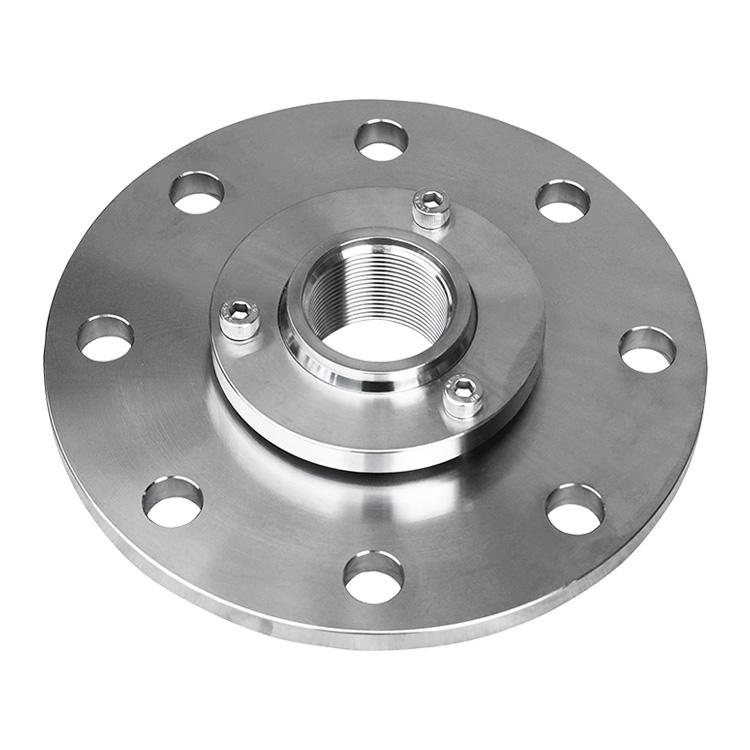
At Zhejiang Songlin Flange Co., Ltd., we rely on CNC automation and precision machining systems. I have personally seen how automation improves consistency.
Our production process includes:
Raw material inspection
Forging or casting
CNC machining
Heat treatment
Drilling and finishing
Pressure testing
Final inspection
We use full digital measuring systems to ensure each standard flange matches design specifications.
Key quality tests include:
Ultrasonic testing (UT)
Magnetic particle testing (MT)
Hydrostatic pressure testing
This structured process ensures that every flange leaving our factory is reliable for long-term engineering use.
A standard flange is used in almost every industrial sector I have worked with:
Oil and gas pipelines
Petrochemical plants
Water treatment systems
Shipbuilding industry
Power generation stations
HVAC systems
Industrial machinery
In offshore oil platforms, weld neck flanges are used because they handle extreme pressure and vibration. In contrast, slip-on flanges are widely used in municipal water systems due to their easy installation.
The flexibility of a standard flange makes it one of the most essential components in engineering fabrication.
Over the years, I’ve noticed many buyers focus only on price. But in reality, selection should be based on engineering conditions.
Here is a practical comparison guide:
| Factor | Low Requirement System | Medium System | High Requirement System |
|---|---|---|---|
| Pressure | Low | Medium | High |
| Material | Carbon steel | Stainless steel | Alloy / duplex steel |
| Flange Type | Slip-on | Socket weld | Weld neck |
| Cost Priority | High | Balanced | Performance priority |
| Maintenance Frequency | Low | Medium | High reliability required |
Never use low-grade flange in high-pressure systems
Always match flange material with fluid type
Consider long-term maintenance cost, not just purchase price
Choosing the right standard flange is always a balance between safety, cost, and durability.
Even the best flange can fail if installed incorrectly.
From my field experience, here are key practices:
Always clean sealing surfaces before assembly
Use correct gasket type (spiral wound or rubber)
Tighten bolts in a cross pattern
Follow torque specifications strictly
Regularly check for leakage
Inspect corrosion in humid environments
Replace gaskets during maintenance cycles
Retighten bolts after thermal cycling
A properly installed standard flange can last many years without failure.
At Zhejiang Songlin Flange Co., Ltd., we are not just producing metal parts—we are delivering engineering reliability.
What sets us apart:
Full CNC automated production system
Strict quality inspection process
Wide range of flange types
Custom Non-standard Flange capability
Strong export experience
Customer-first service philosophy
Located in Wenzhou Longwan, China’s valve and flange manufacturing hub, we benefit from strong logistics and industrial supply chains.
We continuously improve our standard flange production to meet global engineering demands.
For me personally, the goal is simple:
Deliver flanges that engineers can trust in real-world conditions, not just on paper.
A standard flange is used to connect pipes, valves, and equipment in industrial piping systems.
Weld neck flanges are stronger and used for high pressure, while slip-on flanges are easier to install but used in lower pressure systems.
It depends on the application. Stainless steel is best for corrosion resistance, while carbon steel is widely used in general pipelines.
Flange size should match pipe diameter, pressure rating, and system standards like ASME or EN.
Yes, we support non-standard and Custom Flange production based on engineering drawings.
A standard flange may look simple, but it plays a critical role in every pipeline system. From my experience in manufacturing and engineering, choosing the right flange is about understanding pressure, material, and application—not just cost.
At Zhejiang Songlin Flange Co., Ltd., we focus on precision, durability, and global standards to ensure every flange supports safe and efficient industrial operations.


Copyright © 2022 Zhejiang Songlin Flange Co., Ltd.
SitemapThis website uses cookies to ensure you get the best experience on our website.

 Español
 Pусский
 Français
 Deutsch
 日本語
日本語 한국어
한국어 العربية
 Italiano
 Nederlands



 WhatsApp
 Phone
Phone
Comment
(0)