
Precision Tube Sheet for Pressure Vessel Heat Exchange Equipment: Engineering Reliability for High-Pressure Industrial Systems
Have you ever wondered what keeps a pressure vessel heat exchanger running safely under extreme pressure, continuous thermal cycling, and corrosive industrial fluids?
From my experience as a manufacturer, I can tell you the answer is simple but critical: the tube sheet.
As a producer of Precision Tube Sheet for Pressure Vessel Heat Exchange Equipment, I have seen how small machining errors—sometimes invisible to the eye—can lead to serious consequences such as leakage, tube vibration failure, or even full system shutdown.
At Zhejiang Songlin Flange Co., Ltd., we manufacture precision tube sheets using CNC-controlled drilling systems, strict flatness inspection, and certified raw materials such as carbon steel, stainless steel, and duplex alloys. Every unit is engineered to ensure perfect tube alignment, structural stability, and long-term sealing performance in pressure vessel environments.
In this article, I will share real engineering experience and practical guidance based on industrial applications and manufacturing standards.
On This Page
What is a Precision Tube Sheet for Pressure Vessel Heat Exchange Equipment
Why Tube Sheets Are Critical in Pressure Vessels
Engineering Design Principles
Material Selection Guide
Manufacturing Process
Industrial Applications
Selection Guide & Practical Tips
Frequently Asked Questions
A Precision Tube Sheet for Pressure Vessel Heat Exchange Equipment is a highly accurate, machined metal plate that holds heat exchanger tubes inside a pressure vessel while maintaining complete sealing between different fluid systems.
In simple words, I usually explain it like this:
It is the core structural component that keeps thousands of tubes perfectly positioned while safely separating high-pressure fluids inside industrial equipment.
A precision tube sheet must perform several critical roles:
Secure tube positioning under high pressure
Maintain perfect alignment across thousands of holes
Prevent cross-fluid leakage
Support thermal expansion and mechanical stress
Ensure long-term sealing reliability
Even a 0.1 mm deviation can affect pressure balance and system efficiency.
Pressure vessel systems are unforgiving. Unlike low-pressure equipment, there is no margin for error.
From my experience, the most common failure risks include:
Uneven pressure distribution
Tube joint leakage
Thermal fatigue cracking
Corrosion at hole edges
This is why precision machining is not optional—it is mandatory.
In pressure vessel heat exchange systems, the tube sheet acts as a structural and sealing boundary between two high-risk environments.
The tube sheet ensures:
Separation of high-pressure and low-pressure zones
No mixing of different process fluids
Structural integrity under extreme load
A properly designed tube sheet ensures:
Stable tube spacing
Efficient heat exchange
Uniform flow distribution
Tube sheets absorb:
Internal pressure forces
Tube expansion stress
Flow-induced vibration
Without proper design, deformation can occur quickly.
| Component | Function | Failure Impact | Importance |
|---|---|---|---|
| Tube Sheet | Tube support + sealing barrier | System leakage | Critical |
| Shell | Pressure containment | Structural failure | Critical |
| Tubes | Heat transfer medium | Efficiency loss | High |
| Baffles | Flow direction control | Reduced efficiency | Medium |
Source: ASME Boiler and Pressure Vessel Code Section VIII, TEMA Heat Exchanger Standards, Heat Transfer Engineering Handbook (Kern)
As a manufacturer of Precision Tube Sheet for Pressure Vessel Heat Exchange Equipment, I always focus on three engineering principles: accuracy, safety, and durability.
Common layouts include:
Triangular pitch (maximum heat transfer efficiency)
Square pitch (easier maintenance and cleaning)
Rotated square (balanced strength and efficiency)
Each layout directly affects flow and mechanical stability.
Tube sheet thickness is determined by:
Operating pressure level
Tube diameter and density
Material strength grade
Thermal expansion load
Thicker plates increase rigidity but require higher machining precision.
Pressure vessels generate complex stress patterns:
Radial stress across large plates
Local stress around tube holes
Thermal expansion mismatch
Vibration-induced fatigue
Proper engineering ensures uniform stress distribution.
Three main methods are used:
Mechanical expansion
Welding
Combined expansion + welding (preferred for pressure vessels)
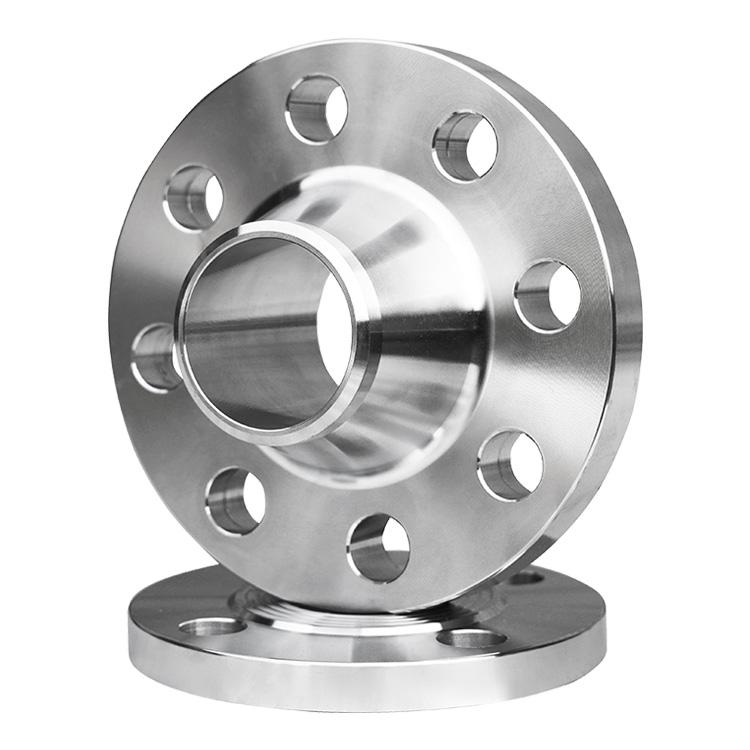
| Material | Pressure Resistance | Corrosion Resistance | Temperature Resistance | Application |
|---|---|---|---|---|
| Carbon Steel | High | Medium | Medium | General pressure vessels |
| SS304 | High | Good | High | Standard industrial systems |
| SS316L | High | Excellent | High | Chemical + marine systems |
| Duplex Steel | Very High | Very High | High | High-pressure offshore systems |
| Alloy Steel | Very High | Medium | Very High | Extreme pressure environments |
Source: ASTM A182, ASTM A240, ASME Material Standards, ASM International Handbook
From real engineering projects, I have seen:
Wrong material → corrosion failure within months
Weak grade → deformation under pressure cycles
Poor selection → costly shutdown and repair
Material selection is not cost-saving—it is risk control.
At Zhejiang Songlin Flange Co., Ltd., every Precision Tube Sheet for Pressure Vessel Heat Exchange Equipment is manufactured as a safety-critical component.
We check:
Chemical composition
Mechanical strength
Surface defects
Certification traceability
We ensure:
High flatness accuracy
Controlled stress removal
Stable plate structure
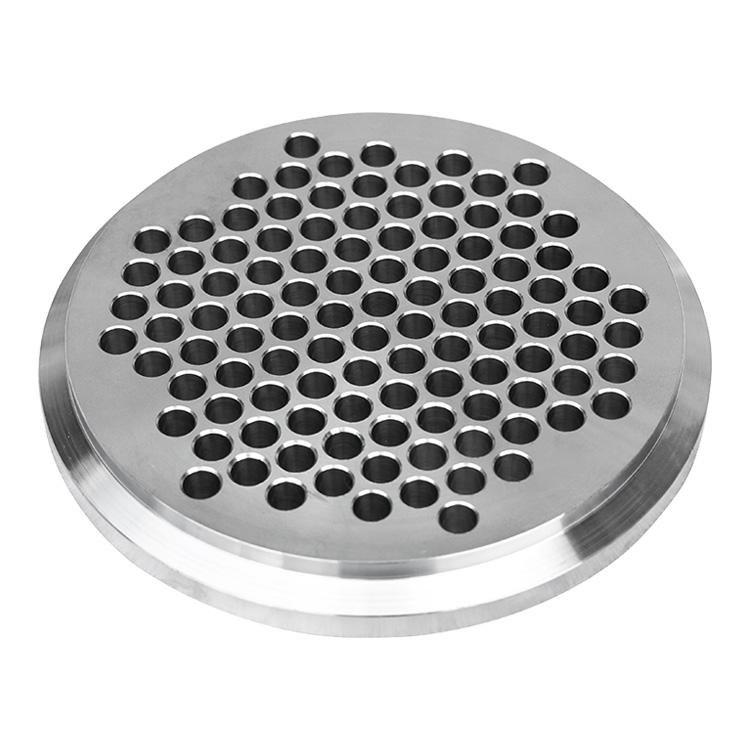
This is the most important step:
Multi-axis coordinate drilling
Tight tolerance control (±0.05 mm)
Uniform hole spacing
Burr-free finishing
We improve:
Corrosion resistance
Sealing performance
Surface smoothness
We verify:
Flatness
Hole diameter accuracy
Pitch consistency
Surface roughness
Structural integrity
| Parameter | Industry Standard | OEM Precision Level |
|---|---|---|
| Hole Tolerance | ±0.1 mm | ±0.05 mm CNC control |
| Flatness | ≤0.5 mm/m | ≤0.3 mm/m precision machining |
| Surface Roughness | Ra 3.2 μm | Ra 1.6–3.2 μm |
| Pitch Accuracy | ±0.15 mm | ±0.1 mm CNC layout |
Source: ASME BPVC Section VIII, TEMA Standards, Industrial Machining Engineering References
The Precision Tube Sheet for Pressure Vessel Heat Exchange Equipment is widely used in:
Steam condensers
Cooling water systems
Heat recovery units
Refinery heat exchangers
Gas separation systems
Hydrocarbon processing equipment
Offshore cooling systems
Seawater heat exchangers
Desalination systems
Reactor cooling systems
Acid heat exchangers
Industrial separation units
Central cooling plants
Industrial chillers
Thermal management systems
Because they ensure:
Safe pressure separation
Stable heat transfer
Long-term sealing reliability
Reduced maintenance downtime
It is used to support tubes and separate fluids safely under high-pressure conditions in heat exchange equipment.
Because small errors in hole alignment or flatness can lead to leakage, vibration failure, or pressure imbalance.
SS316L and duplex steel are preferred for high-pressure and corrosive environments.
It ensures accurate hole positioning, consistent spacing, and high dimensional stability.
Yes, we design fully customized tube sheets based on pressure, temperature, and application requirements.
When I design a Precision Tube Sheet for Pressure Vessel Heat Exchange Equipment, material selection is always the first real engineering decision—not an afterthought.
In pressure vessel systems, material choice directly determines:
Service life
Corrosion resistance
Pressure safety margin
Maintenance frequency
From my experience, many early failures are not caused by design mistakes, but by incorrect material selection.
A common misunderstanding in the industry is: “stronger material = better performance.”
But in real pressure vessel heat exchangers, I focus on:
Corrosion behavior under fluid exposure
Thermal fatigue resistance
Weldability and expandability
Long-term dimensional stability
| Property | Carbon Steel | SS304 | SS316L | Duplex Steel |
|---|---|---|---|---|
| Corrosion Resistance | Low | Medium | High | Very High |
| Pressure Strength | High | High | High | Very High |
| Maintenance Cost | High | Medium | Low | Very Low |
| Service Life (Typical) | 3–8 years | 8–12 years | 12–20 years | 20+ years |
Source: ASTM A240, ASME BPVC Section II, NACE Corrosion Engineering Guidelines
In chemical and pressure systems, I often recommend SS316L because:
Excellent chloride resistance
Stable in acidic environments
Good weldability
Reliable long-term performance
It is the “balanced choice” between cost and durability.
For offshore and high-pressure applications, duplex steel is preferred because:
Higher yield strength than standard stainless steel
Superior stress corrosion resistance
Excellent fatigue performance
But it requires higher manufacturing precision.
As a manufacturer, I always say:
A tube sheet is not just machined—it is engineered.
We strictly inspect:
Chemical composition (spectro analysis)
Mechanical strength testing
Ultrasonic flaw detection
Surface defect inspection
Any substandard material is rejected immediately.
For large or high-pressure tube sheets, we apply:
Stress relieving
Internal structure stabilization
Deformation control
This step reduces long-term warping risk.
This is where industrial-grade accuracy is created.
We control:
Flatness within ≤0.3 mm/m
Surface consistency across large diameter plates
Dimensional stability under machining stress
This is the most sensitive stage.
We ensure:
Hole accuracy ±0.05 mm
Uniform pitch distribution
Burr-free inner surfaces
No micro-cracks at hole edges
Even a 0.1 mm error can affect tube sealing integrity.
Depending on application, we apply:
Pickling and passivation
Mechanical polishing
Anti-oxidation treatment
This improves long-term corrosion resistance.
We check:
Flatness deviation
Hole alignment consistency
Surface roughness (Ra value)
Material integrity under simulated stress
| Parameter | Standard Industry Level | Our Manufacturing Level |
|---|---|---|
| Hole Tolerance | ±0.1 mm | ±0.05 mm |
| Flatness | ≤0.5 mm/m | ≤0.3 mm/m |
| Pitch Accuracy | ±0.15 mm | ±0.1 mm |
| Surface Roughness | Ra 3.2 μm | Ra 1.6–3.2 μm |
Source: ASME BPVC Section VIII, TEMA Standards, Industrial Machining Engineering Handbook
The Precision Tube Sheet for Pressure Vessel Heat Exchange Equipment is widely used in multiple high-demand industries.
Steam condensers
Boiler heat exchangers
Cooling tower systems
Focus: continuous operation and thermal stability
Refinery heat exchangers
Crude oil cooling systems
Gas separation units
Focus: pressure resistance and corrosion control
Seawater cooling systems
Offshore platform exchangers
Desalination systems
Focus: chloride resistance and fatigue strength
Acid heat exchangers
Reactor cooling systems
Industrial fluid separation units
Focus: corrosion resistance and sealing safety
Central cooling plants
Industrial chillers
Thermal energy systems
Focus: efficiency and long-term stability
From my field experience, I always emphasize:
Tube sheet = system “foundation”
Failure = entire system shutdown
Precision = operational safety
When selecting a Precision Tube Sheet for Pressure Vessel Heat Exchange Equipment, I always recommend evaluating:
Operating pressure range
Fluid corrosion level
Temperature fluctuation cycle
Maintenance accessibility
Expected service life
Do not overspec material without need (cost efficiency matters)
Always match material with fluid chemistry
Prefer CNC-controlled drilling for high-density layouts
Ensure flatness before tube expansion process
When I finalize a Precision Tube Sheet for Pressure Vessel Heat Exchange Equipment, I always treat selection as a system-level decision, not just a component purchase.
In real engineering projects, I focus on one core idea:
A tube sheet must match the system’s pressure, fluid behavior, and maintenance strategy—not just its drawing dimensions.
Pressure is the first filter.
I always confirm:
Working pressure
Test pressure
Safety margin requirement (ASME-based)
Higher pressure means:
Thicker tube sheet
Stronger material (often SS316L or duplex)
Tighter machining tolerance
Different fluids behave very differently:
Water → low corrosion
Steam → oxidation risk
Acid → aggressive attack
Chloride media → pitting corrosion
Wrong selection here is the fastest way to shorten system life.
If the system frequently heats and cools:
Stress fatigue increases
Tube expansion varies
Sealing load becomes unstable
In such cases, duplex steel or SS316L performs much better.
I always ask customers:
Can the system be shut down easily?
Are tubes replaceable?
Is cleaning required frequently?
Because design must match real operation conditions, not just theory.
| Industry | Pressure Level | Recommended Material | Key Design Focus |
|---|---|---|---|
| Power Plants | High | SS316L / Alloy Steel | Thermal stability |
| Petrochemical | Very High | Duplex Steel | Corrosion resistance |
| Marine Systems | High | Duplex / SS316L | Chloride protection |
| Chemical Plants | Medium-High | SS316L | Chemical resistance |
| HVAC Systems | Medium | SS304 | Cost efficiency |
Source: ASME BPVC Section VIII, TEMA Heat Exchanger Standards, Industrial Heat Transfer Engineering Guide (Kern)
From my experience in manufacturing and field feedback:
Correct selection reduces maintenance cost by 30–50%
Proper material matching increases lifespan by 2–3x
Balanced design prevents premature leakage failures
It is used to support heat exchanger tubes and maintain complete separation between different fluids under high pressure conditions.
Because it provides strong corrosion resistance, good mechanical strength, and stable performance under high temperature and pressure.
Most failures come from corrosion, improper material selection, poor machining accuracy, or thermal fatigue stress.
CNC machining ensures accurate hole positioning, uniform pitch distribution, and strict flatness control across large surfaces.
Yes. We manufacture fully customized tube sheets based on pressure, temperature, fluid type, and project drawings.
| Manufacturing Level | Risk of Leakage | Maintenance Frequency | Expected Lifespan |
|---|---|---|---|
| Low Precision Fabrication | High | Frequent | 3–6 years |
| Standard Industrial Grade | Medium | Occasional | 8–12 years |
| High-Precision OEM CNC | Low | Minimal | 12–20+ years |
Source: Industrial Heat Exchanger Reliability Studies, ASME Maintenance Engineering Reports, TEMA Standards
A Precision Tube Sheet for Pressure Vessel Heat Exchange Equipment is not just a mechanical plate—it is the structural heart of the entire heat exchanger system.
From my engineering and manufacturing experience, I have learned that long-term system reliability depends on three things:
Material selection matched to real fluid conditions
CNC-level precision manufacturing
Proper engineering design based on pressure and thermal behavior
At Zhejiang Songlin Flange Co., Ltd., we combine advanced CNC machining technology, strict inspection standards, and years of industrial experience to produce high-performance tube sheets for global industries including power generation, petrochemical processing, marine engineering, HVAC, and chemical systems.


Copyright © 2022 Zhejiang Songlin Flange Co., Ltd.
SitemapThis website uses cookies to ensure you get the best experience on our website.

 Español
 Pусский
 Français
 Deutsch
 日本語
日本語 한국어
한국어 العربية
 Italiano
 Nederlands



 WhatsApp
 Phone
Phone
Comment
(0)