
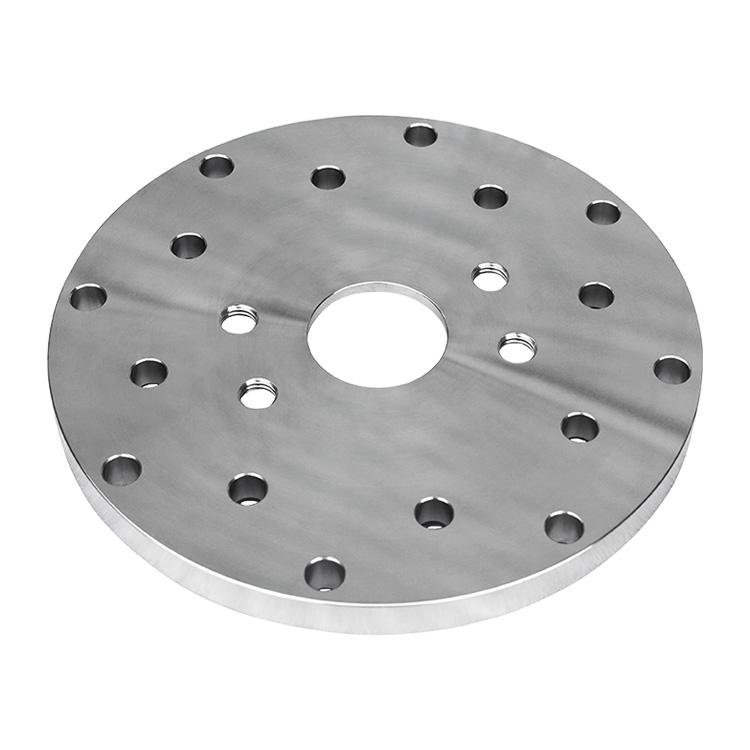
Standard flange for industrial pipeline connection systems is one of the most important components in modern piping design, fabrication, and maintenance. In industrial facilities, flanges are used to connect pipes, valves, pumps, pressure vessels, and other equipment in a secure, detachable, and standardized way. Because industrial pipelines often operate under high pressure, high temperature, corrosion, vibration, and demanding flow conditions, the choice of the correct standard flange plays a critical role in safety, sealing performance, installation efficiency, and long-term system reliability.
This page provides a clear, SEO-friendly overview of standard flange for industrial pipeline connection systems, including definitions, types, material options, dimensional standards, performance advantages, selection guidance, common applications, and a practical specification table. The content is written in English and organized for direct use in blog posts, directory pages, industrial resource pages, and product category pages.
A standard flange is a mechanical connection part used to join two sections of piping or to connect pipes with equipment such as valves, pumps, and tanks. In industrial pipeline connection systems, the flange provides a bolted joint that can be assembled and disassembled more easily than welded joints. Most flange connections use a gasket between two flange faces to improve sealing and prevent leakage.
Standard flanges are manufactured according to recognized dimensions, pressure ratings, face types, and material specifications. These standards ensure interchangeability, predictable performance, and compatibility across industrial sectors. A standard flange for industrial pipeline connection systems is not just a simple connector; it is a precision-engineered component designed to support pressure containment, alignment, maintenance access, and mechanical stability.
In practical use, flanges are selected based on pipe size, pressure class, temperature range, medium type, corrosion resistance, installation environment, and applicable regional standards. Common Industrial Flange systems include ASME/ANSI, DIN, EN, JIS, and API-based configurations, depending on market and application.
Industrial piping systems require components that can maintain structural integrity and sealing performance under difficult operating conditions. Standard flanges matter because they help achieve the following:
For industries that operate continuously, even a small leak or connection failure can cause downtime, product loss, environmental risk, or safety incidents. That is why the standard flange remains a core element in industrial pipeline connection systems across oil and gas, petrochemical, chemical processing, water treatment, power generation, shipbuilding, food processing, and general manufacturing.
Standard flanges for industrial pipeline connection systems are designed with multiple technical features that support reliable performance:
These features make standard flanges suitable for a wide range of industrial pipeline connection systems where safety, durability, and maintenance efficiency are essential.
There are several common flange types used in industrial pipeline connection systems. Each type has a specific structural design and application advantage.
Weld neck flanges feature a long tapered hub that is welded to the pipe. This design helps distribute stress and is often used in high-pressure, high-temperature, or critical service applications. Weld neck flanges are valued for their strength and fatigue resistance.
Slip-on flanges are fitted over the pipe and then welded in place. They are easier to align and install than weld neck flanges and are widely used in lower-pressure industrial systems where installation speed is important.
Blind flanges are used to close the end of a pipeline, valve opening, or pressure vessel nozzle. They do not have a bore and are commonly used for isolation, testing, inspection, or future expansion points.
Socket weld flanges are designed for smaller diameter, high-pressure piping. The pipe is inserted into the socket and welded around the outer edge. They are commonly used where strong leakage control is needed in compact piping systems.
Threaded flanges connect to pipes with threads rather than welding. They are suitable for applications where welding is not practical or where disassembly is needed without hot work. They are commonly found in smaller pipe sizes and moderate-duty service.
Lap joint flanges are used with a stub end and are especially useful in systems that require frequent dismantling or where alignment is a concern. They are often selected for corrosion-resistant piping systems because the flange itself does not contact the process fluid directly.
The face type of a standard flange for industrial pipeline connection systems affects how the gasket seals and how the joint performs under pressure.
| Face Type | Description | Typical Use |
|---|---|---|
| Flat Face (FF) | Entire flange face is flat and fully contacts the gasket. | Common in low-pressure systems and some cast iron applications. |
| Raised Face (RF) | Gasket seals on a raised circular area around the bore. | Most common industrial flange face type. |
| Ring Type Joint (RTJ) | Uses a metal ring gasket seated in a machined groove. | High-pressure, high-temperature, and critical sealing service. |
| Male and Female (M/F) | One flange has a raised male face, the other a matching female groove. | Specialty sealing applications. |
| Tongue and Groove (T&G) | Matching tongue and groove faces create a tight sealing interface. | Specific process and equipment connections. |
Choosing the correct flange face type is essential for achieving proper gasket compression, leak prevention, and pressure integrity in industrial pipeline connection systems.
Material selection is one of the most important considerations when choosing a standard flange. The best material depends on system pressure, temperature, corrosion exposure, and the nature of the conveyed fluid or gas.
| Material | Key Properties | Typical Applications |
|---|---|---|
| Carbon Steel | Strong, cost-effective, widely available | General industrial piping, water, oil, gas, process systems |
| Stainless Steel | Excellent corrosion resistance and cleanability | Chemical processing, food, pharmaceutical, marine, water systems |
| Alloy Steel | Improved strength and heat resistance | High-temperature and high-pressure industrial service |
| Duplex Stainless Steel | High strength and strong resistance to corrosion and stress cracking | Offshore, chemical, and aggressive service environments |
| Nickel Alloy | Superior performance in highly corrosive or extreme conditions | Special chemical, marine, and severe process environments |
| Cast Iron | Economical and rigid, but lower in toughness compared to steel | Low-pressure water and utility systems |
For long service life and reliable performance, the flange material must match the process conditions and the pipe material. Material compatibility is especially important in corrosive, high-temperature, or cyclic-pressure systems.
Industrial flanges are produced in standard pressure classes that indicate their pressure-carrying capability. The exact ratings vary by standard system, but the concept is consistent: the higher the class, the greater the pressure and often temperature capability, depending on material and design.
| Pressure Class | General Meaning | Typical Use |
|---|---|---|
| Class 150 | Low to moderate pressure service | Utility piping, water, low-pressure process lines |
| Class 300 | Moderate pressure service | General industrial processing, steam, oil, gas |
| Class 600 | Higher pressure service | More demanding process and energy systems |
| Class 900 | High-pressure service | Critical industrial pipeline systems |
| Class 1500 | Very high-pressure service | Severe-duty and specialized process systems |
| Class 2500 | Extreme-pressure service | Specialized high-integrity applications |
It is important to note that pressure class alone does not determine suitability. Actual selection must consider flange material, temperature, face type, gasket, bolt load, and the piping code or standard used in the project.
Standard flange for industrial pipeline connection systems may follow different international standards depending on project location and industry requirements. Some of the most common standards include:
Because different standards may have different bolt patterns, thicknesses, and dimensional tolerances, it is essential to confirm standard compatibility before procurement or installation. A flange that appears similar may not be interchangeable if it follows a different standard series.
Using a standard flange instead of a non-standard or custom connection provides many operational benefits.
Flanged joints are bolted connections, which means they can be opened without cutting the pipe. This is a major advantage for maintenance, shutdowns, system upgrades, and equipment replacement.
When properly selected and installed, standard flanges provide strong mechanical support and dependable sealing. This reliability is vital in high-pressure and critical service pipeline systems.
Because the dimensions are standardized, components from different sources can often be matched if they comply with the same standard. This simplifies spare parts management and project planning.
Industrial facilities benefit from quick inspection, flange rotation, gasket replacement, and reassembly. This reduces downtime and supports planned maintenance schedules.
Standard flanges can be used in many industries and services, from clean utility water to harsh chemical environments. The same basic connection method can be adapted to different requirements by changing the material, pressure class, face type, or gasket.
Properly engineered flanged joints help control leaks and maintain system integrity. In industrial pipeline connection systems, this contributes directly to worker safety, environmental protection, and process continuity.
Choosing the correct standard flange for industrial pipeline connection systems requires a careful review of the operating conditions and project specifications. Important selection factors include:
A well-selected flange reduces installation problems, extends system life, and lowers the risk of leaks or premature failure. For best results, the flange should always be chosen as part of a complete piping design that includes gasket selection, bolt material, torque procedure, and inspection plan.
Standard flange for industrial pipeline connection systems is used across a broad range of industries and services. Common applications include:
Each industry may place different demands on the flange depending on its operating pressure, temperature range, cleanliness standards, corrosion exposure, and maintenance requirements. This is why flange design is such a critical detail in industrial pipeline connection systems.
The following table provides a general overview of typical flange specification elements. Actual dimensions vary by standard, size, and pressure class, so project engineers should always confirm the official standard tables before use.
| Specification Item | Description |
|---|---|
| Nominal Pipe Size (NPS) | Indicates the pipe and flange size designation. |
| Pressure Class | Defines the pressure rating, such as Class 150, 300, 600, etc. |
| Flange Face Type | FF, RF, RTJ, M/F, or T&G depending on sealing requirement. |
| Bolt Hole Count | Number of bolt holes in the flange circle. |
| Bolt Hole Diameter | Size of the holes used for flange bolts. |
| Bolt Circle Diameter | Diameter of the circle on which bolt holes are placed. |
| Outer Diameter | Total outside diameter of the flange body. |
| Thickness | Overall flange thickness, which affects strength and weight. |
| Bore Diameter | Internal opening that matches the pipe flow path. |
| Facing Finish | Surface roughness and machining finish on the sealing face. |
| Material Grade | Specifies the metal used for fabrication. |
Even the best standard flange for industrial pipeline connection systems will not perform correctly if installation is poor. Proper flange assembly is essential for preventing leakage and ensuring long-term performance.
Installation quality has a direct impact on sealing performance. Many flange leaks are caused not by product defects, but by incorrect alignment, unsuitable gaskets, poor bolt loading, or surface contamination.
Industrial pipeline connection systems using standard flanges can face several challenges if the design or installation is not properly managed:
To reduce these risks, engineers often combine correct flange design with inspection schedules, bolt load management, corrosion control, and proper maintenance procedures.
From an SEO perspective, pages that target industrial buyers, engineers, procurement teams, and technical readers should use highly relevant phrases naturally throughout the content. The keyword standard flange for industrial pipeline connection systems describes a specific industrial search intent and can help the page rank for informational, commercial, and specification-related queries.
Useful related terms include:
Using these phrases in a natural way helps search engines understand the topic, while also improving relevance for readers looking for technical guidance and specification-level information.
The standard flange for industrial pipeline connection systems is a fundamental component in modern industrial engineering. It provides a standardized, secure, and maintainable method for connecting pipes and equipment across a wide range of applications. By selecting the right flange type, face type, material, and pressure class, industries can improve sealing performance, reduce downtime, and support safe and efficient operations.
Whether used in oil and gas, chemical processing, water treatment, power generation, or general manufacturing, the standard flange remains essential to pipeline integrity and system flexibility. Understanding flange standards, materials, dimensions, and installation practices is key to building dependable industrial pipeline connection systems that perform over the long term.
For industrial websites, blogs, and category pages, this topic offers strong SEO value because it combines technical depth, high-intent keywords, and practical specification information. A well-structured page on standard flange for industrial pipeline connection systems can attract engineers, buyers, and technical decision-makers searching for reliable industry knowledge.


Copyright © 2022 Zhejiang Songlin Flange Co., Ltd.
SitemapThis website uses cookies to ensure you get the best experience on our website.

 Español
 Pусский
 Français
 Deutsch
 日本語
日本語 한국어
한국어 العربية
 Italiano
 Nederlands



 WhatsApp
 Phone
Phone
Comment
(0)