
High-Quality Non-Standard Flanges for Industrial Piping Systems
Have you ever found that a standard flange simply doesn't fit your piping system? Many engineers, EPC contractors, and equipment manufacturers face this challenge when working on industrial projects. Standard flanges are suitable for most common applications, but complex equipment, pressure vessels, and customized pipelines often require dimensions or specifications that standard products cannot provide.
As a professional manufacturer of High-Quality Non-standard Flanges for Industrial Piping Systems, we work closely with customers to solve these challenges every day. At Zhejiang Songlin Flange Co., Ltd., we believe every piping system deserves components that fit perfectly—not products that require expensive modifications during installation.
Located in Longwan, Wenzhou, widely recognized as China's Valve City, our company combines advanced CNC machining technology, modern inspection equipment, and years of manufacturing experience to produce precision-engineered non-standard flanges for customers worldwide.
Our product range includes slip-on flanges, welding neck flanges, blind flanges, threaded flanges, lap joint flanges, socket weld flanges, Pressure Vessel Flanges, large-diameter flanges, Tube Sheets, and fully customized non-standard flanges.
Every project begins with understanding the customer's technical requirements. Whether the application involves high pressure, corrosive chemicals, elevated temperatures, or oversized equipment, our engineering team develops reliable flange solutions that improve installation efficiency and long-term system reliability.
In this guide, we share our manufacturing experience, explain how to choose the right Custom Flange, compare materials and flange types, and provide practical advice that helps industrial buyers make informed purchasing decisions.
On This Page
Understanding Non-Standard Flanges
Why High-Quality Non-Standard Flanges Matter
How We Manufacture Custom Flanges
Choosing the Right Material
Industrial Applications
Selection Guide
Frequently Asked Questions
Conclusion
Understanding Non-Standard Flanges
A Non-Standard Flange is a flange manufactured according to customer drawings or project specifications instead of fixed international standards.
Although international standards such as ASME, DIN, EN, and JIS cover most industrial piping systems, many industries require customized flange dimensions because of unique equipment designs or special operating conditions.
Typical customization includes:
Outside diameter
Inside diameter
Thickness
Bolt circle diameter
Bolt quantity
Bolt hole size
Facing design
Pressure rating
Material selection
Surface treatment
Unlike standard catalog products, every custom flange is designed to meet a specific engineering requirement.
This flexibility makes non-standard flanges an essential component in modern industrial manufacturing.
During our years of manufacturing experience, we've found that customers typically request customized flanges for several practical reasons.
Many OEM manufacturers develop proprietary equipment with exclusive connection dimensions.
Rather than redesigning expensive machinery, they choose custom flanges that perfectly match their equipment.
Power plants and pressure vessels often operate at pressures far beyond ordinary industrial pipelines.
These applications require thicker flanges, stronger materials, and customized sealing surfaces.
Some industrial equipment has very limited installation space.
Engineers may reduce flange diameter or redesign bolt patterns to improve assembly efficiency.
Chemical plants frequently handle aggressive media.
Standard carbon steel may not provide adequate corrosion resistance.
Customized stainless steel or alloy flanges significantly improve service life.
Large tanks, reactors, and pressure vessels often require oversized flanges exceeding standard dimensions.
These products must be manufactured according to engineering drawings.
Why High-Quality Non-Standard Flanges Matter
Some buyers focus primarily on price.
From our experience, however, flange quality affects much more than the purchase cost.
It directly influences:
Equipment safety
Leakage prevention
Maintenance costs
Shutdown frequency
Overall operating efficiency
Choosing a high-quality flange reduces long-term operating expenses.
Precision machining creates smoother sealing surfaces.
When combined with appropriate gaskets and proper bolt tightening, these surfaces significantly reduce leakage risks.
This becomes especially important in:
Chemical processing
Steam systems
High-pressure pipelines
Offshore engineering
Premium raw materials and strict quality inspection increase durability.
A properly manufactured flange may remain in service for decades under suitable operating conditions.
Lower replacement frequency means lower maintenance costs.
Accurate machining improves dimensional consistency.
Contractors spend less time modifying bolt holes or correcting alignment issues.
This saves labor while reducing project delays.
Industrial piping systems often transport hazardous media.
Reliable flange connections reduce the possibility of:
Fluid leakage
Pressure loss
Equipment damage
Environmental contamination
For industries handling flammable or toxic substances, dependable flange performance is critical.
Although high-quality flanges may require a slightly higher initial investment, they often provide lower lifetime costs through:
Longer service life
Fewer repairs
Less downtime
Better sealing
Reduced replacement frequency
For industrial buyers, total lifecycle cost is usually more important than the purchase price alone.
| Feature | Standard Flange | High-Quality Non-Standard Flange |
|---|---|---|
| Dimensions | Fixed Standards | Fully Customized |
| Design Flexibility | Limited | Excellent |
| Equipment Compatibility | General Purpose | Project Specific |
| Material Options | Standard Grades | Wide Material Selection |
| Machining Precision | Standard | Customer Requirements |
| Application | General Pipelines | Specialized Equipment |
Source: ASME B16.5, EN 1092-1, Zhejiang Songlin Flange Engineering Experience.
How We Manufacture High-Quality Non-Standard Flanges
Every successful custom flange starts long before machining begins.
We believe communication with customers is just as important as manufacturing itself.
Before production begins, we carefully review:
Engineering drawings
Operating pressure
Working temperature
Medium type
Material specifications
Surface requirements
Inspection standards
This process helps avoid unnecessary revisions later.
Our engineering team evaluates whether the proposed design can achieve the desired performance.
Sometimes we recommend:
Increasing flange thickness
Optimizing bolt layout
Selecting stronger materials
Improving sealing surfaces
Small design improvements often increase reliability without significantly increasing production cost.
Only qualified raw materials enter production.
Depending on project requirements, we manufacture flanges using:
Carbon Steel
Stainless Steel
Alloy Steel
Duplex Stainless Steel
Nickel Alloy
Material certificates are available when requested.
Modern CNC equipment provides:
Stable dimensional accuracy
Excellent surface finish
Consistent bolt positioning
Repeatable production quality
Advanced machining also shortens production cycles while maintaining high precision.
Before shipment, every flange undergoes detailed inspection.
Typical inspections include:
Dimension verification
Surface finish inspection
Material identification
Hardness testing
Visual inspection
Non-destructive testing when required
Quality documentation can accompany shipments according to customer specifications.
Proper packaging is often overlooked.
However, damaged sealing surfaces may cause installation problems.
We therefore use protective covers, rust prevention treatments, and export-grade packaging to ensure products arrive safely at the customer's facility.
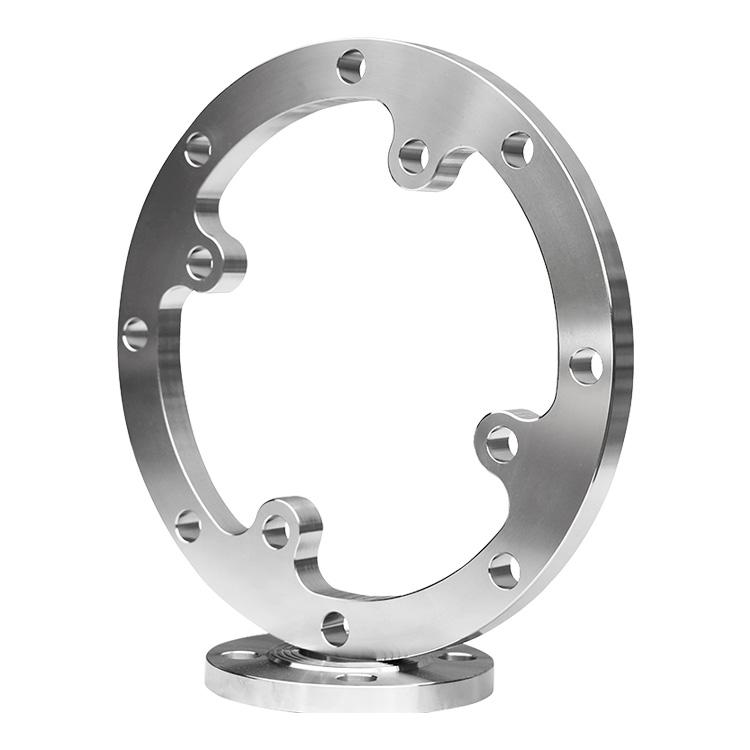
Throughout the entire manufacturing process, our goal remains simple: to deliver High-Quality Non-Standard Flanges for Industrial Piping Systems that meet exact engineering requirements, perform reliably in demanding environments, and provide long-term value for customers around the world.
Choosing the Right Material for Non-Standard Flanges
Material selection is one of the most important decisions when designing a High-Quality Non-Standard Flange for Industrial Piping Systems. Even the most accurate machining cannot compensate for an unsuitable material. The correct choice depends on pressure, temperature, corrosion resistance, and the working medium.
When customers contact us, we always recommend discussing the operating conditions before confirming the material. This helps ensure the flange performs reliably throughout its service life rather than simply meeting the drawing requirements.
Carbon steel remains one of the most widely used materials because of its excellent strength and competitive cost.
Advantages
High mechanical strength
Easy machining
Cost-effective
Suitable for medium-pressure systems
Widely available
Typical Applications
Oil pipelines
Natural gas transmission
Water supply systems
Industrial utilities
General manufacturing
Common material grades include ASTM A105 and ASTM A350 LF2.
Stainless steel is preferred when corrosion resistance is the main concern.
Its chromium content forms a protective oxide layer, helping the flange resist rust and chemical attack.
Advantages
Excellent corrosion resistance
Smooth surface finish
Long service life
Low maintenance
Good weldability
Common Industries
Food processing
Pharmaceutical manufacturing
Chemical plants
Water treatment
Marine engineering
Popular grades include ASTM A182 F304, F304L, F316, and F316L.
High-temperature and high-pressure systems require stronger materials.
Alloy steel maintains excellent strength under demanding operating conditions.
It is commonly used in:
Thermal power plants
Steam pipelines
Petrochemical plants
Refineries
Pressure vessels
Typical grades include ASTM A182 F11, F22, and F91.
Some projects require both high strength and superior corrosion resistance.
Duplex stainless steel provides:
Higher yield strength than standard stainless steel
Better resistance to chloride corrosion
Improved fatigue performance
Excellent seawater resistance
It is widely used in offshore engineering and desalination projects.
For extremely corrosive environments, nickel alloys offer outstanding performance.
Although more expensive, they provide excellent resistance to:
Strong acids
High temperatures
Oxidizing chemicals
Aggressive process media
These materials are commonly selected for specialized chemical processing equipment.
| Material | Corrosion Resistance | High Temperature Performance | Typical Industry | Relative Cost |
|---|---|---|---|---|
| Carbon Steel | Moderate | Good | Oil & Gas | Low |
| Stainless Steel 304 | High | Good | Food & Water | Medium |
| Stainless Steel 316 | Excellent | Good | Chemical | Medium-High |
| Alloy Steel | Moderate | Excellent | Power Generation | High |
| Duplex Stainless Steel | Outstanding | Excellent | Offshore | High |
| Nickel Alloy | Exceptional | Exceptional | Chemical Processing | Very High |
Source: ASTM A182 Specification, ASME Boiler & Pressure Vessel Code, ASM International Material Data.
Industrial Applications
Every industry presents different engineering challenges. Over the years, we have manufactured customized flange solutions for customers operating in a wide range of industrial sectors.
Rather than offering one-size-fits-all products, we develop flange solutions that match the exact operating conditions of each application.
Oil and gas facilities often operate under:
High pressure
High temperature
Corrosive fluids
Continuous production schedules
Pipeline reliability is essential because even a small leak can lead to expensive downtime.
Many customers request customized welding neck flanges with reinforced hubs and increased wall thickness to improve structural integrity.
Chemical plants handle aggressive media that can quickly damage ordinary materials.
Depending on the chemical process, engineers may specify:
Stainless steel
Duplex stainless steel
Nickel alloys
Special sealing faces
Custom bolt patterns
Customized manufacturing ensures every flange matches the processing equipment perfectly.
Power stations require components capable of handling high-pressure steam and elevated temperatures for long periods.
In these systems, reliability is far more important than reducing initial purchase costs.
Our alloy steel non-standard flanges are frequently supplied for:
Steam pipelines
Boiler systems
Turbine equipment
Heat exchangers
Pressure vessels rarely use identical connection dimensions.
Manufacturers often provide complete engineering drawings specifying:
Flange diameter
Bolt arrangement
Thickness
Welding preparation
Sealing face design
Precision machining ensures accurate assembly and dependable sealing performance.
Saltwater environments accelerate corrosion.
To improve service life, marine customers commonly choose:
Duplex stainless steel
Stainless steel 316L
Corrosion-resistant coatings
Precision-machined sealing surfaces
Reliable flange performance reduces maintenance requirements for offshore equipment.
Large municipal and industrial water treatment facilities frequently require oversized flanges that exceed standard dimensions.
Custom manufacturing allows engineers to optimize equipment layouts without compromising installation efficiency.
A manufacturer of chemical reactors approached us with a challenging project.
Their equipment required:
A flange over 1,600 mm in diameter
A customized bolt hole arrangement
Extra-thick sealing surfaces
Stainless steel construction
No international standard could satisfy these requirements.
After reviewing the engineering drawings, our team developed a customized manufacturing plan using CNC machining and multiple quality inspections.
The finished products were installed without modification, reducing installation time and helping the customer complete the project ahead of schedule.
How to Choose the Right Non-Standard Flange
Choosing the correct flange involves much more than matching dimensions.
We recommend evaluating the following factors before placing an order.
Pressure determines flange thickness, bolt size, and material strength.
Higher pressure usually requires:
Thicker flanges
Higher-strength materials
Better sealing surfaces
Stronger bolts
Ignoring pressure requirements may reduce equipment safety.
Temperature directly affects material performance.
For example:
Carbon steel performs well at moderate temperatures.
Alloy steel withstands high-temperature steam.
Stainless steel performs well in many corrosive environments.
Pressure and temperature should always be considered together.
The working fluid influences material selection.
Consider whether the medium contains:
Chlorides
Acids
Alkalis
Abrasive particles
High moisture
Choosing the right material greatly extends service life.
Different applications require different flange designs.
Common options include:
Slip-On Flange
Welding Neck Flange
Blind Flange
Threaded Flange
Socket Weld Flange
Lap Joint Flange
Pressure Vessel Flange
Large Diameter Flange
Fully Customized Non-Standard Flange
Each design offers different advantages depending on installation and maintenance requirements.
Before selecting a supplier, we recommend asking the following questions:
Does the factory have advanced CNC machining equipment?
Can they manufacture according to engineering drawings?
Do they provide material certificates?
What inspection methods are available?
Can they perform non-destructive testing (NDT)?
Do they have export experience?
Can they provide technical support before production?
A qualified manufacturer should offer more than competitive pricing—they should also provide engineering expertise, stable quality, and reliable after-sales support.
| Production Stage | Standard Flanges | Non-Standard Flanges |
|---|---|---|
| Design | Standard Dimensions | Customer Drawings |
| Engineering Review | Limited | Detailed Technical Analysis |
| CNC Programming | Standard Programs | Customized Programming |
| Material Selection | Standard Grades | Project-Specific Selection |
| Quality Inspection | Routine Inspection | Customized Inspection Plan |
| Final Approval | Standard Procedure | Customer Confirmation Before Production |
Source: ISO 9001:2015 Quality Management System, ASME Manufacturing Practices, Zhejiang Songlin Flange Production Experience.
Based on our manufacturing experience, these recommendations help customers achieve better project outcomes:
Provide detailed engineering drawings whenever possible.
Clearly specify pressure, temperature, and process media.
Confirm material grades before production begins.
Request inspection reports for critical applications.
Discuss packaging requirements for international shipping.
Choose a manufacturer with proven experience in custom flange production rather than focusing solely on price.
Frequently Asked Questions (FAQ)
To help us prepare an accurate quotation and reduce project lead time, we recommend providing as much technical information as possible.
The following details are especially useful:
Technical drawings (2D PDF, DWG, or 3D files)
Outside Diameter (OD)
Inside Diameter (ID)
Thickness
Bolt Circle Diameter (BCD/PCD)
Number and size of bolt holes
Flange facing type (RF, FF, RTJ, or custom)
Material grade
Operating pressure and temperature
Applicable standards or inspection requirements
Order quantity
If complete drawings are unavailable, our engineering team can assist in developing a suitable solution based on your equipment specifications and application.
Yes.
This is one of our core capabilities.
Most of the High-Quality Non-Standard Flanges for Industrial Piping Systems we produce are manufactured entirely according to customer drawings or physical samples.
Before production begins, our engineers carefully review every design to verify dimensions, machining feasibility, material selection, and quality requirements. If we identify opportunities to improve manufacturability or reduce production costs without affecting performance, we discuss these suggestions with our customers before moving forward.
Quality control is integrated into every stage of manufacturing.
Depending on customer requirements, inspections may include:
Raw material verification
Chemical composition analysis
Mechanical property testing
Dimensional inspection
Surface roughness measurement
Hardness testing
Ultrasonic Testing (UT)
Magnetic Particle Testing (MT)
Penetrant Testing (PT)
Positive Material Identification (PMI)
Inspection reports and material certificates can be provided upon request.
Our custom flange solutions are widely used in:
Oil and gas
Petrochemical processing
Power generation
Pressure vessels
Shipbuilding
Marine engineering
Water treatment
Chemical plants
Mining
Heavy equipment manufacturing
Food processing
Pharmaceutical production
Every industry has different technical requirements, which is why customized engineering is often the most practical solution.
Some companies attempt to modify standard flanges by enlarging bolt holes or machining sealing faces after purchase.
While this may seem less expensive initially, it often creates additional risks, including:
Reduced sealing performance
Structural weakness
Installation difficulties
Increased maintenance costs
Potential safety issues
A professionally manufactured custom flange is designed specifically for the application, resulting in better reliability, easier installation, and a longer service life.
Why Choose Zhejiang Songlin Flange Co., Ltd.?
Selecting the right manufacturing partner is just as important as selecting the right flange.
At Zhejiang Songlin Flange Co., Ltd., we focus on delivering reliable products, responsive service, and long-term value to customers around the world.
Our factory is equipped with advanced CNC lathes and machining centers capable of producing complex non-standard flanges with high dimensional accuracy and excellent repeatability.
Automation helps improve production efficiency while ensuring consistent product quality.
Custom flange manufacturing requires more than machining expertise.
Our engineers work closely with customers throughout every project, offering support with:
Drawing evaluation
Material recommendations
Design optimization
Manufacturing feasibility analysis
Production planning
This collaborative approach helps reduce project risks and shorten development cycles.
Quality is monitored throughout the entire production process.
From raw material procurement to final inspection, every stage follows documented procedures designed to ensure consistency and traceability.
Our commitment to quality helps customers reduce maintenance costs and improve long-term system reliability.
Whether you require:
Prototype development
Small-batch production
OEM manufacturing
High-volume industrial orders
our production system can be adjusted to meet your project schedule and quantity requirements.
We have experience supplying industrial customers in many international markets.
Our export services include:
Professional packaging
Technical documentation
Material certificates
Inspection reports
Timely delivery coordination
These services help overseas customers receive products safely and efficiently.
Best Practices for Installing and Maintaining Non-Standard Flanges
Even the highest-quality flange requires correct installation and routine maintenance to achieve optimal performance.
Based on our experience, we recommend the following best practices.
Always verify:
Sealing surface condition
Bolt hole alignment
Material identification
Dimensional accuracy
Surface cleanliness
Small imperfections can lead to sealing problems if overlooked.
A flange connection consists of several components working together.
Properly matched bolts, nuts, washers, and gaskets help achieve reliable sealing and extend service life.
Uneven tightening remains one of the most common causes of leakage.
We recommend:
Cross-pattern tightening
Multi-stage torque application
Calibrated torque tools
Following the equipment manufacturer's torque recommendations
These practices help distribute gasket pressure evenly.
For high-pressure or corrosive systems, regular inspections should include:
Corrosion monitoring
Bolt condition
Surface wear
Leakage detection
Vibration effects
Preventive maintenance is generally more cost-effective than emergency repairs or unexpected shutdowns.
Conclusion
Choosing High-Quality Non-Standard Flanges for Industrial Piping Systems is not simply about purchasing a component—it is about ensuring the safety, reliability, and long-term efficiency of your entire piping system.
At Zhejiang Songlin Flange Co., Ltd., we combine advanced CNC machining technology, experienced engineers, modern inspection equipment, and a customer-focused approach to deliver precision-manufactured non-standard flanges that meet demanding industrial requirements. Whether your project involves large-diameter flanges, Pressure Vessel Flanges, tube sheets, or fully customized designs, we are committed to providing products that match your specifications and perform reliably in real-world applications.
Our philosophy is built on integrity, quality, innovation, and long-term cooperation. We believe that every successful project begins with understanding our customers' needs and delivering practical engineering solutions that create lasting value.
From design consultation and material selection to manufacturing, inspection, and delivery, we strive to be a trusted partner for industrial customers worldwide. We welcome the opportunity to support your next project with dependable custom flange solutions and professional technical service.
 RELATED
 RELATED
 RELATED
 RELATED


Copyright © 2022 Zhejiang Songlin Flange Co., Ltd.
SitemapThis website uses cookies to ensure you get the best experience on our website.

 Español
 Pусский
 Français
 Deutsch
 日本語
日本語 한국어
한국어 العربية
 Italiano
 Nederlands



 WhatsApp
 Phone
Phone