
Custom Pipe Flange Manufacturer for Industrial Applications: Precision Engineering for Safe and Reliable Pipeline Systems
Have you ever thought about what keeps massive industrial piping systems running safely under pressure, vibration, and temperature changes—day after day, year after year?
From my experience as a manufacturer, I can tell you the answer is not just the pipe itself. It is the flange.
As a producer of Custom Pipe Flange Manufacturer for Industrial Applications, I have seen how something as simple as a poor flange connection can lead to leakage, production downtime, or even full system shutdown. In industrial piping, every joint matters.
At Zhejiang Songlin Flange Co., Ltd., we manufacture standard and custom pipe flanges using CNC machining, strict dimensional inspection, and certified materials. Our focus is always the same: ensure every flange delivers perfect sealing, mechanical strength, and long-term reliability.
In this article, I will share practical engineering insights based on real production experience, industrial standards, and global application cases.
On This Page
What is a Pipe Flange
Why Standard Flanges Matter in Industrial Systems
Engineering Design Principles
Material Selection Guide
Manufacturing Process
Industrial Applications
Selection Guide & Practical Tips
Frequently Asked Questions
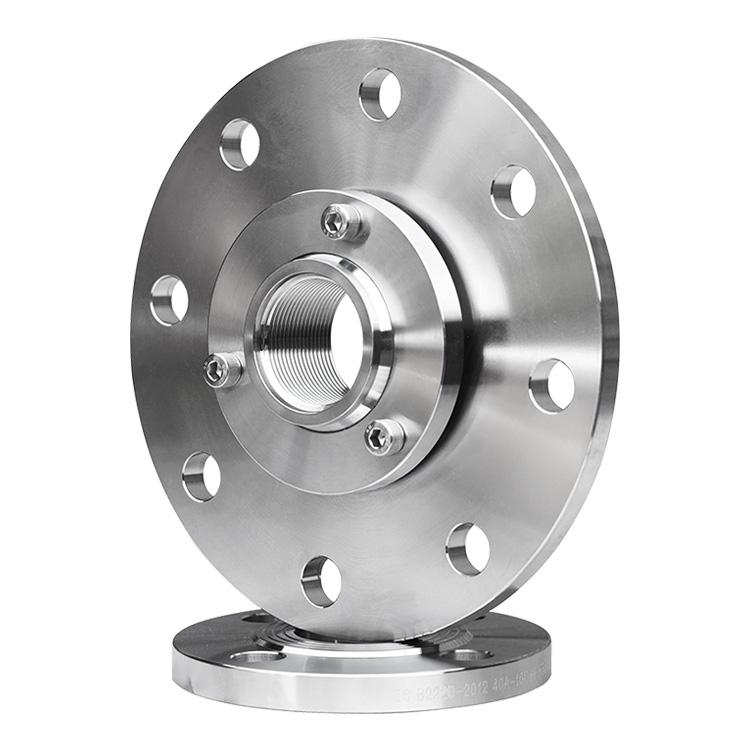
A pipe flange is a mechanical component used to connect pipes, valves, pumps, and other equipment in a piping system.
As a Custom Pipe Flange Manufacturer for Industrial Applications, I usually explain it in simple terms:
A flange is a “strong connecting ring” that allows two pipe sections to be safely joined, sealed, and easily maintained.
A standard flange must perform several critical roles:
Connect piping systems securely
Provide leak-proof sealing
Allow easy maintenance and disassembly
Support pressure and mechanical loads
Ensure alignment between pipe sections
Even a small sealing defect can lead to system-wide failure in industrial pipelines.
Industrial systems rely on continuous flow of:
Water
Oil
Gas
Steam
Chemical fluids
Without reliable flanges, these systems cannot operate safely or efficiently.
Standard flanges are widely used because they follow international dimensions and pressure ratings.
From my manufacturing experience, I have seen that standardization reduces risk in three key areas:
Standard flanges ensure:
Easy replacement
Global compatibility
Reduced installation errors
Industrial systems often operate under:
Medium to high pressure
Temperature fluctuations
Flow vibration
Standard flanges ensure predictable performance.
Flanged systems allow:
Fast disassembly
Easy inspection
Lower downtime costs
| Flange Type | Pressure Level | Installation Ease | Maintenance | Typical Use |
|---|---|---|---|---|
| Weld Neck Flange | High | Medium | Low | High-pressure pipelines |
| Slip-On Flange | Medium | Easy | Medium | General industry |
| Threaded Flange | Low | Easy | Easy | Small pipelines |
| Blind Flange | High | Medium | Medium | Pipeline sealing |
| Socket Weld Flange | High | Medium | Low | High-pressure small pipes |
Source: ASME B16.5, ASME B16.47, Industrial Pipe Engineering Handbook
As a Custom Pipe Flange Manufacturer for Industrial Applications, I focus on three key engineering principles: sealing integrity, strength, and alignment.
Common sealing faces include:
Raised Face (RF)
Flat Face (FF)
Ring Type Joint (RTJ)
Each design affects sealing performance and pressure capacity.
Bolts must distribute force evenly across the flange face.
If uneven:
Leakage occurs
Gasket fails
Joint deformation increases
Flanges are designed based on pressure ratings such as:
Class 150
Class 300
Class 600
Class 900+
Higher class = higher thickness and strength.
Flanges must handle:
Internal pressure
External vibration
Thermal expansion
Pipeline misalignment
| Material | Corrosion Resistance | Strength | Temperature Resistance | Application |
|---|---|---|---|---|
| Carbon Steel | Medium | High | Medium | Oil & water pipelines |
| SS304 | Good | High | High | General industrial systems |
| SS316L | Excellent | High | High | Chemical & marine systems |
| Alloy Steel | Medium | Very High | Very High | High-pressure systems |
| Duplex Steel | Very High | Very High | High | Offshore & harsh environments |
Source: ASTM A182, ASTM A240, ASME Material Standards, ASM International Handbook
From real industrial cases, I often see:
Wrong material → corrosion leakage
Low-grade steel → bolt failure
Poor selection → frequent shutdowns
Material selection is directly linked to system safety.
At Zhejiang Songlin Flange Co., Ltd., every flange is treated as a safety-critical component.
We test:
Chemical composition
Mechanical strength
Surface defects
Traceability certification
Depending on flange type:
Forged blanks for high pressure
Cut plates for standard applications
We ensure:
Precise outer diameter
Accurate bolt hole positioning
Flat sealing surfaces
To improve:
Strength
Hardness stability
Stress relief
We check:
Dimensional accuracy
Flatness
Bolt hole alignment
Surface quality
| Parameter | Industry Standard | OEM Precision Level |
|---|---|---|
| Bolt Hole Tolerance | ±0.2 mm | ±0.1 mm |
| Flatness | ≤0.5 mm/m | ≤0.3 mm/m |
| Diameter Accuracy | ±0.5 mm | ±0.2 mm |
| Surface Finish | Ra 3.2 μm | Ra 1.6–3.2 μm |
Source: ASME B16.5, ASME B16.47, Industrial Forging & Machining Standards
The Custom Pipe Flange Manufacturer for Industrial Applications supports multiple industries:
Pipeline connections
Refinery systems
Offshore platforms
Reactor pipelines
Acid transfer systems
Cooling pipelines
Steam systems
Boiler connections
Cooling water pipelines
Seawater pipelines
Ship systems
Offshore structures
Pump stations
Filtration pipelines
Distribution networks
Because they ensure:
Safe pipeline sealing
Easy maintenance access
Structural flexibility
Long-term system reliability
When I work as a Custom Pipe Flange Manufacturer for Industrial Applications, I always remind clients that flange performance is not only about strength—it is about controlled sealing behavior under real working conditions.
In real pipelines, flanges face combined forces:
Internal pressure
Bolt preload force
Thermal expansion stress
Pipeline vibration
If any one of these is ignored, leakage will happen sooner or later.
A flange seals through:
Bolt compression force
Gasket deformation
Metal surface contact stability
In simple terms:
The tighter and more evenly the force is distributed, the better the sealing performance.
From my experience, many failures are caused not by the flange itself, but by wrong gasket selection.
Common gasket types:
Spiral wound gasket (high pressure)
Rubber gasket (low pressure)
PTFE gasket (chemical resistance)
Graphite gasket (high temperature)
| Gasket Type | Pressure Range | Temperature Range | Chemical Resistance | Best Application |
|---|---|---|---|---|
| Rubber | Low | Low | Medium | Water systems |
| PTFE | Medium | Medium | Very High | Chemical pipelines |
| Graphite | High | Very High | High | Steam & refinery systems |
| Spiral Wound | Very High | High | High | Oil & gas pipelines |
Source: ASME B16.20, Industrial Sealing Technology Handbook, API 601 Standards
A flange joint is only as strong as its bolt system.
I always focus on:
Uniform bolt tightening sequence
Correct torque value
Lubrication control
Thermal expansion allowance
Uneven bolt load is one of the top causes of flange leakage.
As a manufacturer, I often see installation mistakes that lead to system failure—not product defects.
Before installation:
Remove dust and oil
Check sealing face scratches
Ensure flat surface alignment
Even small debris can break sealing integrity.
Misalignment causes:
Uneven stress distribution
Bolt bending
Gasket deformation
Proper alignment ensures uniform sealing pressure.
I always recommend:
Cross-pattern tightening
Gradual torque increase
Final torque calibration
Never tighten one side completely first.
Standard procedure:
Hydrostatic test
Leak detection test
Pressure holding test
This ensures system reliability before operation.
| Installation Error | Risk Level | Result |
|---|---|---|
| Uneven bolt torque | High | Leakage |
| Misaligned pipes | High | Flange deformation |
| Dirty sealing surface | Medium | Slow leakage |
| Wrong gasket type | Very High | System failure |
Source: ASME PCC-1 (Pressure Boundary Bolting Guidelines), Industrial Pipeline Installation Handbook
In real engineering projects, I have seen how Custom Pipe Flange Manufacturer for Industrial Applications solutions are used across different industries.
In these systems:
High pressure is constant
Corrosion risk is severe
Maintenance is expensive
Flanges must ensure zero leakage under extreme conditions.
Key challenges:
Acidic fluids
Corrosive gases
High temperature cycles
SS316L and duplex flanges are commonly used.
Applications include:
Steam pipelines
Cooling systems
Boiler connections
Stability and thermal resistance are critical.
Challenges:
Saltwater corrosion
Continuous vibration
High humidity exposure
Duplex steel flanges perform best here.
Focus:
Long service life
Low maintenance
Stable sealing under low pressure
Carbon steel and SS304 are commonly used.
From my experience:
Design = theory
Application = reality
Many failures happen because real operating conditions are more complex than design assumptions.
When customers ask me for selection advice, I always follow a structured engineering approach.
Class 150 → low pressure
Class 300 → medium pressure
Class 600+ → high pressure
Pressure always comes first in selection.
Ask:
Is it corrosive?
Is it high temperature?
Is it abrasive?
This determines material choice.
Indoor or outdoor
Marine exposure
Chemical plant environment
Frequent maintenance → easier disassembly flanges
Long-term operation → welded flange systems
Never choose flange type based only on price. Choose based on system risk level.
A pipe flange is used to connect pipes, valves, and equipment securely while allowing easy maintenance and leak-free operation.
Because material determines corrosion resistance, pressure capacity, and overall system lifespan.
Common causes include uneven bolt torque, wrong gasket selection, misalignment, and poor surface finishing.
Weld neck flanges and socket weld flanges are commonly used for high-pressure industrial applications.
Yes. As a manufacturer, we provide OEM custom pipe flanges based on pressure, material, and drawing specifications.
| Flange Type | Strength | Installation Ease | Maintenance | Application |
|---|---|---|---|---|
| Weld Neck | Very High | Medium | Low | High-pressure systems |
| Slip-On | Medium | High | Medium | General industry |
| Threaded | Low | High | High | Small pipelines |
| Blind | High | Medium | Medium | Pipeline sealing |
Source: ASME B16.5, ASME B16.47, Industrial Pipeline Design Handbook
When I work as a Custom Pipe Flange Manufacturer for Industrial Applications, I always tell clients one simple truth:
Most flange failures are not caused by the flange itself, but by system-level mistakes.
From real industrial cases, I have repeatedly seen the same issues:
This is the most common problem.
What happens:
One side is tighter than the other
Gasket is unevenly compressed
Stress concentrates in one zone
Result:
Slow leakage
Or sudden joint failure under pressure
Even a perfect flange cannot compensate for a wrong gasket.
Typical mistakes:
Rubber gasket used in high temperature
PTFE used in high vibration systems
Graphite not used in corrosive steam systems
Small scratches on sealing face can lead to:
Micro leakage paths
Pressure loss over time
Reduced gasket lifespan
If pipes are not aligned:
Bolt bending occurs
Uneven load distribution
Long-term deformation
| Failure Mode | Frequency | Impact Level | Root Cause |
|---|---|---|---|
| Bolt Uneven Torque | Very High | High | Improper installation |
| Gasket Failure | High | Very High | Wrong material selection |
| Surface Damage | Medium | Medium | Poor handling |
| Misalignment | Medium | High | Pipeline installation error |
Source: ASME PCC-1 Bolting Guidelines, API 570 Pipeline Inspection Data, Industrial Maintenance Engineering Reports
From my manufacturing experience, improving flange performance is not about making one component stronger—it is about system optimization.
Best practices:
Use torque-controlled tightening tools
Apply cross-pattern tightening sequence
Re-check torque after pressure testing
I always recommend:
Steam systems → graphite gasket
Chemical systems → PTFE gasket
High pressure systems → spiral wound gasket
A smoother sealing surface improves:
Contact stability
Leak resistance
Gasket lifespan
Many engineers make the mistake of selecting flange class too late.
Correct approach:
Define pressure class first → then choose material → then design flange type.
| Optimization Factor | Improvement in Reliability | Maintenance Reduction |
|---|---|---|
| Torque Control | +25% | -20% |
| Gasket Upgrade | +35% | -30% |
| Surface Finishing | +20% | -15% |
| Correct Class Selection | +40% | -40% |
Source: Industrial Pipeline Engineering Studies, ASME Reliability Reports, API Maintenance Optimization Guidelines
As a Custom Pipe Flange Manufacturer for Industrial Applications, I have observed clear global trends:
SS316L usage increasing
Duplex steel replacing carbon steel in offshore systems
Traditional machining is being replaced by:
CNC precision drilling
Automated inspection systems
Digital tolerance control
Industries now require:
OEM flange designs
Non-standard pressure classes
Special alloy combinations
Companies now prioritize:
Long-term durability
Maintenance reduction
System reliability
After years of manufacturing experience, I can summarize flange engineering into one core principle:
A pipe flange is not just a connector—it is a safety-critical pressure boundary.
If the flange fails:
The pipeline fails
The system stops
The cost multiplies
That is why precision, material selection, and installation quality all matter equally.
At Zhejiang Songlin Flange Co., Ltd., we focus on:
CNC precision manufacturing
Strict material inspection
International standard compliance (ASME, ANSI, DIN)
OEM customization capability
Stable long-term supply capability
We don’t just produce flanges—we engineer reliability into every connection.


Copyright © 2022 Zhejiang Songlin Flange Co., Ltd.
SitemapThis website uses cookies to ensure you get the best experience on our website.

 Español
 Pусский
 Français
 Deutsch
 日本語
日本語 한국어
한국어 العربية
 Italiano
 Nederlands



 WhatsApp
 Phone
Phone
Comment
(0)