
Heat Exchanger Tube Sheet for Industrial Cooling Systems: Precision Engineering for Stable Thermal Performance and Long-Term Reliability
Have you ever wondered what keeps industrial cooling systems running continuously without fluid mixing, leakage, or efficiency loss—even under high pressure and temperature cycles? From my experience in manufacturing, the answer always comes back to one critical component: the tube sheet.
As a manufacturer working in this field, I’ve seen how the Heat Exchanger Tube Sheet for Industrial Cooling Systems often determines whether a cooling system runs smoothly for 10–20 years or fails early due to leakage, vibration, or corrosion damage.
At Zhejiang Songlin Flange Co., Ltd., we produce tube sheets using CNC precision drilling, strict dimensional control, and full material traceability. Every unit we manufacture is designed to ensure stable tube alignment, strong sealing performance, and long service life in demanding industrial environments.
In this article, I will share real engineering experience on how tube sheets are designed, selected, manufactured, and applied in industrial cooling systems.
On This Page
What is a Heat Exchanger Tube Sheet
Role in Industrial Cooling Systems
Engineering Design Principles
Material Selection Guide
Manufacturing Process
Industrial Applications
Selection Guide & Practical Tips
Frequently Asked Questions
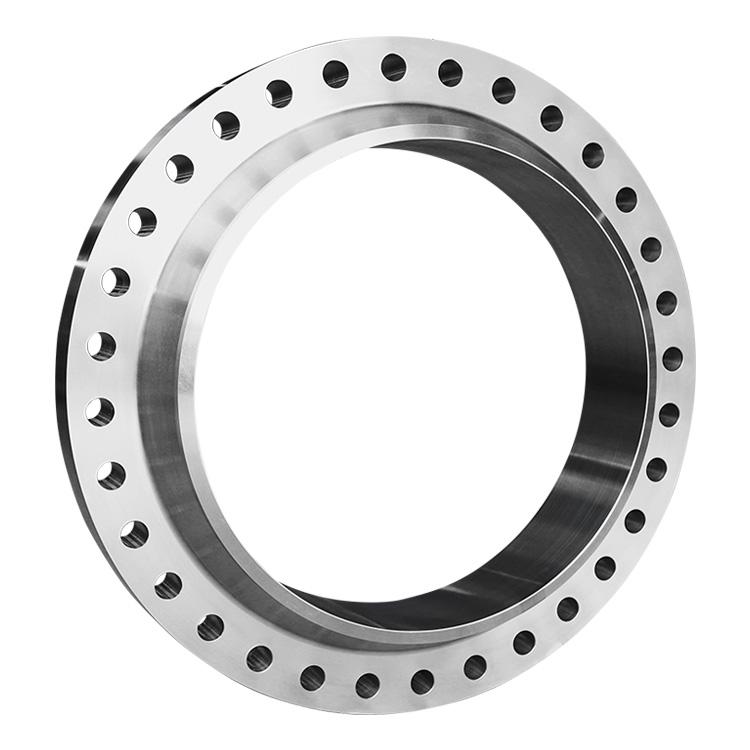
A heat exchanger tube sheet is a thick circular metal plate with precision-drilled holes used to hold and secure tubes inside a heat exchanger or industrial cooling system.
As a manufacturer of the Heat Exchanger Tube Sheet for Industrial Cooling Systems, I always explain it in simple terms:
It is the structural foundation that keeps hundreds or even thousands of tubes perfectly aligned while separating two different fluids safely.
A properly designed tube sheet must:
Fix tube positions with high precision
Separate hot and cold fluids safely
Maintain pressure integrity
Support mechanical and thermal loads
Ensure long-term sealing reliability
Even a small deviation in hole accuracy can lead to leakage or system inefficiency.
Industrial cooling systems operate continuously in:
Power plants
Petrochemical facilities
Marine cooling systems
HVAC plants
These systems cannot afford downtime, so tube sheet reliability becomes essential.
In industrial cooling systems, the tube sheet acts as the core interface between:
Tube side fluid
Shell side fluid
It ensures that heat transfer occurs without mixing the two fluids.
Inside a cooling system:
Tubes pass through drilled holes in the tube sheet
Tubes are fixed by expansion or welding
Fluids flow separately through shell and tube sides
Heat transfers through tube walls
The tube sheet ensures system stability under pressure and vibration.
Cooling systems require:
Continuous operation
High thermal efficiency
Leak-free separation
Minimal maintenance downtime
That is why tube sheet design quality is so important.
| Component | Function | Failure Impact | Importance |
|---|---|---|---|
| Tube Sheet | Tube support + sealing barrier | System leakage | Critical |
| Tubes | Heat transfer medium | Efficiency loss | High |
| Shell | Pressure containment | Structural failure | Critical |
| Baffles | Flow direction control | Reduced efficiency | Medium |
Source: ASME Boiler and Pressure Vessel Code Section VIII, Heat Exchanger Design Handbook (Kern), TEMA Standards
As a Heat Exchanger Tube Sheet for Industrial Cooling Systems manufacturer, I follow strict engineering principles to ensure reliability.
Common layouts include:
Triangular pitch (high efficiency)
Square pitch (easy cleaning)
Rotated square (balanced performance)
For cooling systems, efficiency and cleanability must be balanced.
Tube sheet thickness depends on:
System pressure
Tube diameter and quantity
Material strength
Thermal stress conditions
Thicker plates improve strength but increase machining complexity.
Engineers must manage:
Radial stress across large surfaces
Local stress at hole edges
Thermal expansion mismatch
Vibration-induced fatigue
Poor stress design leads to leakage or tube failure.
Three main methods are used:
Mechanical expansion
Welding
Expansion + welding (preferred for high reliability)
| Material | Corrosion Resistance | Strength | Temperature Resistance | Application |
|---|---|---|---|---|
| Carbon Steel | Medium | High | Medium | General cooling systems |
| SS304 | Good | High | High | HVAC systems |
| SS316L | Excellent | High | High | Chemical & marine |
| Duplex Steel | Very High | Very High | High | Offshore systems |
| Alloy Steel | Medium | Very High | Very High | High-pressure cooling |
Source: ASTM A182, ASTM A240, ASME Material Standards, ASM Handbook Volume 1
In real operation:
Corrosion reduces thickness
Hole edges weaken over time
Leakage risk increases
Maintenance cost rises significantly
At Zhejiang Songlin Flange Co., Ltd., we treat every tube sheet as a precision engineering product.
We verify:
Chemical composition
Mechanical properties
Surface quality
Certification traceability
We ensure:
Flat surface accuracy
Dimensional stability
Stress-controlled cutting
This is the most critical stage:
CNC coordinate drilling
High-density hole layout
Tight tolerance control (±0.05 mm)
Burr-free finishing
We improve:
Flatness
Surface smoothness
Sealing performance
We check:
Hole accuracy
Flatness
Surface roughness
Material integrity
Dimensional compliance
| Parameter | Industry Standard | OEM Manufacturing Level |
|---|---|---|
| Hole Tolerance | ±0.1 mm | ±0.05 mm CNC precision |
| Flatness | ≤0.5 mm/m | ≤0.3 mm/m controlled machining |
| Surface Roughness | Ra 3.2 μm | Ra 1.6–3.2 μm |
| Pitch Accuracy | ±0.15 mm | ±0.1 mm CNC layout |
Source: ASME BPVC Section VIII, TEMA Standards, Industrial Machining Engineering References
The Heat Exchanger Tube Sheet for Industrial Cooling Systems is widely used in many industries.
Steam condensers
Cooling water systems
Heat recovery systems
Refinery heat exchangers
Gas cooling units
Crude oil cooling systems
Seawater cooling systems
Offshore platforms
Desalination plants
Reactor cooling systems
Acid heat exchangers
Industrial cooling loops
Central chillers
Industrial cooling towers
Large air conditioning systems
Because they ensure:
Stable tube positioning
Safe fluid separation
High thermal efficiency
Long service life
It supports and aligns tubes while separating two fluids inside a heat exchanger without leakage.
Because poor quality can lead to leakage, reduced efficiency, vibration failure, and system downtime.
SS316L and duplex steel are ideal for corrosive environments, while carbon steel is used for general systems.
It ensures precise hole positioning, consistent spacing, and high flatness accuracy.
Yes, OEM tube sheets are fully customizable based on pressure, temperature, material, and design requirements.
Choosing a reliable Heat Exchanger Tube Sheet for Industrial Cooling Systems is essential for ensuring long-term system efficiency, safety, and operational stability.
From material selection to CNC precision drilling, every manufacturing step directly impacts performance. A well-designed tube sheet improves heat transfer efficiency, reduces leakage risk, and extends equipment lifespan.
At Zhejiang Songlin Flange Co., Ltd., we combine advanced manufacturing technology, strict quality control, and engineering expertise to deliver high-performance tube sheets for global industries such as power generation, petrochemical processing, marine engineering, HVAC, and chemical systems.
Our mission is to provide reliable, precise, and durable solutions that keep industrial cooling systems running safely and efficiently for years.


Copyright © 2022 Zhejiang Songlin Flange Co., Ltd.
SitemapThis website uses cookies to ensure you get the best experience on our website.

 Español
 Pусский
 Français
 Deutsch
 日本語
日本語 한국어
한국어 العربية
 Italiano
 Nederlands



 WhatsApp
 Phone
Phone
Comment
(0)