
Stainless Steel Heat Exchanger Tube Sheet for Chemical Plants: Precision Engineering for Corrosion-Resistant Industrial Cooling Systems
Have you ever asked yourself why some chemical plants run smoothly for years while others suffer from frequent leakage, corrosion failures, or unexpected shutdowns in their heat exchanger systems? From my experience as a manufacturer, the answer often comes down to one key component—the tube sheet.
As a producer of the Stainless Steel Heat Exchanger Tube Sheet for Chemical Plants, I have seen how aggressive chemical environments quickly expose weak designs or poor material choices. A single failure in a tube sheet can cause cross-contamination, efficiency loss, or even full system shutdown.
At Zhejiang Songlin Flange Co., Ltd., we manufacture stainless steel tube sheets using CNC precision drilling, strict flatness control, and certified materials such as SS304, SS316L, and duplex stainless steel. Every piece is engineered to resist corrosion, maintain tube alignment, and ensure long-term sealing reliability in harsh chemical conditions.
In this article, I will share practical engineering knowledge based on real manufacturing and industrial application experience.
On This Page
What is a Stainless Steel Heat Exchanger Tube Sheet
Why Chemical Plants Depend on Stainless Steel Tube Sheets
Engineering Design Principles
Material Selection Guide (304 / 316L / Duplex)
Manufacturing Process
Chemical Plant Applications
Selection Guide & Practical Tips
Frequently Asked Questions
A stainless steel heat exchanger tube sheet is a precision-machined metal plate made from corrosion-resistant stainless steel, designed to hold and seal heat exchanger tubes inside chemical plant equipment.
As a manufacturer of the Stainless Steel Heat Exchanger Tube Sheet for Chemical Plants, I describe it simply:
It is the structural backbone that keeps thousands of tubes aligned while preventing dangerous fluid mixing in chemical environments.
A stainless steel tube sheet must:
Secure and align heat exchanger tubes
Separate incompatible chemical fluids
Resist corrosion from aggressive media
Maintain sealing integrity under pressure
Support thermal and mechanical loads
Even small machining errors can lead to leakage or contamination in chemical processing systems.
In chemical plants, carbon steel often fails due to corrosion.
Stainless steel provides:
Chromium-based corrosion resistance
Long-term chemical stability
High-temperature performance
Reduced maintenance cost
Chemical plants operate in one of the most aggressive industrial environments.
From my experience, I’ve seen three major failure risks:
Acids, alkalis, and solvents attack metal surfaces continuously.
Without stainless steel:
Tube sheet surface weakens
Hole edges corrode
Leakage risk increases rapidly
Tube sheets must ensure:
No mixing of process fluids
Stable separation of chemical streams
Zero leakage under pressure
Even minor failure can damage entire production batches.
Chemical plants often operate in:
High-temperature reaction cycles
Cooling phases
Pressure fluctuations
This causes expansion stress on tube sheets.
| Material | Acid Resistance | Alkali Resistance | Temperature Stability | Chemical Plant Suitability |
|---|---|---|---|---|
| Carbon Steel | Low | Low | Medium | Not recommended |
| SS304 | Medium | Medium | High | General use |
| SS316L | High | High | High | Standard chemical plants |
| Duplex Steel | Very High | Very High | High | Harsh chemical environments |
Source: ASTM A240, ASME BPVC Section II, ASM International Materials Handbook
As a Stainless Steel Heat Exchanger Tube Sheet for Chemical Plants manufacturer, I always focus on three design principles: safety, precision, and durability.
Common configurations include:
Triangular pitch (high efficiency heat transfer)
Square pitch (easy cleaning and maintenance)
Rotated square (balanced mechanical strength)
For chemical plants, corrosion access and cleaning ability are as important as efficiency.
Tube sheet thickness depends on:
Operating pressure
Tube diameter and density
Chemical load conditions
Material grade (304, 316L, duplex)
Thicker sheets improve durability but require higher machining precision.
Chemical environments intensify stress due to:
Corrosive weakening
Thermal cycling
Pressure fluctuations
Proper engineering ensures stress is evenly distributed across the plate.
Three main approaches:
Mechanical expansion
Welding
Combined expansion + welding (preferred for chemical plants)
| Grade | Corrosion Resistance | Chloride Resistance | Cost Level | Typical Use |
|---|---|---|---|---|
| SS304 | Medium | Low | Low | General chemicals |
| SS316L | High | High | Medium | Standard chemical plants |
| SS321 | Medium | Medium | Medium | High-temperature systems |
| Duplex 2205 | Very High | Very High | High | Aggressive chemical media |
Source: ASTM A240 Standard, NACE Corrosion Engineering Guide, ASME Materials Reference
From real projects, I often recommend SS316L because:
It resists chloride corrosion
It performs well in acids
It balances cost and performance
It is widely accepted globally
At Zhejiang Songlin Flange Co., Ltd., we treat chemical plant tube sheets as high-precision safety components.
We verify:
Chemical composition
Corrosion resistance properties
Mechanical strength certification
Surface defect inspection
We ensure:
Flat surface accuracy
Controlled stress cutting
Stable dimensional structure
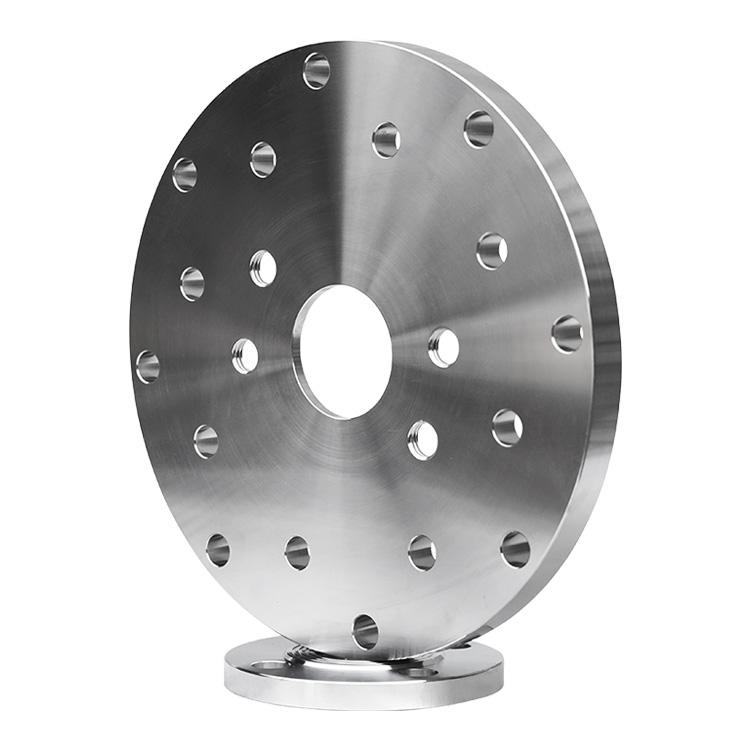
This is the most critical stage:
CNC coordinate drilling system
Tight tolerance control (±0.05 mm)
Burr-free hole finishing
Uniform hole distribution
We improve:
Corrosion resistance
Surface smoothness
Sealing performance
We check:
Flatness
Hole accuracy
Surface roughness
Material integrity
Pressure compatibility
| Parameter | Industry Standard | OEM Control Level |
|---|---|---|
| Hole Tolerance | ±0.1 mm | ±0.05 mm CNC precision |
| Flatness | ≤0.5 mm/m | ≤0.3 mm/m controlled machining |
| Surface Roughness | Ra 3.2 μm | Ra 1.6–3.2 μm |
| Pitch Accuracy | ±0.15 mm | ±0.1 mm CNC layout |
Source: ASME BPVC Section VIII, TEMA Standards, Industrial Machining Engineering References
The Stainless Steel Heat Exchanger Tube Sheet for Chemical Plants is widely used in:
Crude oil refining
Gas separation systems
Hydrocarbon cooling systems
Sulfuric acid cooling
Hydrochloric acid systems
Chemical reaction control units
Sterile heat exchangers
Process cooling systems
Purification systems
Ammonia cooling systems
Urea production heat exchangers
Gas-liquid separation units
Because they ensure:
Zero contamination risk
High corrosion resistance
Stable long-term operation
Reduced maintenance downtime
When selecting a tube sheet, I always consider:
Chemical type and concentration
Temperature range
Pressure requirements
Maintenance frequency
Service life expectations
Because it resists corrosion, maintains strength under pressure, and ensures long-term stability in aggressive chemical environments.
SS316L is the most widely used due to its excellent corrosion resistance and balance between cost and performance.
Common causes include corrosion, poor machining accuracy, thermal stress, and improper material selection.
Yes, OEM tube sheets are fully customizable based on chemical media, pressure, and temperature conditions.
It ensures precise hole alignment, consistent spacing, and high sealing performance.
Choosing a reliable Stainless Steel Heat Exchanger Tube Sheet for Chemical Plants is essential for ensuring safe, efficient, and long-lasting chemical processing operations.
From corrosion resistance to CNC precision machining, every detail directly affects system safety and performance. A properly engineered tube sheet reduces leakage risk, improves thermal efficiency, and extends equipment lifespan.
At Zhejiang Songlin Flange Co., Ltd., we combine advanced manufacturing technology, strict quality control, and real industrial experience to deliver high-performance stainless steel tube sheets for global chemical industries.
Our goal is simple: to provide reliable, corrosion-resistant, and precision-engineered solutions that keep chemical plants running safely and efficiently for the long term.


Copyright © 2022 Zhejiang Songlin Flange Co., Ltd.
SitemapThis website uses cookies to ensure you get the best experience on our website.

 Español
 Pусский
 Français
 Deutsch
 日本語
日本語 한국어
한국어 العربية
 Italiano
 Nederlands



 WhatsApp
 Phone
Phone
Comment
(0)