
Heavy Duty Pipe Flange Manufacturer for Oil and Gas – Premium Standard Flange Solutions for High-Pressure Pipeline Systems
Throughout my years in flange manufacturing, I have learned one important lesson: in the oil and gas industry, reliability is never optional.
Pipelines often transport crude oil, natural gas, steam, or corrosive fluids under extreme pressure and temperature. Even if the pipes themselves are manufactured to the highest standards, the entire system can fail if the flange connection is weak.
This is why selecting a high-quality standard flange is one of the most important decisions engineers make during project planning.
Many customers ask me:
"How can I find a heavy-duty pipe flange manufacturer that delivers consistent quality, international standards, and dependable OEM service?"
In this guide, I will share practical knowledge from my experience at Zhejiang Songlin Flange Co., Ltd., explaining how we manufacture heavy-duty standard flange products for demanding oil and gas applications worldwide.
This Page
Why Heavy-Duty Pipe Flanges Matter
Common Standard Flange Types for Oil and Gas
Material Selection for Extreme Operating Conditions
Our Manufacturing Process and Quality Assurance
Typical Applications in Oil and Gas Projects
How to Choose the Right Standard Flange
Installation and Maintenance Recommendations
Why Customers Choose Zhejiang Songlin Flange
Frequently Asked Questions
Why Heavy-Duty Pipe Flanges Matter
Oil and gas pipelines operate under some of the harshest industrial conditions.
A flange must withstand:
High internal pressure
Extreme temperatures
Continuous vibration
Corrosive fluids
Long operating cycles
A properly manufactured standard flange provides:
Reliable sealing
Structural stability
Easy maintenance
Long service life
Safe pipeline operation
From my experience, investing in high-quality flanges always costs less than repairing pipeline failures later.
Common Standard Flange Types for Oil and Gas
Different pipeline systems require different flange designs.
Source: ASME B16.5, ASME B16.47
| Flange Type | Pressure Capability | Typical Application | Main Advantage |
|---|---|---|---|
| Weld Neck Flange | Very High | Transmission pipelines | Excellent fatigue resistance |
| Slip-On Flange | Medium | Utility piping | Easy installation |
| Blind Flange | High | Pipeline isolation | Complete sealing |
| Socket Weld Flange | High | Small bore piping | Strong leak resistance |
| Ring Type Joint (RTJ) Flange | Extremely High | Offshore & refinery | Metal-to-metal sealing |
| Threaded Flange | Medium | Low-pressure systems | No welding required |
For high-pressure oil pipelines, I usually recommend weld neck or RTJ standard flange designs because they offer superior sealing performance.
Material Selection for Extreme Operating Conditions
Material selection directly affects pipeline safety.
Source: ASTM A105, ASTM A182, NACE MR0175
| Material | Strength | Corrosion Resistance | Typical Service |
|---|---|---|---|
| ASTM A105 Carbon Steel | High | Moderate | General oil pipelines |
| ASTM A350 LF2 | High | Good | Low-temperature service |
| ASTM A182 F304 | High | Excellent | Mild corrosive media |
| ASTM A182 F316 | High | Outstanding | Offshore & chemical plants |
| Duplex Stainless Steel 2205 | Very High | Excellent | Seawater & offshore platforms |
When helping customers choose a standard flange, I always consider:
Working pressure
Operating temperature
Medium type
Corrosion risk
Service life requirements
Choosing the correct material often determines whether the flange lasts five years or twenty.
Our Manufacturing Process and Quality Assurance
At Zhejiang Songlin Flange Co., Ltd., quality begins with raw materials and continues through every production stage.
Our manufacturing process includes:
Raw material inspection
Forging
CNC precision machining
Heat treatment
Precision drilling
Surface finishing
Dimensional inspection
Pressure testing
Final quality inspection
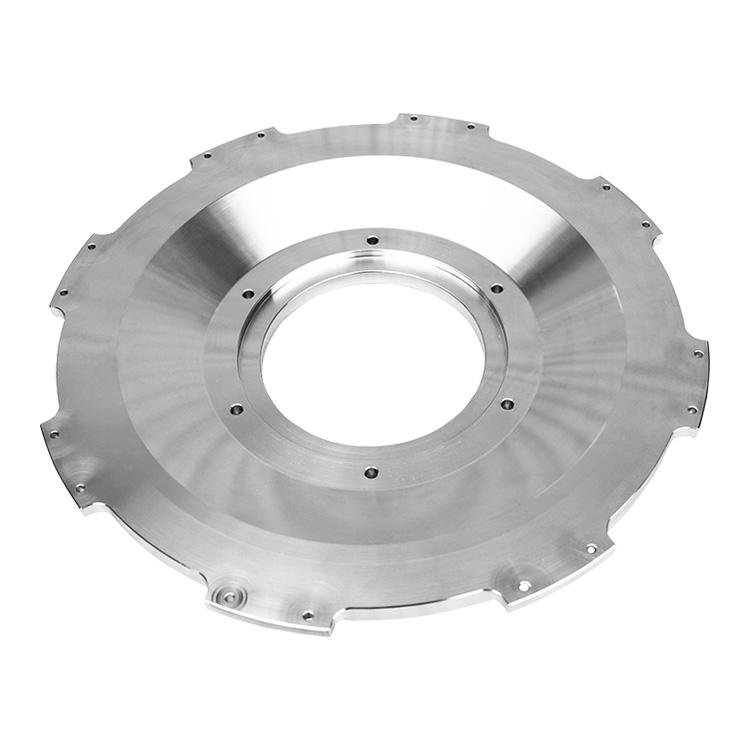
Our factory uses advanced CNC machining centers together with comprehensive inspection equipment to guarantee consistent quality.
Every standard flange undergoes strict quality control before shipment.
Inspection methods include:
Ultrasonic Testing (UT)
Magnetic Particle Testing (MT)
PMI Material Verification
Hydrostatic Testing
Dimensional Measurement
This manufacturing system helps ensure every flange meets international engineering standards.
Typical Applications in Oil and Gas Projects
Heavy-duty standard flange products are widely used throughout the energy industry.
Typical applications include:
Crude oil transmission pipelines
Natural gas distribution systems
LNG facilities
Offshore drilling platforms
Petrochemical plants
Refineries
Compressor stations
Pressure vessels
Pump stations
A refinery customer required flanges capable of operating continuously under high-temperature steam.
After reviewing the working conditions, we recommended ASTM A182 F316 weld neck flanges with RTJ sealing surfaces.
The upgraded system significantly improved sealing reliability and reduced maintenance frequency.
Selecting the correct standard flange made a measurable difference in long-term operating costs.
How to Choose the Right Standard Flange
Selecting a flange involves more than matching pipe size.
Source: ASME Engineering Practice & Industrial Pipeline Design
| Working Condition | Recommended Flange | Suggested Material |
|---|---|---|
| High Pressure | Weld Neck | A105 / F316 |
| Offshore Platform | RTJ Flange | Duplex 2205 |
| Corrosive Fluid | Weld Neck | F316 |
| Low Temperature | Weld Neck | A350 LF2 |
| Maintenance Access | Lap Joint | Stainless Steel |
When advising customers, I always recommend considering:
Pressure class
Temperature range
Fluid characteristics
Applicable standards
Future maintenance
Total lifecycle cost
Choosing the proper standard flange today helps avoid expensive downtime tomorrow.
Installation and Maintenance Recommendations
Even the highest-quality flange requires proper installation.
Clean flange faces carefully.
Use compatible gasket materials.
Tighten bolts using a cross-pattern sequence.
Follow specified torque values.
Verify alignment before tightening.
Inspect bolt tightness regularly.
Monitor gasket condition.
Check for corrosion around sealing surfaces.
Replace damaged components immediately.
Schedule periodic pressure testing.
Routine maintenance greatly extends the service life of every standard flange.
Why Customers Choose Zhejiang Songlin Flange
As a professional flange manufacturer located in Wenzhou Longwan—China's renowned valve manufacturing center—we continuously improve our manufacturing technology to serve global customers.
Our advantages include:
Advanced CNC machining equipment
Complete quality inspection system
OEM & ODM manufacturing
Wide range of standard and Custom Flanges
Fast production capability
Competitive pricing
Reliable export experience
Professional technical support
Our product portfolio includes:
Slip-On Flanges
Weld Neck Flanges
Blind Flanges
Socket Weld Flanges
Threaded Flanges
Lap Joint Flanges
Ring Type Joint Flanges
Large Diameter Flanges
Custom Non-standard Flanges
Our goal is simple:
Deliver every standard flange with the precision, quality, and reliability that industrial customers expect.
Frequently Asked Questions
Weld neck flanges are generally preferred because they provide excellent strength and stress distribution under high pressure.
Our products can be manufactured according to ASME, ANSI, DIN, EN, JIS, and customer-specific specifications.
Yes. We produce OEM and custom-engineered standard flange products based on drawings, materials, dimensions, and industry standards.
ASTM A182 F316 and Duplex Stainless Steel are commonly selected for highly corrosive oil and gas environments.
We combine CNC precision machining with comprehensive inspections, including UT, MT, PMI, pressure testing, and dimensional verification before shipment.
Conclusion
Working in the flange industry has taught me that successful pipeline systems are built on reliable connections.
A premium standard flange is more than a mechanical component—it protects equipment, improves safety, minimizes downtime, and supports long-term operational efficiency.
At Zhejiang Songlin Flange Co., Ltd., we combine advanced manufacturing technology, strict quality control, and customer-focused service to provide dependable heavy-duty pipe flange solutions for global oil and gas projects.
Whether you require standard products or fully customized OEM solutions, we are committed to delivering flange products that perform reliably under the world's most demanding industrial conditions.


Copyright © 2022 Zhejiang Songlin Flange Co., Ltd.
SitemapThis website uses cookies to ensure you get the best experience on our website.

 Español
 Pусский
 Français
 Deutsch
 日本語
日本語 한국어
한국어 العربية
 Italiano
 Nederlands



 WhatsApp
 Phone
Phone
Comment
(0)