
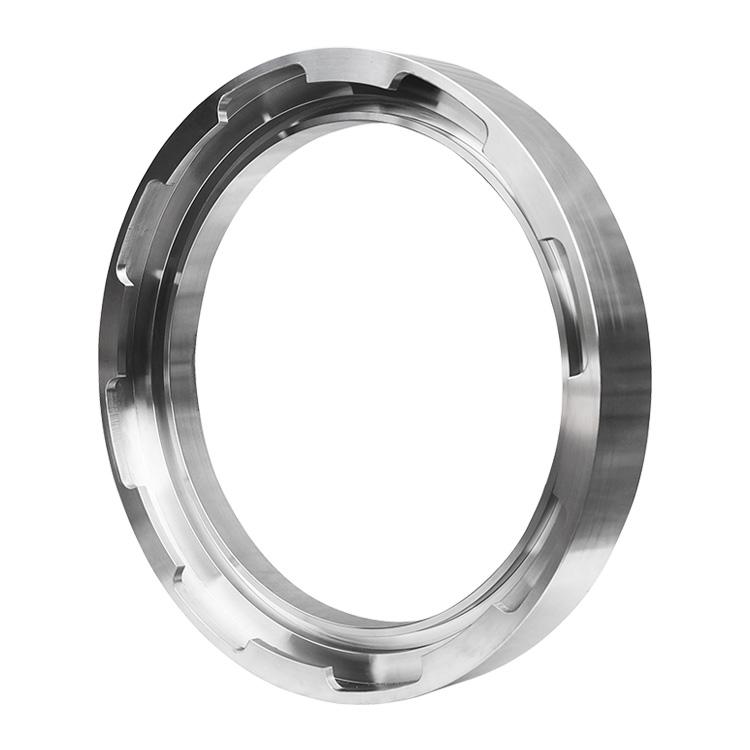
Precision ANSI DIN Standard Flange products are essential connection components used in a wide range of industrial equipment, piping systems, pressure vessels, process lines, power generation units, chemical plants, water treatment systems, and mechanical assemblies. In modern industry, the demand for high-accuracy flange components continues to grow because equipment operators need reliable sealing, stable alignment, easy maintenance, and long service life. When industrial systems must handle pressure, vibration, temperature changes, and continuous operation, a precision flange becomes a critical part of the connection structure.
The terms ANSI flange and DIN flange refer to two widely recognized standard systems used in piping and equipment engineering. ANSI standards are commonly associated with the American industrial standard framework, while DIN standards are linked to the German and European engineering system. Although the two standards differ in dimensions, pressure ratings, drilling patterns, and application preferences, both are widely used in global industrial markets. Understanding the structure, functions, specifications, and advantages of a precision ANSI DIN standard flange is important for engineers, buyers, maintenance teams, and project planners who need dependable connection solutions for industrial equipment.
This page provides original, SEO-friendly, and industry-focused information about the definition, features, benefits, dimensions, materials, pressure classes, and application scenarios of precision ANSI DIN standard flanges. The content is designed for use in blog posts, category pages, product directory pages, technical resource pages, and industry landing pages. It contains practical and search-optimized language with clear headings and structured tables to support easier indexing and improved readability.
A precision ANSI DIN standard flange is a machined flange component manufactured according to controlled dimensional requirements based on either ANSI or DIN standards. It is used to connect pipes, valves, pumps, pressure equipment, and other industrial components. The word precision indicates tighter dimensional control, improved surface finish, stable concentricity, accurate bolt-hole positioning, and better sealing performance compared with basic or low-tolerance flanges.
In industrial equipment, a flange is typically a circular disc or ring with bolt holes around the perimeter. Two flanges are joined together using bolts, nuts, and a gasket to create a sealed connection. The gasket fills microscopic surface irregularities and helps prevent leakage of liquids, gases, steam, or chemical media. A precision flange improves this sealing process by offering cleaner machined faces, better alignment, and more consistent fitment.
ANSI and DIN are not interchangeable in every case because they use different measurement systems, pressure classes, and face styles. However, both are recognized as important standards in industrial equipment design. Precision flanges made to these standards are selected based on system pressure, temperature, media type, equipment design, and regional standard preference.
Industrial flange connections must perform under demanding conditions. If a flange is poorly machined or dimensionally inconsistent, it can lead to misalignment, gasket failure, uneven bolt loading, leakage, vibration, and maintenance issues. This is why precision is not just a quality feature; it is a performance requirement in many industrial environments.
Precision machining helps ensure that the flange face remains flat, the bolt holes are accurately placed, the bore is centered, and the sealing geometry remains consistent. These factors are especially important in systems where downtime is expensive, safety is critical, or process media are hazardous. A precision ANSI DIN standard flange is therefore valued for both operational reliability and long-term cost control.
Choosing a precision ANSI DIN standard flange for industrial equipment offers multiple technical and economic advantages. These advantages are particularly important in operations where system integrity, uptime, and safety are major priorities.
Precision-machined flange faces support better gasket contact and more uniform bolt loading. This helps reduce leakage risk in systems handling water, oil, steam, gas, chemicals, and other process media.
Accurate flange drilling and face geometry help ensure that connected equipment aligns correctly. This reduces installation errors and mechanical stress on pipes, pumps, valves, and vessels.
When stress is evenly distributed and sealing is stable, the flange assembly tends to last longer. Precision reduces wear caused by vibration, thermal expansion, and repeated maintenance cycles.
Well-made flanges reduce the chance of frequent retightening, gasket replacement, and unplanned shutdowns. This supports lower total maintenance cost over time.
ANSI and DIN standards make it easier for buyers, engineers, and maintenance teams to select replacement parts and match existing systems.
Precision flanges are used in applications involving pressure surges, thermal cycling, corrosive media, and continuous operation.
Although both systems are widely used, ANSI and DIN flanges are not identical. The differences affect compatibility, pressure ratings, and regional usage. Understanding these differences is important when selecting a precision flange for industrial equipment.
| Item | ANSI Flange | DIN Flange |
|---|---|---|
| Standard origin | American industrial standard framework | German / European engineering standard framework |
| Measurement system | Commonly imperial-based in many applications | Commonly metric-based |
| Typical market use | North America and many global industrial projects | Europe and many metric-based systems |
| Pressure classification | Class-based ratings such as Class 150, 300, 600 | PN-based ratings such as PN6, PN10, PN16, PN25 |
| Dimensional profile | Different bolt-circle and thickness profiles by class | Different bolt-circle and thickness profiles by PN rating |
| Interchangeability | Not directly interchangeable with DIN without engineering review | Not directly interchangeable with ANSI without engineering review |
Because of these differences, engineers should verify specifications carefully before ordering or installing a precision ANSI DIN standard flange. Correct matching of standard, pressure class, face type, and material is essential for system safety and performance.
Precision flanges are available in several structural forms. Each type serves a different industrial purpose depending on welding method, assembly process, and maintenance requirements.
| Flange Type | Typical Use | Main Advantage |
|---|---|---|
| Weld Neck Flange | High-pressure and high-temperature piping systems | Strong connection and excellent stress distribution |
| Slip-On Flange | General industrial piping and moderate-pressure systems | Easy installation and alignment |
| Blind Flange | Closing pipe ends, pressure testing, future expansion points | Provides a secure seal at line termination |
| Socket Weld Flange | Small-diameter high-pressure systems | Good strength and compact design |
| Threaded Flange | Low-maintenance systems where welding is not preferred | Simple installation without welding |
| Lap Joint Flange | Systems requiring frequent disassembly | Flexible alignment and easier maintenance |
| Orifice Flange | Flow measurement systems | Supports accurate differential pressure measurement |
Material selection is a major factor in flange performance. The right material improves strength, corrosion resistance, temperature tolerance, and service life. Precision ANSI DIN standard flange products are commonly manufactured from the following materials:
| Material | Key Properties | Common Industrial Applications |
|---|---|---|
| Carbon Steel | Strong, cost-effective, suitable for many general-purpose systems | Water pipelines, oil lines, utility piping, equipment frames |
| Stainless Steel | Excellent corrosion resistance and hygienic performance | Food processing, chemical plants, marine systems, pharmaceutical lines |
| Alloy Steel | Improved strength and heat resistance | High-pressure equipment, power generation, thermal systems |
| Duplex Stainless Steel | High corrosion resistance and strong mechanical performance | Offshore, seawater, aggressive chemical environments |
| Nickel Alloy | Excellent performance in highly corrosive or extreme-temperature service | Special chemical processing and severe service conditions |
The best material depends on operating pressure, temperature range, fluid type, environmental exposure, and regulatory requirements. In many applications, precision machining is just as important as the base material because a high-quality alloy still requires accurate geometry to perform well.
Precision ANSI DIN standard flanges are produced in various pressure classes and nominal sizes. Pressure rating determines how much pressure the flange can safely withstand under defined conditions. The specific rating system depends on whether the product follows ANSI or DIN standards.
ANSI flanges are commonly classified as Class 150, Class 300, Class 600, Class 900, Class 1500, and Class 2500. Higher class numbers generally indicate higher pressure capability, though exact ratings vary by material and temperature.
DIN flanges are often designated by PN values such as PN6, PN10, PN16, PN25, PN40, and other ratings. The PN number represents nominal pressure and is widely used in metric-based systems.
| Standard | Common Pressure Designation | General Application Level |
|---|---|---|
| ANSI | Class 150 | General industrial service |
| ANSI | Class 300 | Moderate pressure and temperature service |
| ANSI | Class 600 and above | High-pressure and demanding service |
| DIN | PN6 / PN10 | Low-pressure industrial systems |
| DIN | PN16 / PN25 | General to medium-pressure systems |
| DIN | PN40 and above | Higher-pressure applications |
When selecting a precision ANSI DIN standard flange for industrial equipment, buyers and engineers should review all major technical parameters. Proper specification matching improves safety, performance, and compatibility.
The face design of a precision ANSI DIN standard flange directly affects gasket compatibility and sealing behavior. Different face types are chosen based on pressure level, media characteristics, and joint design.
| Face Type | Description | Common Use |
|---|---|---|
| Raised Face (RF) | The sealing surface is raised above the bolt circle area | Very common in industrial piping and process systems |
| Flat Face (FF) | The sealing face is flat across the full surface | Used where matching flat mating surfaces are required |
| Ring Type Joint (RTJ) | Uses a metal ring gasket seated in a groove | High-pressure and high-temperature service |
| Tongue and Groove | Matching tongue and groove profile improves alignment | Specialized applications requiring controlled sealing |
Precision ANSI DIN standard flanges are used across many sectors. Their function is not limited to simple pipe joining; they support reliable operation of complex industrial equipment and process systems.
In industrial equipment, even small dimensional errors can create serious issues. A flange that is not flat enough, centered properly, or drilled accurately may cause uneven loading on the gasket and bolts. Over time, this can result in leakage, fatigue, vibration, and equipment damage.
Precision ANSI DIN standard flange components help reduce these risks by improving fit quality and connection stability. This is especially important in high-energy systems where escaping fluid or gas can create safety hazards. Precision also supports more predictable performance during startup, shutdown, thermal expansion, and pressure fluctuation.
When comparing precision flange options, buyers should not rely on price alone. The best choice depends on the complete technical requirement of the system.
Proper selection reduces system risk and helps ensure that the precision ANSI DIN standard flange performs reliably during the full service life of the equipment.
The quality of a precision flange depends on more than raw material. Manufacturing control plays a major role in the final result. Common quality factors include:
| Inspection Point | Purpose |
|---|---|
| Outer diameter | Ensures compatibility with the intended standard and mating parts |
| Bolt-hole diameter and spacing | Confirms accurate bolt fit and alignment |
| Face flatness | Supports proper gasket sealing and leak prevention |
| Thickness | Helps confirm pressure performance and structural strength |
| Bore concentricity | Reduces flow disturbance and installation misalignment |
| Surface roughness | Influences seal quality and gasket compression behavior |
For content strategy, industrial buyers often search using technical phrases and product-related keywords. Including these terms naturally in content can improve search visibility:
These keywords are useful for category pages, technical landing pages, and educational blog content. However, keyword placement should remain natural and helpful rather than forced.
Many product pages and engineering documents use technical terms that buyers should understand. Below is a simple reference table.
| Term | Meaning |
|---|---|
| Nominal Diameter | Standardized size reference used for piping and flange matching |
| Pressure Class | Rating that indicates pressure capability under defined conditions |
| Bolt Circle | Diameter of the circle passing through the centers of the bolt holes |
| Gasket Face | Machined surface that contacts the gasket for sealing |
| Concentricity | Degree to which the bore and outer geometry are centered |
| Surface Roughness | Micro-level texture of the sealing face affecting gasket performance |
A precision ANSI DIN standard flange is a foundational component in industrial equipment and piping systems. By combining standard compliance with accurate machining, it helps improve sealing performance, structural reliability, alignment accuracy, and long-term service stability. Whether the application involves ANSI-based systems, DIN-based systems, or projects requiring careful standard comparison, precision flange selection remains a critical part of engineering success.
For industrial users, the most important considerations include standard compatibility, pressure class, material grade, face type, and machining quality. When these factors are properly matched, the flange connection can support safe, efficient, and durable operation in demanding environments. As industries continue to prioritize uptime, leak prevention, and maintenance efficiency, the demand for precision ANSI DIN standard flange solutions will remain strong across global markets.
```


Copyright © 2022 Zhejiang Songlin Flange Co., Ltd.
SitemapThis website uses cookies to ensure you get the best experience on our website.

 Español
 Pусский
 Français
 Deutsch
 日本語
日本語 한국어
한국어 العربية
 Italiano
 Nederlands



 WhatsApp
 Phone
Phone
Comment
(0)