
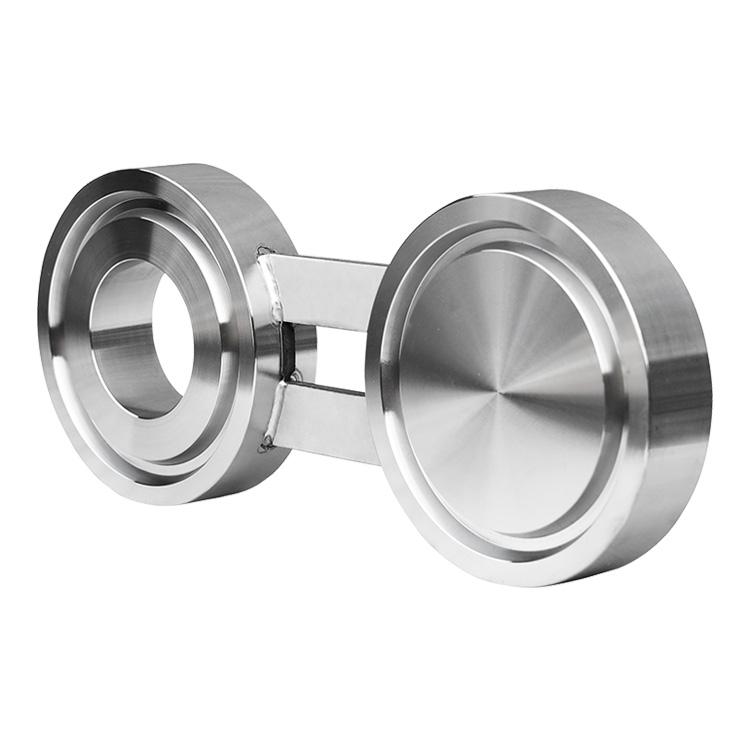
A stainless steel welding neck flange for corrosion resistance is a high-performance piping component designed for demanding industrial systems where strength, leak prevention, and long-term resistance to aggressive environments are essential. This type of flange is widely used in piping networks that transport liquids, gases, steam, chemicals, and other media exposed to moisture, pressure, temperature changes, and corrosive substances. Because of its long tapered hub and butt-weld connection, the welding neck flange provides excellent stress distribution, stable alignment, and reliable performance in critical service conditions.
In industries that require durable pipe connections, the stainless steel welding neck flange has become one of the most trusted flange types. Its geometry is engineered to reduce stress concentration at the base of the flange and to support smooth transfer of mechanical loads from the flange to the pipe. When manufactured from stainless steel grades such as 304, 304L, 316, 316L, 321, or duplex stainless steel, the flange offers improved corrosion resistance, superior strength, and extended service life compared with many carbon steel alternatives.
This guide provides a detailed, SEO-friendly overview of stainless steel welding neck flanges, including their definition, structure, key advantages, corrosion resistance properties, common standards, dimensions, applications, material grades, selection tips, and specification tables. The content is written for industry pages, catalog pages, blog articles, and product information sections that focus on stainless steel welding neck flange for corrosion resistance without referencing specific companies.
A welding neck flange, often abbreviated as WN flange, is a flange type with a long tapered hub that is welded directly to the pipe by a butt-weld joint. This design creates a strong and smooth transition between the pipe and the flange, making it suitable for high-pressure, high-temperature, and corrosive applications. When the flange is made from stainless steel, it becomes especially valuable in systems where corrosion resistance is required.
The main function of a stainless steel welding neck flange is to connect pipes, valves, pumps, and other equipment while maintaining a secure and leak-resistant joint. Compared with slip-on, threaded, or lap joint flanges, the welding neck flange is typically chosen for more severe operating conditions because it delivers better structural integrity and fatigue resistance.
The term corrosion resistance is central to the value of this flange type. Stainless steel contains chromium, which forms a passive oxide layer on the surface. This invisible protective film helps resist oxidation, rust, and chemical attack. In environments involving seawater, acidic fluids, humidity, chlorides, or high temperatures, stainless steel welding neck flanges can outperform many conventional materials.
Corrosion can shorten service life, weaken pressure systems, increase maintenance costs, and create safety risks. In industrial piping, corrosion may lead to pitting, crevice corrosion, galvanic corrosion, stress corrosion cracking, and general material degradation. Selecting a stainless steel welding neck flange for corrosion resistance helps reduce these risks by providing a more durable connection point.
The corrosion resistance of stainless steel flanges is especially important in the following conditions:
Because flanges are connection points, they are often vulnerable to corrosion around bolt holes, gasket faces, and welded areas. Stainless steel helps extend flange life and improve system reliability, especially when paired with proper design, correct installation, and suitable gasket materials.
Stainless steel welding neck flanges combine mechanical strength with corrosion resistance. Their design includes several important features that make them ideal for demanding piping systems.
| Feature | Description | Benefit |
|---|---|---|
| Long tapered hub | Gradually transfers stress from flange to pipe | Improves strength and reduces stress concentration |
| Butt-weld connection | Welded directly to the pipe end | Creates a secure, leak-resistant joint |
| Stainless steel material | Contains chromium and other alloying elements | Enhances corrosion resistance and durability |
| Raised face or flat face | Sealing surface for gasket installation | Supports reliable sealing performance |
| Bolt-hole pattern | Allows connection with matching flange | Provides standardized assembly |
| Pressure-rated design | Manufactured according to flange class or PN rating | Suitable for industrial pressure systems |
The popularity of the stainless steel welding neck flange for corrosion resistance is based on a combination of performance, safety, and long-term value. Below are the most important advantages.
Stainless steel offers strong resistance to rust and oxidation in many environments. Depending on the grade, it can also resist chlorides, acids, alkaline substances, and moisture. This makes it suitable for corrosive industrial applications where carbon steel may deteriorate more quickly.
The welding neck design provides structural reinforcement at the pipe-to-flange transition. This helps the flange manage high internal pressure, thermal expansion, vibration, and mechanical stress.
The tapered hub of a welding neck flange reduces localized stress. This is especially beneficial in systems that experience cyclic loading or temperature fluctuations, where fatigue resistance is important.
Because it is welded directly to the pipe, a WN flange creates a more secure connection than many threaded or slip-on alternatives. When properly installed with the correct gasket and torque, it supports reliable sealing performance.
Stainless steel flanges often last longer than lower-grade materials in corrosive environments. This can reduce replacement frequency, maintenance interruptions, and lifecycle costs.
These flanges are widely used in applications involving high temperature, high pressure, and aggressive media. Their combination of strength and corrosion resistance makes them dependable for critical pipelines.
Stainless steel has a smooth surface that is easy to clean and sanitize. This is an important advantage in food, beverage, dairy, and pharmaceutical systems.
Different stainless steel grades provide different levels of corrosion resistance, strength, and temperature performance. The right grade depends on the application environment and operating conditions.
| Grade | Main Characteristics | Typical Use |
|---|---|---|
| 304 | General-purpose austenitic stainless steel with good corrosion resistance | Water systems, food equipment, general industrial piping |
| 304L | Lower carbon version of 304 with better weldability and reduced sensitization | Welded systems requiring improved corrosion performance |
| 316 | Contains molybdenum for improved chloride resistance | Marine, chemical, and high-corrosion environments |
| 316L | Low-carbon 316 with strong weldability and corrosion resistance | Process piping, sanitary systems, corrosive service |
| 321 | Stabilized with titanium for high-temperature resistance | Heat-exposed systems, exhaust, thermal processing |
| 347 | Stabilized stainless steel with excellent high-temperature stability | High-heat process systems and pressure equipment |
| Duplex 2205 | High strength and strong resistance to chloride stress corrosion cracking | Offshore, desalination, chemical processing |
The corrosion resistance of a stainless steel welding neck flange is influenced by alloy composition, surface finish, operating temperature, chemical exposure, and fabrication quality. Chromium is the key element that forms the passive protective layer. Nickel improves toughness and stability, while molybdenum enhances resistance to pitting and crevice corrosion, especially in chloride-rich conditions.
Here are the main corrosion resistance mechanisms associated with stainless steel:
It is important to understand that stainless steel is not completely immune to corrosion. In highly aggressive environments, the performance of the flange depends on selecting the right grade, maintaining proper fabrication practices, avoiding contamination, and ensuring suitable cleaning and maintenance.
Stainless steel welding neck flanges are manufactured according to recognized international standards to ensure interchangeability, pressure rating consistency, and dimensional accuracy. The most common standards include ASME/ANSI, EN, DIN, JIS, and ISO-related specifications.
| Standard | Region / System | Common Use |
|---|---|---|
| ASME B16.5 | North America / global industrial systems | Pipe flanges and fittings up to certain sizes and pressure classes |
| ASME B16.47 | Large-diameter piping | Large welding neck flanges for higher size ranges |
| EN 1092-1 | European systems | Metric flange dimensions and pressure ratings |
| DIN standards | German and European applications | Traditional metric flange systems |
| JIS standards | Japanese industrial systems | Pressure-rated flange connections |
| ISO-related specifications | International applications | General reference and compatibility frameworks |
The pressure rating of a stainless steel welding neck flange depends on the standard being used. In ASME systems, flange class ratings are commonly expressed as Class 150, 300, 600, 900, 1500, and 2500. In EN and DIN systems, pressure ratings are often expressed as PN values such as PN6, PN10, PN16, PN25, PN40, and higher.
| Rating System | Common Designations | Typical Meaning |
|---|---|---|
| ASME Class | 150, 300, 600, 900, 1500, 2500 | Pressure capacity based on temperature and material group |
| PN Rating | PN6, PN10, PN16, PN25, PN40 | Metric pressure nominal value in bar-based systems |
It is important to note that pressure ratings are not fixed values across all temperatures and materials. The allowable pressure changes according to the flange standard, material group, and operating temperature. Always verify the correct rating before selecting a flange for corrosive or high-pressure service.
Stainless steel welding neck flanges are available in a wide range of sizes and configurations. Typical design elements include nominal pipe size, outside diameter, bolt-hole count, flange thickness, hub length, bore diameter, and facing type. These dimensions must match the corresponding pipe and mating flange.
| Dimension / Element | Description | Why It Matters |
|---|---|---|
| Nominal Pipe Size (NPS) | Standard pipe size designation | Ensures compatibility with piping system |
| Outside Diameter (OD) | Total flange diameter | Determines fit and bolt circle geometry |
| Bolt Circle Diameter (BCD) | Diameter of the circle passing through bolt holes | Ensures proper bolted connection alignment |
| Bolt Hole Count | Number of holes for flange bolts | Supports secure mechanical fastening |
| Hub Length | Tapered neck length extending from flange body | Improves stress transfer and weld quality |
| Facing Type | Raised face, flat face, ring-type joint, etc. | Influences sealing method and gasket choice |
| Bore | Internal opening matched to pipe size | Allows smooth flow and proper welding |
Surface finish plays an important role in corrosion resistance. A smoother, cleaner surface is less likely to trap contaminants, moisture, or chemicals. It can also support better gasket sealing and easier cleaning. In corrosive or hygienic applications, polished stainless steel flanges are often preferred.
Common surface finish considerations include:
For maximum corrosion resistance, stainless steel flanges should be manufactured and handled carefully to avoid iron contamination, surface damage, or welding defects that could reduce performance.
A stainless steel welding neck flange for corrosion resistance is used in many industrial sectors. The following applications are among the most common.
| Industry | Typical Application | Why Welding Neck Flanges Are Used |
|---|---|---|
| Oil and Gas | High-pressure pipelines, refineries, process units | Strength, pressure containment, corrosion resistance |
| Chemical Processing | Acid, solvent, and reactive fluid systems | Resistance to aggressive media and reliability |
| Marine and Offshore | Seawater systems, shipbuilding, offshore platforms | Chloride resistance and durability in salt environments |
| Water Treatment | Filtration, desalination, clean water lines | Long service life and moisture resistance |
| Food and Beverage | Processing lines, sanitary pipelines, CIP systems | Hygiene, cleanability, corrosion resistance |
| Pharmaceutical | Purified water and process piping | Clean surfaces and contamination control |
| Power Generation | Steam lines, boiler systems, thermal loops | Temperature resistance and mechanical strength |
| Pulp and Paper | Chemical handling and process systems | Resistance to wet and chemically active environments |
Understanding how the welding neck flange compares with other flange styles can help determine when it is the best choice. While all flange types serve to connect piping systems, their performance varies depending on pressure, temperature, corrosion, and installation requirements.
| Flange Type | Main Advantage | Typical Limitation | Best Use Case |
|---|---|---|---|
| Welding Neck Flange | Strong, leak-resistant, excellent stress transfer | Higher cost and more welding effort | High-pressure, high-temperature, corrosive systems |
| Slip-On Flange | Easy to install and align | Lower strength than WN flange | General-duty piping |
| Threaded Flange | No welding required | Not ideal for high pressure or vibration | Low-pressure or temporary systems |
| Blind Flange | Closes pipe ends securely | Not used for flow connection | End closures and testing |
| Lap Joint Flange | Easy alignment and rotation | Depends on stub end and lower structural strength | Frequent dismantling and low-pressure service |
| Sockolet / Welded Connection | Compact piping connection | Not a full flange solution | Small-bore piping systems |
Choosing the correct stainless steel welding neck flange for corrosion resistance requires evaluation of several technical factors. These include operating pressure, temperature, media type, pipe size, flange standard, face type, material grade, and environmental exposure.
Proper installation is essential to achieving the full corrosion-resistant performance of a stainless steel welding neck flange. Even high-quality materials can fail prematurely if installation practices are poor. Correct alignment, welding technique, gasket selection, bolt tightening, and surface cleanliness all play a role.
After installation, it is good practice to perform pressure testing and system checks to ensure the flange connection is tight and operating correctly.
Even though stainless steel offers excellent corrosion resistance, long-term performance depends on maintenance and operating discipline. The following practices can help preserve flange integrity.
| Maintenance Practice | Purpose | Result |
|---|---|---|
| Regular inspection | Detect early signs of rust, pitting, or leakage | Prevents unexpected failure |
| Surface cleaning | Remove dirt, salts, chemicals, and deposits | Maintains passivation and appearance |
| Passivation treatment | Restore protective oxide film after fabrication or repair | Improves corrosion resistance |
| Avoiding chloride buildup | Limit exposure to salt and aggressive cleaning agents | Reduces pitting risk |
| Torque checks | Ensure bolted connection remains secure | Reduces gasket leakage |
A stainless steel welding neck flange for corrosion resistance is the preferred choice when the system must perform reliably under difficult conditions. It is especially suitable when the application combines one or more of the following factors: high pressure, elevated temperature, vibration, fatigue loading, corrosive media, sanitary requirements, or limited maintenance access.
This flange type is often selected when the cost of failure is high and the piping system must remain secure over a long service period. Although the initial cost may be higher than some simpler flange types, the total lifecycle value can be excellent because of lower maintenance needs, better resistance to damage, and longer service life.
The stainless steel welding neck flange combines material performance and structural design to create one of the most dependable connection solutions in industrial piping. Its corrosion resistance comes from stainless steel chemistry, while its mechanical strength comes from the tapered neck and butt-weld design. Together, these characteristics make it suitable for harsh environments where ordinary flanges may not last as long.
| Benefit | Why It Matters |
|---|---|
| Corrosion resistance | Helps prevent rust, pitting, and chemical attack |
| Strong welded connection | Improves reliability under pressure and vibration |
| Stress distribution | Reduces fatigue and structural weakness |
| Long service life | Supports lower replacement and maintenance costs |
| Wide applicability | Used in oil and gas, chemical, marine, food, and power systems |
| Standardized dimensions | Ensures compatibility with global piping systems |
A stainless steel welding neck flange for corrosion resistance is an essential component for industrial piping systems that demand strength, reliability, and long-term durability in harsh environments. Its tapered hub design, butt-weld connection, and stainless steel composition make it an ideal solution for high-pressure and corrosive applications. Whether used in chemical processing, marine systems, food production, water treatment, or energy infrastructure, this flange type offers dependable performance and strong resistance to environmental attack.
When selecting a stainless steel welding neck flange, it is important to consider the correct material grade, pressure rating, flange standard, surface finish, and installation method. With proper selection and maintenance, this flange can deliver excellent sealing performance, long service life, and consistent corrosion resistance across a wide range of operating conditions.
For industrial buyers, engineers, and project planners, understanding the properties and advantages of stainless steel welding neck flanges can support better material selection and stronger system design. As a result, the flange remains one of the most trusted solutions for modern piping systems where corrosion resistance and mechanical integrity are both critical.
```
If you want, I can also provide:
1. a meta title + meta description + SEO keywords set,
2. a shorter version for category pages, or
3. a more technical version with extra tables for dimensions and standards.


Copyright © 2022 Zhejiang Songlin Flange Co., Ltd.
SitemapThis website uses cookies to ensure you get the best experience on our website.

 Español
 Pусский
 Français
 Deutsch
 日本語
日本語 한국어
한국어 العربية
 Italiano
 Nederlands



 WhatsApp
 Phone
Phone
Comment
(0)