
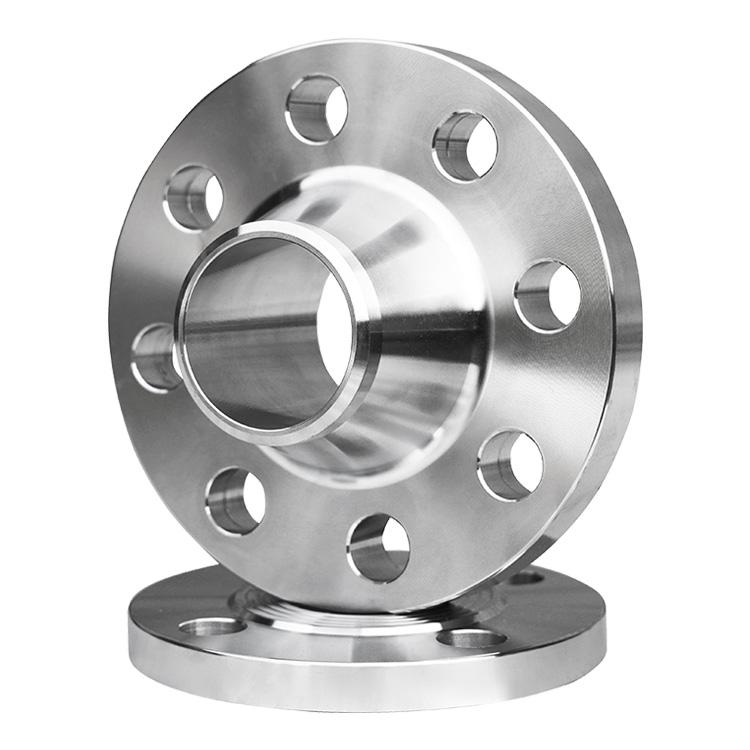
Non-standard flange for heat exchanger and boiler use refers to a custom-engineered flange solution designed for
demanding thermal, pressure, and sealing conditions in heat exchange systems, boiler assemblies, pressure vessels, piping networks,
and related industrial equipment. Unlike standard flanges produced according to commonly used dimensions and universal norms,
a non-standard flange is manufactured based on specific drawings, special interface requirements, unique hole patterns,
unusual diameters, special face types, or application-driven dimensional tolerances.
In industrial sectors where reliability, leak prevention, temperature resistance, and mechanical strength are critical, the
non-standard flange for heat exchanger and boiler use plays an essential role in connecting tubes, shells, nozzles,
headers, covers, channels, and auxiliary piping. These flanges are frequently specified when standard flange sizes do not fit legacy
equipment, retrofitting projects, compact layouts, OEM designs, or special pressure vessel structures.
This page provides a comprehensive, SEO-friendly overview of non-standard flanges for heat exchangers and boilers,
including definition, functions, advantages, material options, fabrication considerations, dimensional factors, common applications,
inspection points, and technical reference tables. The content is designed for industrial blogs, product directories, category pages,
and engineering resource pages.
A non-standard flange is a flange that does not conform exactly to a widely recognized standard dimension series.
Standard flange systems typically follow established codes and catalogs for diameter, bolt circle, thickness, pressure rating, and
facing style. However, industrial equipment often requires a flange that must match a particular design instead of a generic size.
In these situations, a custom or non-standard flange is created to satisfy exact operational and geometric requirements.
For heat exchangers and boilers, non-standard flanges may be used on:
These flanges are often produced in small batches or single-piece orders, making precision, material traceability, and dimensional
verification especially important.
Heat exchangers and boilers operate under demanding conditions such as high temperature, internal pressure, thermal cycling,
vibration, corrosive media, and long service hours. In such environments, a poor connection can lead to leakage, downtime,
maintenance cost increases, and even safety hazards. A non-standard flange for heat exchanger and boiler use is chosen
when the equipment design requires a precise match that standard products cannot provide.
Common reasons for selecting a Custom Flange include:
In many cases, the non-standard design improves system compatibility and helps maintain stable operation without redesigning the
entire connected system.
The main advantage of a non-standard flange for heat exchanger and boiler use is exact compatibility. However,
the benefits extend beyond fitment. Properly engineered custom flanges can improve sealing performance, simplify installation,
reduce adaptation work, and support long-term equipment reliability.
| Advantage | Description | Industrial Value |
|---|---|---|
| Exact dimensional match | Designed to match special drawings, existing nozzles, or obsolete equipment interfaces | Reduces installation errors and modification time |
| Improved sealing reliability | Can be engineered for the required gasket type, surface finish, and bolt load distribution | Helps prevent leakage under pressure and thermal stress |
| Application-specific design | Adapted to temperature, pressure, media, and mechanical load requirements | Supports safer operation in demanding service conditions |
| Retrofit compatibility | Useful for replacement parts in older heat exchangers and boilers | Minimizes system redesign and equipment downtime |
| Material flexibility | Can be produced in carbon steel, stainless steel, alloy steel, and other grades | Improves corrosion resistance and service life |
| Custom bolt pattern | Supports unique hole counts, spacing, and orientation | Ensures assembly compatibility with special equipment |
Material selection is a critical factor for a non-standard flange for heat exchanger and boiler use. The chosen material
must withstand temperature variation, corrosion, pressure stress, and fabrication requirements. The best material depends on the
process medium, operating temperature, pressure level, and applicable engineering code.
| Material | Main Characteristics | Typical Use Cases |
|---|---|---|
| Carbon Steel | Good strength, cost-effective, widely available | General boiler systems, water service, non-corrosive environments |
| Stainless Steel | Excellent corrosion resistance, good hygiene, strong thermal performance | Corrosive fluids, high-purity systems, chemical service, steam applications |
| Alloy Steel | Enhanced strength and temperature resistance | High-pressure boilers, elevated-temperature systems |
| Duplex Stainless Steel | High strength plus improved resistance to pitting and stress corrosion | Severe corrosion environments, marine-related process systems |
| Nickel Alloys | Excellent resistance to aggressive media and high temperatures | Special chemical service, extreme heat exchanger conditions |
| Low-alloy High-strength Steel | Suitable for demanding mechanical load conditions | Heavy-duty boiler and pressure equipment connections |
Material certification, heat treatment condition, and traceability are often essential for industrial procurement. For pressure-related
equipment, the flange material must also align with the applicable design code and inspection standards.
Non-standard flanges can be manufactured in many configurations. The final design depends on the equipment interface and operating
conditions. In heat exchanger and boiler applications, the following custom flange types are commonly required:
Some projects may also require special face styles such as raised face, flat face, tongue and groove, male and female, or ring-type
joint configurations.
The following table provides a general specification reference for non-standard flanges for heat exchangers and boilers.
Exact values vary by project, drawing, and engineering requirements.
| Specification Item | Typical Range / Options | Notes |
|---|---|---|
| Nominal Size | Custom, based on drawing | May not match standard nominal pipe sizes |
| Outer Diameter | Project-specific | Determined by equipment envelope and bolt layout |
| Bore / Inner Diameter | Custom-machined | Must match pipe, nozzle, or shell opening |
| Bolt Circle Diameter | Custom | Important for load distribution and alignment |
| Bolt Hole Count | Custom number | Depends on pressure rating and flange diameter |
| Flange Thickness | Custom or code-based | Influences rigidity and sealing strength |
| Pressure Rating | Low to high pressure, application-specific | Must suit boiler or exchanger operating pressure |
| Temperature Range | Ambient to elevated temperature service | Material selection must account for thermal expansion |
| Facing Type | RF, FF, RTJ, TG, M/F | Selected based on gasket and sealing requirements |
| Manufacturing Method | Forged, cut plate, machined, welded assembly | Depends on size, pressure, and geometry |
When engineering a non-standard flange for heat exchanger and boiler use, several design factors must be reviewed to
ensure safety and serviceability. These include load, sealing, corrosion, and thermal behavior.
The flange must endure the maximum operating pressure and temperature, including transient spikes. In boiler systems, temperature
changes may occur rapidly, creating thermal stress that affects the gasket surface and bolt preload. Heat exchangers can also
experience repeated heating and cooling cycles that gradually loosen joints if the design is not robust.
The sealing surface should be compatible with the selected gasket material, whether it is spiral wound, graphite, metallic, or
non-metallic. The flange face finish, flatness, and concentricity all affect gasket performance.
Proper bolt load ensures tightness and helps resist separation under internal pressure. A custom flange must provide enough rigidity
so that clamping force is distributed evenly across the gasket area.
Boilers and heat exchangers may handle steam, water treatment chemicals, process fluids, or condensate. Material selection and
protective finishing must address the specific corrosion mechanism involved.
Since non-standard flanges are made for unique interfaces, even small dimensional errors can create assembly problems. Accurate
machining, inspection, and test fitting are essential to reduce rework.
The manufacturing method used for a non-standard flange depends on the size, material, quantity, and engineering
requirements. Common production methods include forging, plate cutting, CNC machining, and welded fabrication.
| Manufacturing Method | Benefits | Typical Application |
|---|---|---|
| Forging | High strength, improved grain structure, excellent reliability | High-pressure boiler and exchanger flanges |
| Plate Cutting | Cost-effective, flexible for large sizes | Large custom flanges, low- to medium-duty service |
| CNC Machining | High dimensional accuracy, good finish quality | Precision interfaces and special sealing faces |
| Welded Fabrication | Supports complex geometry and large assemblies | Special vessel connections and retrofit designs |
| Ring Rolling + Machining | Balanced strength and efficiency for large rings | Large-diameter pressure equipment |
The sealing quality of a non-standard flange for heat exchanger and boiler use depends heavily on face finish and
machining precision. A rough surface can damage gaskets, while an overly smooth surface may not provide the required grip for some
gasket materials. The ideal finish depends on the seal type and service condition.
Important sealing-related factors include:
For high-temperature or high-pressure systems, ring-type joint and other metallic sealing arrangements may be preferred. In lower
stress service, raised face or flat face sealing may be sufficient if compatible with the mating component.
Since these flanges are often used in critical equipment, quality control should be strict. Inspection ensures that the custom flange
meets design intent and performs reliably during operation.
| Inspection Item | Purpose | Typical Method |
|---|---|---|
| Dimensional inspection | Verifies diameter, thickness, hole spacing, and bore size | Calipers, micrometers, coordinate measuring equipment |
| Surface finish check | Confirms sealing face quality | Roughness gauge, visual inspection |
| Material verification | Confirms correct alloy and traceability | MTC review, PMI testing |
| Nondestructive testing | Detects internal or surface defects | UT, MT, PT, RT as required |
| Pressure-related conformity | Checks structural suitability for service | Code review and engineering validation |
| Visual inspection | Confirms cleanliness and machining quality | Trained inspector review |
Heat exchangers frequently require custom flange connections due to varied shell designs, multi-pass arrangements, maintenance access
requirements, and original equipment dimensions. A non-standard flange for heat exchanger use may be applied in:
These connections must often tolerate temperature fluctuation, medium erosion, and repeated maintenance cycles, making the flange
design a significant factor in exchanger performance.
Boilers require strong, reliable, and pressure-tight flange joints to maintain safe operation. A non-standard flange for boiler use
is commonly used in:
Boiler systems are especially sensitive to leakage and fatigue, so flange alignment, bolt preload, and material performance are
critical to long-term safety.
When ordering or designing a non-standard flange for heat exchanger and boiler use, the following information is usually
required to avoid delays and ensure the correct product is produced:
The more complete the technical data, the easier it is to manufacture a flange that fits correctly and performs safely in service.
The following keyword phrases are commonly associated with this topic and may support search visibility when used naturally in web
content:
A flange is considered non-standard when its dimensions, bolt pattern, face design, or material requirements do not match common
cataloged flange sizes. It is usually manufactured to a project-specific drawing.
Yes, provided the flange is properly engineered, manufactured, inspected, and installed according to the operating conditions and
applicable codes. Safety depends on correct material selection, sealing design, and quality control.
In many cases, yes. A custom flange may be used when the standard flange does not fit the equipment interface or does not meet
performance requirements.
The most important factor is compatibility with operating pressure, temperature, and sealing needs. Dimensional fit is equally
important in retrofit or replacement work.
A non-standard flange for heat exchanger and boiler use is a vital component for custom industrial systems that require
exact fit, dependable sealing, and long-term durability. Whether used in pressure vessels, boilers, condensers, shell-and-tube
exchangers, or special retrofit projects, these custom flanges help solve dimensional challenges while supporting safe and efficient
operation.
For industrial buyers, engineers, and technical content publishers, understanding the definition, material options, manufacturing
methods, inspection requirements, and application scenarios of non-standard flanges can improve specification quality
and support better equipment performance. In high-temperature and high-pressure environments, the right flange design is not just a
connection part—it is a critical element of system integrity.


Copyright © 2022 Zhejiang Songlin Flange Co., Ltd.
SitemapThis website uses cookies to ensure you get the best experience on our website.

 Español
 Pусский
 Français
 Deutsch
 日本語
日本語 한국어
한국어 العربية
 Italiano
 Nederlands



 WhatsApp
 Phone
Phone
Comment
(0)